

Updated:
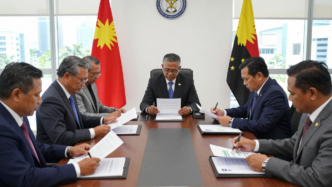
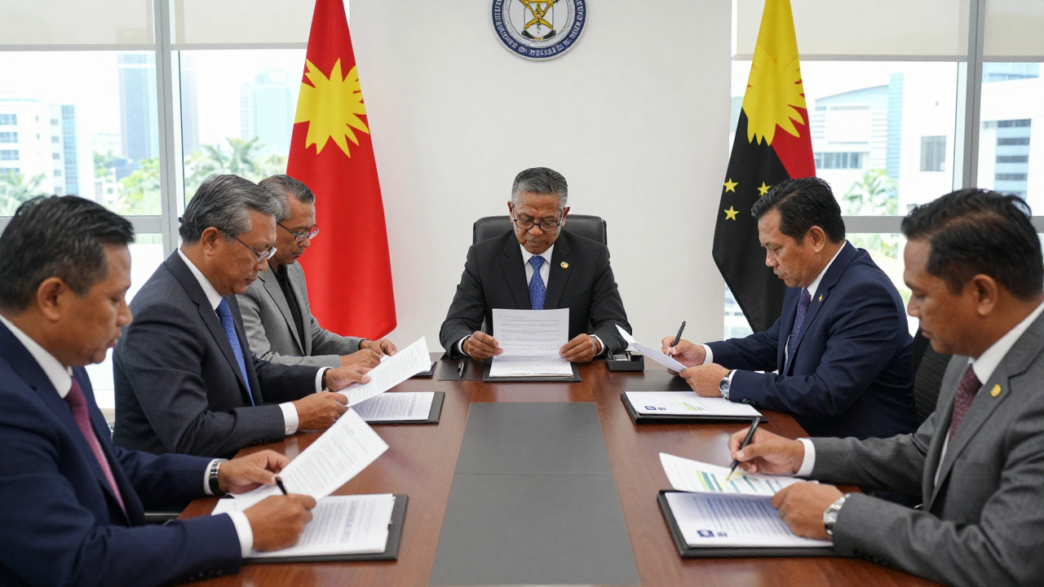
Papua New Guinea has reached a staff-level agreement with the International Monetary Fund on the final reviews of three lending arrangements, a step that could make up to $189 million available if approved by the Fund’s Executive Board. The agreement, reported on October 6, 2026, covers the country’s Extended Credit Facility (ECF), Extended Fund Facility (EFF) and Resilience and Sustainability Facility (RSF).
If the board signs off, about $82 million would be disbursed under the ECF and EFF arrangements, with up to a further $107 million available through the climate-focused RSF. The resulting total IMF disbursements under the programs would reach approximately $1.19 billion, according to Reuters’ account of the announcement. The staff-level agreement itself does not constitute final approval or an immediate payment.
Final reviews still require board approval
The reviews are the seventh under the ECF and EFF and the fourth under the RSF, according to reporting on the IMF announcement. The programs were designed to support Papua New Guinea’s economic reform agenda, including measures addressing external financing pressures and longer-term vulnerabilities linked to climate change.
The IMF’s Executive Board completed earlier reviews in June 2026, authorizing about $82 million under the ECF and EFF and about $81 million under the RSF. At that point, the Fund said total disbursements had reached roughly $1.01 billion. The October agreement, if approved, would add to that support; the exact amount available depends on the terms of the completed reviews, particularly the RSF component, which is reported as “up to” $107 million.
Board approval is the next formal hurdle. The available contemporaneous reporting did not specify when the Executive Board would consider the reviews, so a decision date and payment timing remain unconfirmed.
Growth outlook faces resource and external pressures
The IMF expects Papua New Guinea’s real gross domestic product to expand by 3.1% in 2026, slowing from 6.2% in 2025, Reuters reported. The Fund attributed the projected deceleration to liquefied natural gas production leveling off, El Niño-related damage to farming and mining, and higher import costs associated with the war in the Middle East.
Headline inflation is expected to rise to 4.8%, the same report said. That outlook adds to the challenges facing policymakers as the country attempts to sustain growth while managing import costs and its public finances. The figures are projections, not final results for the year.
The outlook differs from the IMF’s June assessment, which projected 2026 growth of 3.8% after 5.6% growth in 2025. The October figures reported by Reuters represent a weaker growth forecast and a higher reported 2025 comparison; the available coverage did not provide a detailed explanation for the revisions or a full updated forecast table.
Fiscal target missed in first half
Papua New Guinea met all but one quantitative performance criterion and all indicative targets for the end of June 2026, Reuters reported. The government nevertheless missed its fiscal deficit target in the first half of the year, a shortfall it is seeking to address through the budget process.
Parliament passed a supplementary budget in September, and the government continues to aim for a 2026 deficit of 1.6 billion kina, equivalent to about $345.28 million at the exchange rate cited in the report. That remains an official fiscal target rather than a confirmed full-year outcome.
The IMF’s previous program reviews linked the reform effort to fiscal consolidation, stronger public finances and steps to ease foreign-exchange shortages. In June, the Fund also highlighted governance reforms and climate resilience as parts of the supported agenda. The October coverage did not detail the missed quantitative criterion or state whether the supplementary budget changed the target’s underlying assumptions.
Climate financing is a separate part of the package
The RSF component distinguishes the potential climate financing from the funds expected under the ECF and EFF. The RSF supports policies intended to address longer-term balance-of-payments vulnerabilities associated with climate change; it is not simply an additional general budget transfer.
In June, the Executive Board approved roughly $81 million under the RSF after completing its third review. The latest reported agreement concerns the fourth review and could provide up to about $107 million, subject to board approval. The reported maximum should not be read as a guaranteed disbursement.
The amount and timing of any payment remain dependent on the board’s decision. Until that review is completed, Papua New Guinea has a staff-level agreement and a stated potential funding amount—not a confirmed $189 million inflow.