

Updated:
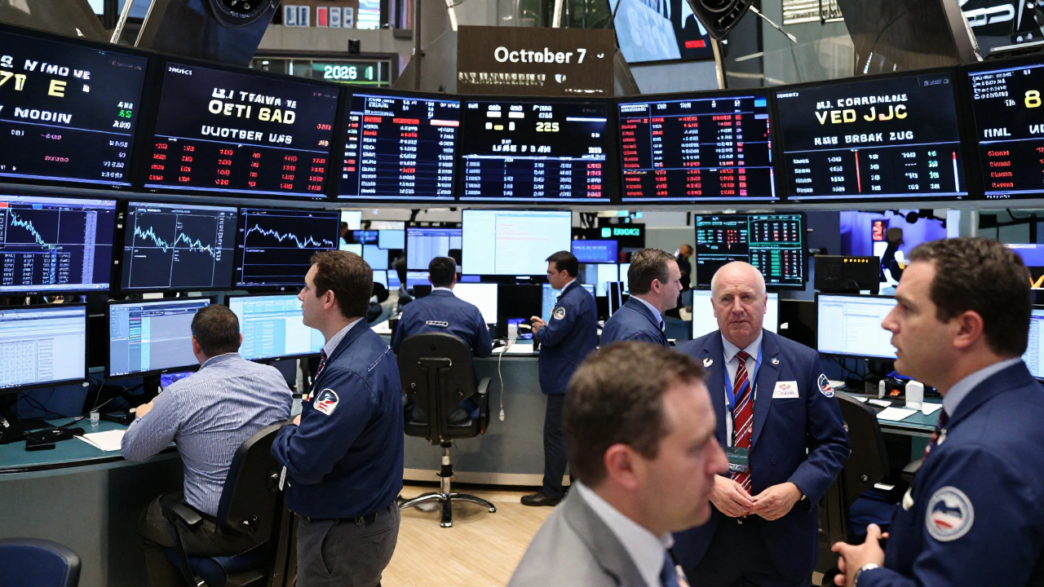
Global stocks fell on Wednesday, October 7, as a renewed selloff in government bonds pushed long-dated U.S. Treasury yields to highs not seen in 24 years. A well-received $39 billion sale of 10-year notes and the release of minutes from the Federal Reserve’s September meeting later helped pull yields back from their peaks, but the day’s trading highlighted a growing tension: equities had recently reached records even as borrowing costs climbed.
The S&P 500 and Nasdaq each slipped 0.2%, while the Dow fell 0.7%, according to Reuters’ market wrap. Stocks also declined in major Asian and European markets. The immediate question for investors is whether higher yields reflect confidence in economic growth or rising concerns about inflation, government borrowing and the extra compensation investors demand to hold longer-dated bonds.
Long-term yields set the tone
U.S. 10-year and 30-year Treasury yields touched 24-year highs before retreating after the auction. The 10-year yield is closely watched as a reference point for borrowing costs across the economy, including mortgages and corporate financing. Rising yields can also make bonds more competitive with stocks and raise the discount rate investors apply to expected company earnings.
Reuters reported that the benchmark yield eased after the Treasury’s 10-year sale drew its strongest demand since 2016. The successful auction offered evidence that buyers were still willing to take on longer-term government debt at prevailing rates, interrupting the day’s sharp rise in yields. It did not, however, resolve the broader pressure on bond markets.
In Europe, government bonds came under renewed pressure, and the spread between French and German borrowing costs widened by 10 basis points to 138 basis points. That gap is one measure of investors’ relative assessment of French debt risk. U.S. mortgage rates also reached their highest level since 2023, underscoring how movements in government bonds can feed into household financing costs.
Fed minutes expose different reasons for a rate increase
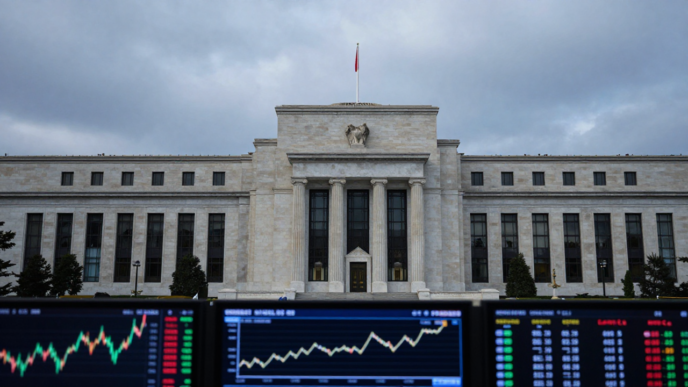
The Federal Reserve’s minutes, released October 7, covered its September 15–16 policy meeting. Reuters reported that officials unanimously backed the rate increase, the first in three years, but disagreed about the reasoning. Some viewed higher rates as insurance against energy-driven price pressures and inflation expectations; others saw the move as an initial response to inflation rooted in stronger demand.
The distinction matters because the causes of inflation shape how policymakers assess the need for further tightening. If price pressure is mainly tied to energy costs, officials may weigh it differently than persistent demand-driven inflation. The minutes document discussion at the September meeting, not a decision about what the Fed will do next.
The next scheduled policy meeting is October 27–28. Reuters said market pricing on Wednesday indicated that investors did not expect a rate increase at that meeting, although expectations had shifted in the prior week. The minutes therefore arrived as investors weighed both the direction of inflation and the likelihood that policymakers would agree on the appropriate response.
Term premium adds another source of strain
Beyond expectations for short-term interest rates, Reuters highlighted a rise in the U.S. bond market’s term premium: the additional return investors seek for holding longer-dated debt rather than rolling over shorter-term securities. Citing Bank of America analysts, the report said the premium had climbed about 40 basis points in two weeks and reached 96 basis points on Monday, a 12-year high.
A rising term premium can push long-term yields higher even without a corresponding shift in expected central-bank rates. Reuters noted that Bank of America analysts were also watching fiscal and funding issues in the United States, the European Central Bank’s willingness to stabilize bond-market spreads, and long-term Japanese government bond dynamics. The report did not establish any single factor as the cause of the latest rise.
Market moves and the next test
Wednesday’s losses were broad but uneven. Seven S&P 500 sectors declined and four advanced; industrials fell 2%, while health care gained 1%. Caterpillar dropped 6%, while Moderna rose 5% and Micron Technology gained 4%. The dollar strengthened, the euro stood at a 17-month low, and gold and other precious metals also fell, Reuters reported.
Investors were also monitoring financing tied to artificial-intelligence infrastructure. Reuters reported that SpaceX was in talks with banks and asset managers to raise $40 billion to purchase Nvidia chips. The report linked that proposal to wider investor scrutiny of debt, corporate borrowing and complex financing arrangements associated with data-center investment, while attributing concerns about opacity and circular financing to market participants.
The next scheduled market events listed by Reuters for Thursday, October 8, included Samsung’s preliminary third-quarter earnings, remarks from European Central Bank and Bank of England economists, and a U.S. Treasury sale of $22 billion in 30-year notes. Federal Reserve officials, including Governor Christopher Waller, were also scheduled to speak. Those events could provide new information for markets, but Wednesday’s trading left unresolved whether rising long-term yields would ease or continue to weigh on stocks and borrowing costs.