


Updated:
Truist analysts attending the International BoatBuilders’ Exhibition & Conference (IBEX) in Tampa this week found an industry still contending with weak consumer conditions, credit sensitivity and cautious dealer inventories. The National Marine Manufacturers Association’s indicators, as described in Truist’s conference account, placed consumer-related measures in “trouble” and marine dealer inventories in “caution.”
The NMMA forecast cited by Truist calls for U.S. retail sales of new powerboats to fall 3% to 5% in 2026 from a year earlier. If that forecast holds, it would mark a sixth consecutive annual decline. The outlook matters to boatbuilders and suppliers because weaker retail demand can influence dealer orders, manufacturing schedules and the volume of components purchased.
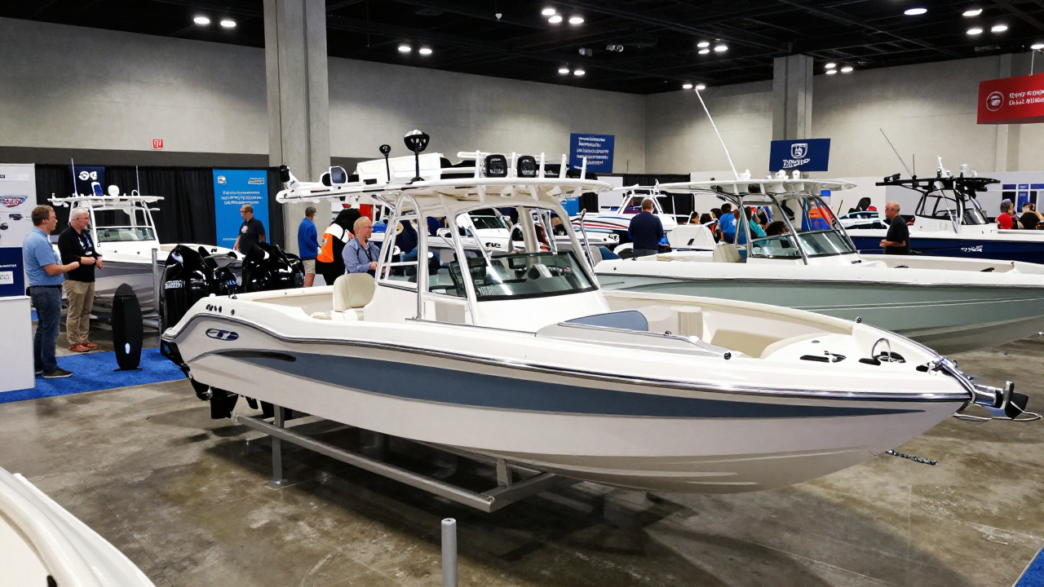
IBEX ran October 6–8 at the Tampa Convention Center. Unlike consumer boat shows, the event brings together boatbuilders, manufacturers, engineers and suppliers, making it a venue for industry participants to discuss production pressures and business prospects.
Consumer finances dominate the warning signs
Truist’s account identified personal debt, consumer confidence and interest rates as the main trouble indicators discussed at the conference. The association also emphasized that many boat buyers are sensitive to financing costs, leaving demand exposed to borrowing conditions as well as household confidence.
In live polling of hundreds of attendees, nearly 60% selected stronger consumer confidence as the economic improvement that would most help boating. About 20% chose lower interest rates. Most respondents expected inflation to rise in 2027, according to the report; the poll reflects conference attendees’ views, not a formal forecast of inflation.
Dealer inventories were described as a caution rather than a trouble indicator. That distinction suggests inventories remain an industry concern, but the report did not provide inventory totals, regional breakdowns or a comparison with historical levels.
Industry sees risk of a deeper downturn
Truist reported concerns among industry participants that marine sales could experience negative growth as severe as that seen in the recreational-vehicle sector. The account did not provide a specific RV comparison or quantify how likely participants considered that outcome, so it remains a reported concern rather than a confirmed forecast.
Participants also raised the age profile of boaters, saying the average age had risen to 60 from 45. The report offered no underlying survey methodology or time period for those figures. The concern, as presented, is that the industry may need to broaden its appeal to younger buyers while existing customers contend with affordability and financing pressures.
Patrick Industries highlights supplier response
Truist met with Patrick Industries management and toured the company’s IBEX booth. The analysts described Patrick’s display as among the event’s largest and said it brought several acquired businesses together in one area for a second consecutive year. Patrick makes components for marine, recreational-vehicle and other markets, and sells to original-equipment manufacturers and aftermarket customers.
According to Truist, Patrick management said the company aims to help boat manufacturers address cost challenges and plans to work with OEMs on end-to-end solutions in 2027. The account did not detail the specific products, customers or financial targets associated with that plan.
Patrick’s public second-quarter results provide context for the supplier’s exposure: the company reported marine revenue of $191 million, up 22% year over year, while estimated wholesale powerboat industry shipments were flat. Patrick also reported that its estimated marine content per wholesale powerboat unit rose 22% to $4,883 on a trailing 12-month basis. Those results show that supplier revenue and industry-wide boat shipments can move differently; they do not establish that the broader retail market has recovered.
What is known—and what remains unsettled
The contrast between Patrick’s reported marine growth and the NMMA’s projected retail-sales decline highlights the different measures involved. Patrick reports revenue from components it sells, while the NMMA forecast concerns retail sales of new powerboats; neither figure alone describes the full state of the marine market.
IBEX’s 2026 event concluded October 8. Truist’s report did not identify a specific upcoming industry data release or provide a timeline for the projected sales decline. The key indicators to watch in subsequent reporting are whether retail demand follows the NMMA forecast, whether dealer inventories move out of the caution category, and how manufacturers and suppliers adjust production and product offerings.