

Updated:
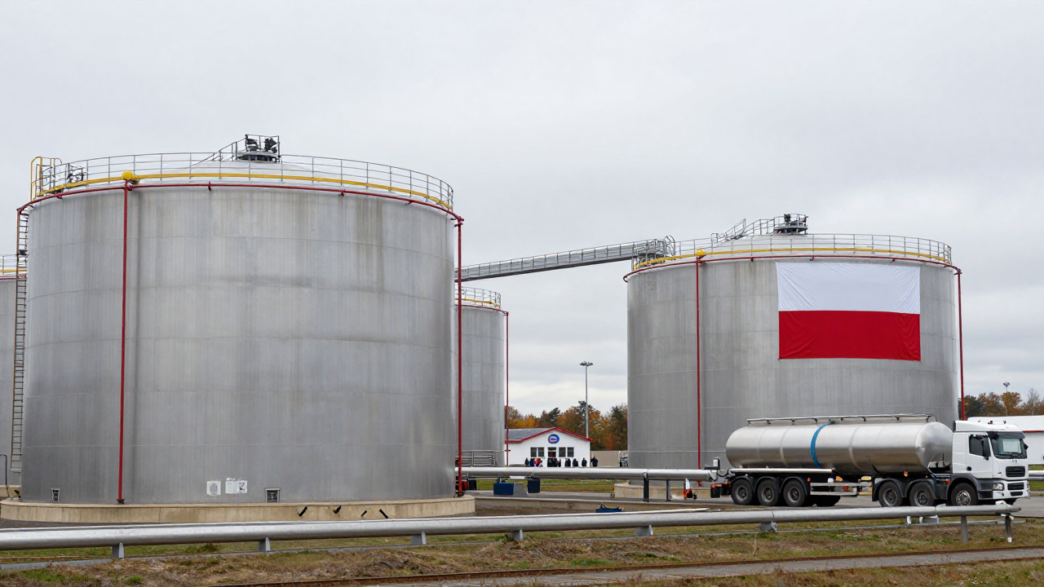
Poland is prepared to release oil and diesel from its reserves if countries reach a collective agreement, Energy Minister Milosz Motyka said Wednesday, as the International Energy Agency’s governing board prepared to discuss a coordinated drawdown. Motyka said he did not expect the agency to make a decision on the release on October 7.
His comments signal Poland’s willingness to participate, but do not amount to a commitment to release a specified volume. The Group of Seven agreed last week to make 100 million barrels of crude oil and petroleum products available, yet the mix of fuels, country allocations and relationship to an earlier emergency-stock pledge have not been fully resolved.
IEA talks leave details unsettled
Reuters reported that the IEA board was due to hold an informal discussion on Wednesday, after EU officials had already discussed the proposal. The agency’s board is expected to decide the release’s details at a meeting scheduled for October 14-15, according to people familiar with the matter cited by Reuters.
The outstanding questions include how much of the announced volume will be diesel, how much will be crude oil and which countries will supply it. It also remains unclear whether the G7’s 100 million barrels represent new supplies or the remaining portion of a March commitment.
The distinction matters because the G7 said its latest action would take account of commitments already fulfilled. Reuters reported that the IEA’s March plan called for a record 400 million-barrel release, of which about 325 million barrels had been released by the time of its October 7 report.
G7 pledge followed pressure over fuel prices
The G7 announcement on October 2 followed pressure from U.S. President Donald Trump, who had urged European countries to release diesel stocks as prices climbed. In its statement, the group backed a coordinated release through the IEA and pledged to refrain from energy export restrictions among members.
The G7 said a substantial amount of diesel should be released early, within 20 days, with the wider action unfolding over four months. However, the agreement did not provide a country-by-country breakdown or specify the exact division among diesel, crude and other products, leaving officials and market participants waiting for implementation details.
Associated Press reporting on the announcement said the release was intended to address elevated fuel prices and that diesel was to be front-loaded. It also noted that the G7 action followed the IEA-coordinated March drawdown, underscoring that the new pledge’s accounting against the earlier commitment was a central unresolved issue.
Poland’s participation depends on collective action
Motyka’s condition—that a consensus be reached—places Poland’s potential contribution within the broader coordinated process rather than describing an independent national release. No quantity or schedule for Poland’s stocks was specified in the report, and there was no indication that withdrawals had begun.
Poland’s established emergency framework gives the minister responsible for climate and energy the authority to decide whether the country participates in an IEA collective action during a global supply disruption. The IEA’s country profile says Poland’s stock drawdowns are commonly carried out by reducing industry stock obligations, while public stocks are held in facilities within the country.
The IEA also reports that Poland’s oil stocks have consistently exceeded the agency’s requirement of 90 days of net imports. That background describes the country’s reserve system, but does not establish how much oil or diesel could be contributed to the current initiative.
Price pressures and next steps
The proposed release comes amid record-high diesel prices and supply strains linked to conflicts affecting oil exports and refinery operations. Reuters reported that the IEA’s March release was prompted by the price spike and supply losses following the start of the U.S.-Israeli war with Iran, while damage to refineries connected to the Ukraine conflict has also contributed to pressure on diesel markets.
For now, Poland has expressed readiness but not a firm volume or timetable. The next defined step is the IEA board’s October 14-15 meeting, where members are expected to work out the release’s details; until then, the overall amount, fuel composition and national contributions remain unsettled.