

Updated:
Workers represented by Micron Technology’s Taoyuan union in Taiwan have authorized a strike, escalating a dispute over the company’s bonus system at a key manufacturing centre for the U.S. memory-chip maker. The union said 1,994 members voted in favour, representing 99% of ballots cast; it has not set a strike date.
The vote adds pressure to negotiations over whether Micron should replace one-off rewards with a permanent profit-sharing arrangement. A work stoppage could raise concerns about production at a time when memory chips, including high-bandwidth memory used in artificial-intelligence servers, are in strong demand. The vote itself does not mean a strike has begun or establish when one might occur.
Vote authorizes action, but timing remains open
The Taoyuan union said 2,012 of its 2,258 eligible members voted during a six-day ballot. Of those ballots, 1,994 supported strike action, 14 opposed it and four were invalid, according to Taiwan’s Central News Agency. That amounts to 88.3% of eligible members backing a strike, in addition to 99% support among those who voted.
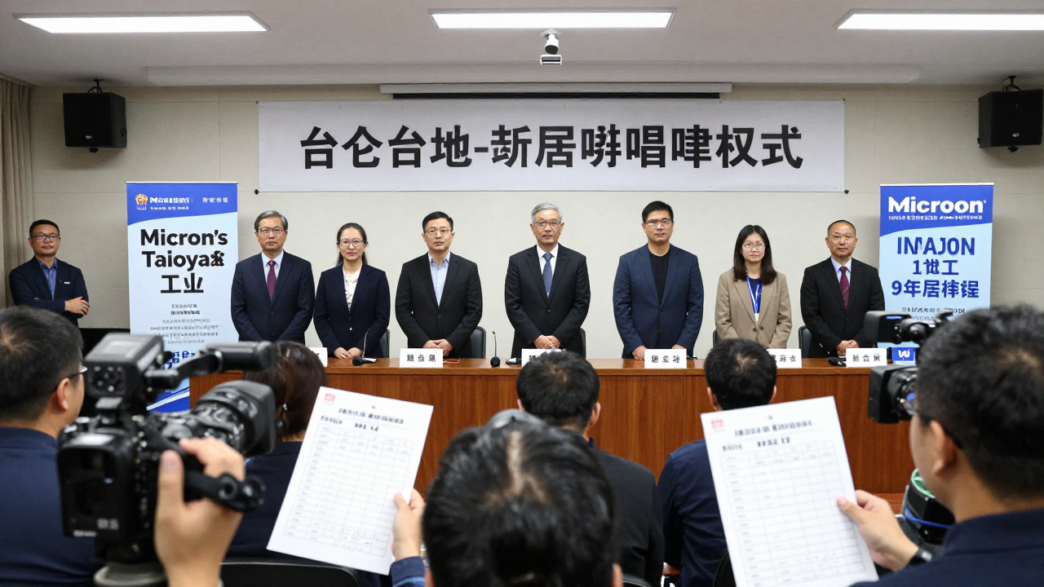
At a news conference in Taipei on October 7, union chairman Jerry Lin said no schedule had been decided. The union was considering a surprise strike if talks failed to produce results, CNA reported, but Lin did not announce that such action would take place. The union has also encouraged members to take a day off on October 19 for a rally in Taipei, which reporting said would not itself be a strike.
Union wants ongoing profit sharing
The central disagreement is over how Micron shares compensation with workers after a strong business year. The union has argued that a one-time cash award does not create a predictable system for sharing future profits and has called for a permanent, transparent mechanism. Earlier reporting by Reuters said the union sought to allocate 15% of operating profit to employees.
Micron announced fiscal 2026 rewards for more than 60,000 employees globally in September. Reuters reported that eligible Taiwan employees would receive a T$1 million cash bonus, with later hires receiving a prorated amount. Separate coverage of the broader Taiwan package described minimum total cash compensation of T$1.7 million for fiscal 2026, illustrating that the one-time bonus and the overall compensation figure are not the same measure.
The union has said the announced awards do not meet its demand for an ongoing profit-sharing framework. It also objected to Micron announcing the package while mediation was under way, without first reaching agreement with the union. The dispute is therefore about the structure and negotiation of compensation, not simply the size of a single payment.
Mediation ended without a Taoyuan agreement
Mediation between Micron and the Taoyuan union ended without agreement in September, Reuters reported. The Taoyuan dispute is separate from negotiations involving Micron workers in Taichung, central Taiwan, where a different union remains in talks with the company.
Together, the Taoyuan and Taichung unions represent more than 80% of Micron’s roughly 15,000 employees in Taiwan, according to Reuters. The result in Taoyuan does not itself settle the Taichung negotiations or establish that the second union will take the same course. Earlier talks also showed different stages across the two groups: a September 19 mediation meeting with the central Taiwan union was described by CNA as constructive, with another session scheduled for October 22.
Company and authorities urge continued engagement
Micron said it took employees’ concerns seriously and remained committed to engaging with its unions in good faith, according to Reuters reporting on October 7. The company’s statement did not announce a revised compensation proposal or say whether further mediation with the Taoyuan union had been arranged.
Taiwan’s labour ministry said it respected the strike vote and urged Micron to consider workers’ concerns, put forward concrete proposals and continue negotiations, Reuters reported. The ministry’s response did not change the union’s decision on whether or when to call a strike.
Potential supply implications are not yet measurable
Taiwan is an important production base for Micron’s DRAM and high-bandwidth memory products. Those chips serve markets including AI servers, but the available reporting did not quantify what a Taoyuan stoppage would mean for output, customers or delivery schedules. With no strike date announced, the operational impact remains uncertain.
For now, the concrete development is a formal strike mandate alongside an unresolved compensation dispute. The next significant steps would be any new proposal or negotiations, and a decision by the union on whether to schedule action; neither a settlement nor a strike timetable had been announced in reporting available on October 7.