



Updated:
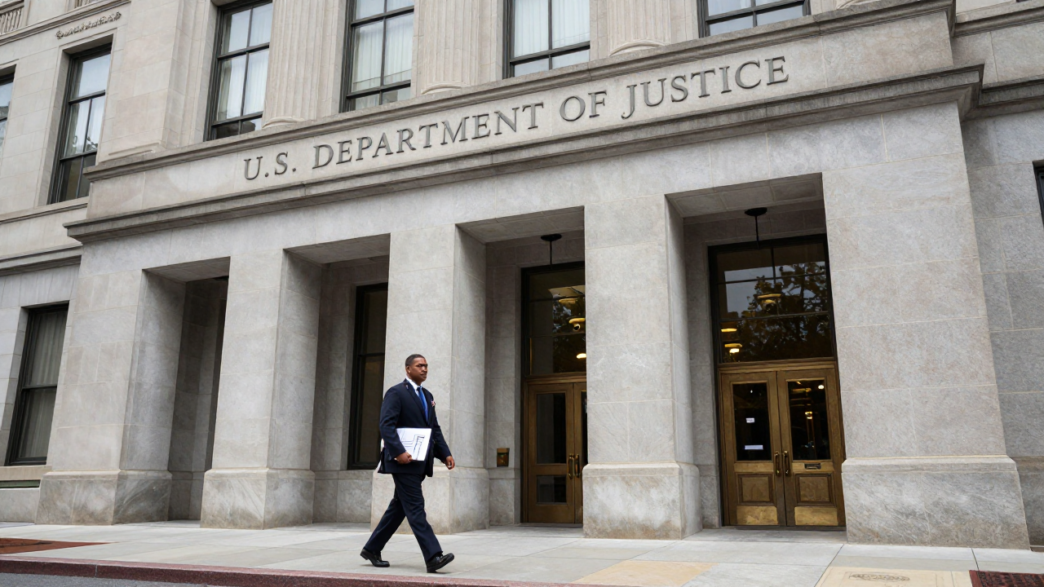
The U.S. Justice Department on Tuesday directed employees to use “super intelligence” and “SI” in place of “artificial intelligence” and “AI” in most official communications, extending the Trump administration’s new terminology to court filings when appropriate. Acting Deputy Attorney General Trent McCotter issued the instruction in a memo, according to Reuters, which reviewed the document.
The directive puts the department’s legal work under an executive-branch policy President Donald Trump set out in an executive order signed September 29. The order calls for federal agencies to adopt the replacement terms to the maximum extent permitted by law. It does not change the statutory definition of artificial intelligence, and it specifically exempts previously issued regulations and other historical documents from revision.
Memo applies the terminology to court work
McCotter’s memo tells Justice Department employees to use “super intelligence” and “SI” in public communications, policy documents and other official records, Reuters reported. It says the guidance extends to court filings “when appropriate,” a provision also reported by Bloomberg Law.
The court-filing language brings the terminology policy into the department’s work before the judiciary, but the available reports do not detail how employees should handle cases where a statute, prior court decision or evidence uses the existing terms. The memo’s qualification and the executive order’s limits leave the application subject to law and context.
Executive order sets the government-wide policy
Trump’s September 29 order directs executive departments and agencies to substitute “Super Intelligence” and “SI” for “Artificial Intelligence” and “AI” in official correspondence, public communications, websites, reports, policy documents and other non-statutory executive-branch materials. The order says the new terminology should reflect what the administration describes as the capabilities of advanced systems.
For purposes of implementing the order, however, “Super Intelligence” and “SI” mean the technologies and systems already encompassed by the federal statutory definition of artificial intelligence. The order therefore changes the government’s preferred terminology without itself creating a new technical or legal category for the technology.
Law remains a boundary on the change
The directive is expressly limited by existing law. The executive order says agencies must implement it consistently with applicable law, and it does not require changes to previously issued regulations, presidential actions, contracts, grants or historical documents.
The order also instructs the White House science and technology adviser to submit proposed legislative language within 60 days. That proposal is to consider establishing a federal definition for “Super Intelligence” and “SI,” whether it should modify or supersede the current statutory definition, and any conforming changes to laws that refer to AI.
Broader policy debate continues
The terminology shift arrives amid a wider debate about the technology’s risks and how it should be governed. Reuters reported that public perceptions of AI have soured following hacking incidents that raised safety questions, while Trump has resisted new regulation and said the Justice Department would act against the technology if necessary.
The federal policy is not shared by every government. California Governor Gavin Newsom, who signed state measures addressing workplace uses of AI on September 30, also issued an executive order directing state agencies to continue using “artificial intelligence,” according to the Associated Press. The contrast underscores that Trump’s terminology instruction governs federal executive-branch materials, not all public agencies or legal usage across the country.
The next stated federal step is the science and technology adviser’s legislative proposal, due within 60 days of the September 29 order. The available reporting does not identify a separate deadline for the Justice Department’s implementation or describe any court filing that has already used the new terminology.