

Updated:
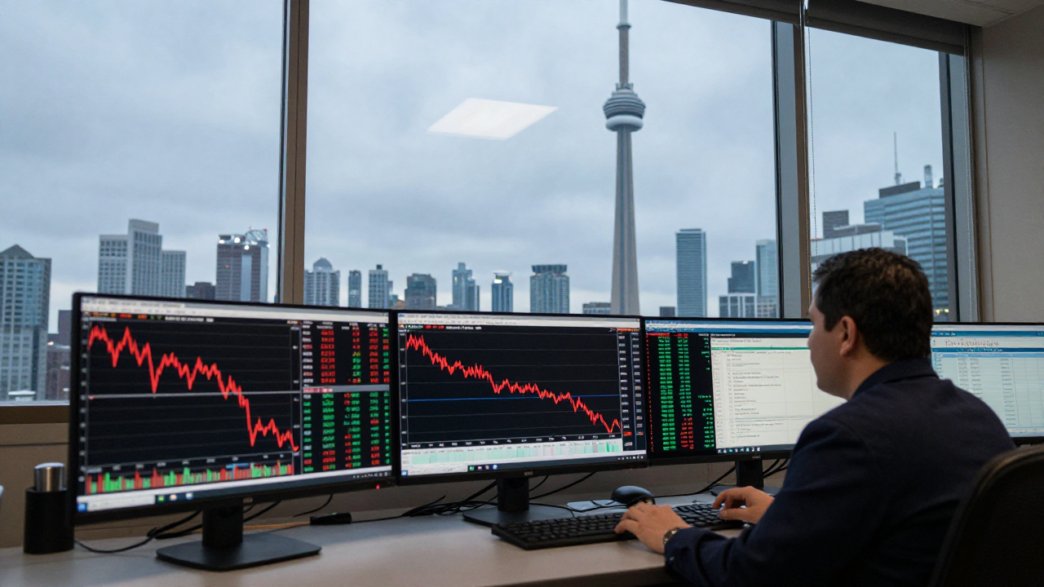
Futures tied to Canada’s main stock index fell on Thursday, October 8, as rising government-bond yields and higher oil prices renewed investor concerns about inflation and borrowing costs. December S&P/TSX index futures were down 0.52% at 5:19 a.m. Eastern time, after briefly touching their lowest level since July 9, Reuters reported.
The move followed a sharp decline in Toronto the previous day. The S&P/TSX Composite Index lost 1.7% on Wednesday to close at 35,041.86, its lowest finish in two and a half months and its steepest one-day drop since June 5, according to Investing.com and Reuters. The pressure on Thursday’s futures reflected a broader reassessment of interest-rate risks as energy prices climbed and bond yields remained elevated.
Yields and oil pressure risk appetite
The U.S. 10-year Treasury yield edged up to 5.3327% early Thursday, Reuters reported, after retreating slightly from a multi-decade high reached the previous day. Investing.com said the benchmark yield had risen as high as 5.36% on Wednesday, while the 30-year yield briefly reached 5.73%, its highest level in 24 years.
Higher yields can make bonds more attractive relative to shares and increase financing costs for businesses and households. The bond-market strain also added to concerns that central banks may need to keep rates higher for longer if rising energy costs feed into broader inflation.
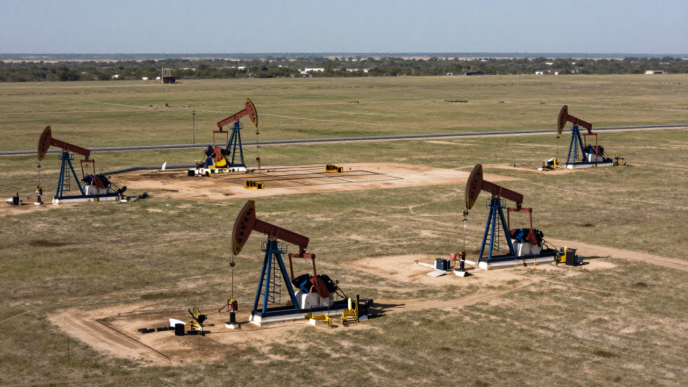
Oil prices gained more than 3% on Thursday amid supply concerns linked to the Middle East and fresh attacks on shipping in the Gulf and the Strait of Hormuz, Reuters reported. Brent crude traded above $105 a barrel in Investing.com’s morning market update. The increase added to worries that an energy shock could complicate the outlook for inflation and interest rates.
Rate-hike expectations return
Market pricing pointed to expectations for further rate increases on both sides of the border. Reuters reported, citing LSEG data, that investors were pricing in at least one quarter-point Bank of Canada hike before the end of 2026. Traders also expected one 25-basis-point increase from the U.S. Federal Reserve by year-end.
The prospect of higher policy rates was part of a shift in investor sentiment, rather than an announced decision by either central bank. The Bank of Canada and the Fed had not, in the reports available Thursday morning, confirmed that additional increases were scheduled.
In the United States, Federal Reserve minutes released Wednesday showed policymakers were not in a hurry to raise rates again after increasing borrowing costs for the first time since 2023 last month, Investing.com reported. Traders had reduced expectations for an October Fed hike, while still assigning a higher probability to an increase in December.
Canadian stocks entered the session after a steep loss
Wednesday’s TSX decline came as U.S. Treasury yields surged and uncertainty about Canada-U.S. trade relations weighed on sentiment. Investing.com reported that U.S. President Donald Trump had suggested Canada was difficult to deal with, clouding the outlook for a potential trade agreement between Washington and Ottawa.
The materials sector, which includes mining companies, was among Wednesday’s weakest groups. Reuters said the sector fell to a three-month low on Thursday, while gold prices steadied after dropping to a two-month low in the previous session. Mining shares can be sensitive to higher yields, which may reduce the appeal of assets such as gold that do not pay interest.
What investors were watching
The Thursday futures decline was part of a wider pullback in risk appetite. U.S. stock futures also pointed lower in Investing.com’s morning report, while major U.S. indexes had ended Wednesday in negative territory. Investors were weighing the combined effect of borrowing costs, energy-market disruption and geopolitical risk on equities.
For the TSX, the next scheduled development was the opening of regular trading on Thursday, when investors could assess whether the futures decline carried through to the cash market. The direction of bond yields and oil prices, as well as any further developments affecting Middle East supply and Canada-U.S. trade, remained key factors in the market backdrop; the available reporting did not establish how the index would finish the session.