



Updated:
U.S. forecasters said Tuesday, October 6, that Tropical Depression Nine was expected to strengthen into the first Atlantic hurricane of 2026 within two days, moving toward the northern Gulf Coast after passing north of Mexico’s Yucatan Peninsula. The forecast put offshore oil and gas installations and major Gulf Coast refineries in the storm’s potential path, creating a weather risk for energy operations already facing market pressure.
The National Hurricane Center said the depression was expected to become a tropical storm by early Wednesday and approach the U.S. northern Gulf Coast on Friday. At the time of the initial advisory, the system was over the southwestern Gulf, moving east at about 5 miles per hour with maximum sustained winds of 35 mph. Forecasts remained subject to change, and the storm’s eventual landfall location and operational effects were not yet established.
Forecast path crosses key energy infrastructure
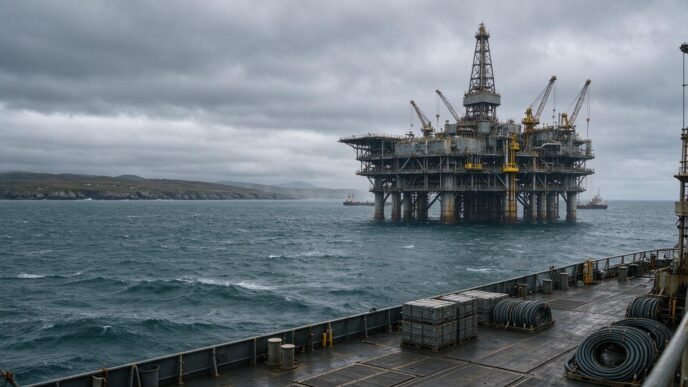
Reuters reported that offshore areas in the storm’s projected path account for about 15% of U.S. crude oil production and 5% of U.S. natural gas production. Those figures describe the importance of the broader offshore region, not a forecast that all of that output would be shut in. The report did not identify specific platforms or announce production suspensions.
Onshore, the forecast landfall area could affect six refineries operated by Shell, Valero Energy, Marathon, PBF Energy and Chevron, Reuters reported. Gulf-state refineries together represent about half of U.S. refining capacity, which totals 18.2 million barrels per day. Whether any facility would reduce operations depends on the storm’s track, strength and local conditions; no company shutdown announcements were included in the contemporaneous report.
Storm was still organizing in the southwestern Gulf
The National Hurricane Center’s first forecast discussion said satellite imagery showed a closed circulation forming over the southwestern Gulf and better-organized showers and thunderstorms. The depression had barely moved during the preceding six to 12 hours, with forecasters estimating its initial motion at roughly 1 mph before projecting a slow eastward or east-northeastward movement over the following days.
The center’s public forecast described a route north of the Yucatan Peninsula on Thursday and toward the northern Gulf Coast on Friday. The National Weather Service office in Houston-Galveston likewise said the system had developed in the Bay of Campeche and could turn north later in the week, while noting that significant impacts were not expected for Southeast Texas under the forecast then available. That local outlook said increasing winds and swells were possible in Gulf waters.
Potential market effects are not yet confirmed
A storm near producing fields and refineries can threaten both supply and the infrastructure that converts crude into fuels. Reuters said any impact could tighten energy markets and add pressure to gasoline and diesel prices, which its report described as already rising amid the U.S.-Israeli war with Iran. That was a risk assessment, not evidence that the storm had already disrupted production, refining or fuel deliveries.
The distinction matters because a forecast track does not establish which facilities will experience hurricane conditions or whether operators will need to pause activity. Offshore producers and refiners typically make operational decisions based on updated forecasts and conditions at individual sites, but the reporting available Tuesday did not document company-specific preparations or quantify potential output losses.
Next steps depend on forecast updates
At publication, the storm remained Tropical Depression Nine, and the National Hurricane Center expected it to strengthen first into a tropical storm and then a hurricane. The Houston-Galveston weather office advised monitoring subsequent updates as the system’s projected route developed. The timing and location of any U.S. landfall, the storm’s final intensity and any effects on energy infrastructure remained uncertain.
The near-term milestones were the expected strengthening by Wednesday and the projected approach to the northern Gulf Coast on Friday. Those dates reflected the forecast issued Tuesday, October 6, rather than confirmed outcomes. No refinery closures, offshore evacuations or production shut-ins were verified in the reporting used for this account.