

Updated:
European wholesale gas futures rose on Thursday, October 8, as news of an attack on a tanker off Qatar renewed concern about commercial shipping and energy supplies from the Persian Gulf. Investing.com reported that the Dutch front-month contract gained 2.8% to €80.20 per megawatt-hour, while Britain’s equivalent contract rose 3% to 199.40 pence per therm.
The price move came despite continued European efforts to refill underground gas storage ahead of winter. The market is weighing those inventories against the risk that attacks or heightened security concerns could disrupt maritime energy shipments and complicate deliveries of liquefied natural gas, or LNG.
Tanker attack adds to shipping concerns
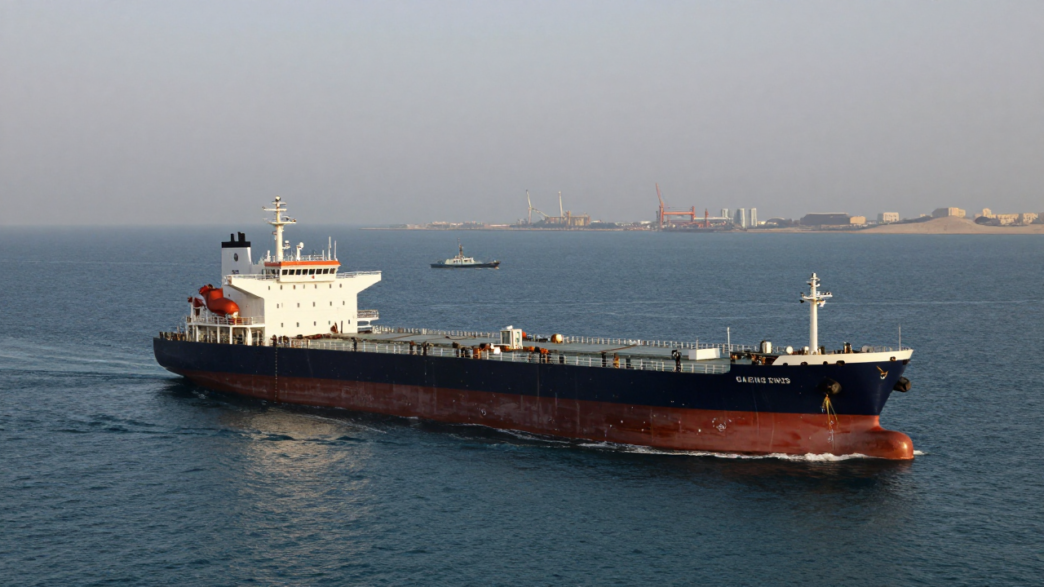
Al Jazeera reported on October 8 that a tanker was hit by multiple projectiles off Qatar’s northern coast, citing the United Kingdom Maritime Trade Operations agency. The incident came amid a wider increase in reported attacks on vessels in the strategically important Strait of Hormuz, a route linking the Persian Gulf to international shipping lanes.
Investing.com said maritime security agencies had reported increased drone and missile strikes on commercial tankers and energy vessels transiting the Strait of Hormuz and Red Sea shipping lanes. Its account linked the renewed concern to higher perceived risks for cargo movements, including potential delays and rerouting. The available reporting did not establish that Thursday’s tanker incident had directly interrupted gas deliveries to Europe.
The distinction matters because a security incident can raise market concern even before a measurable shortfall in supply is reported. European gas buyers depend in part on LNG shipped by sea, and uncertainty over routes and schedules can affect expectations about how readily cargoes will reach receiving terminals.
Storage is rising, but does not remove exposure
Gas Infrastructure Europe data cited by Investing.com put EU underground storage at 72.83% of capacity, compared with 66% a month earlier. The continuing injection season provides a buffer as the heating season approaches, but storage levels alone do not resolve concerns about future imports or the rate at which reserves can be replenished.
The Investing.com report also said trading desks were watching downward revisions to temperature forecasts for northwestern Europe and the possibility of earlier heating demand. Those forecasts are market considerations, not confirmation of a particular level of consumption; the report provided no quantified demand estimate or revised official outlook.
European storage has a dual role: it holds gas already delivered to the region and can help meet demand when consumption rises or imports are constrained. Its protection is therefore partial. The significance of any shipping disruption depends on its duration, the amount of supply affected and the availability of alternative deliveries—details that were not specified in the reporting on Thursday.
Prices reflect competing supply signals
The reported advance shows how a renewed geopolitical risk premium can offset reassurance from rising inventories. Investors were responding not only to the latest reported attack, but also to uncertainty around whether commercial vessels could continue to travel safely and whether LNG cargo schedules might be affected.
Investing.com described the earlier part of the week as a lull that had been reversed by the latest security concerns. The report did not provide a detailed price history for the week, trading volumes, analyst forecasts or a breakdown of how much of Thursday’s move was attributable to shipping risks rather than other market factors. The figures are therefore a snapshot of the contracts at the time covered, not a full account of the day’s closing market.
The Dutch contract is a key reference point for continental European gas trading, while the British contract quoted in pence per therm reflects a separate market. Their simultaneous gains indicated a broader regional reaction, but the available account did not establish that prices rose by the same amount across all European hubs or delivery periods.
What remains uncertain
As of the reports available on Thursday, the central unknowns were whether shipping incidents would continue, whether they would cause vessels to change routes or schedules, and whether any disruption would affect LNG arrivals in Europe. No specific cargo cancellations or European supply shortfalls were identified in the coverage.
Storage injections and weather developments remain important counterweights as winter approaches. But the immediate market response underscores that Europe’s supply outlook is also sensitive to conditions along maritime routes. Further price moves will depend on new security reports and evidence of any actual effects on cargo movements; the reporting reviewed did not give a timetable for when those effects, if any, might become clear.