

Updated:
Vistra shares pared losses on Friday, October 2, after Bloomberg reported that the Trump administration plans to offer the electricity producer a loan package of about $4 billion to upgrade three of its nuclear plants. Investing.com reported that the stock was down 0.3% at $139.20 in afternoon trading, after touching a session low of $135.79.
The reported financing would support work at Vistra’s Perry and Davis-Besse plants in Ohio and Beaver Valley in Pennsylvania, according to people familiar with the matter cited in the report. The proposed package has not been publicly detailed by the company or the government; its terms, timing and approval status were not established in the available reporting.
Report concerns three plants in the PJM region
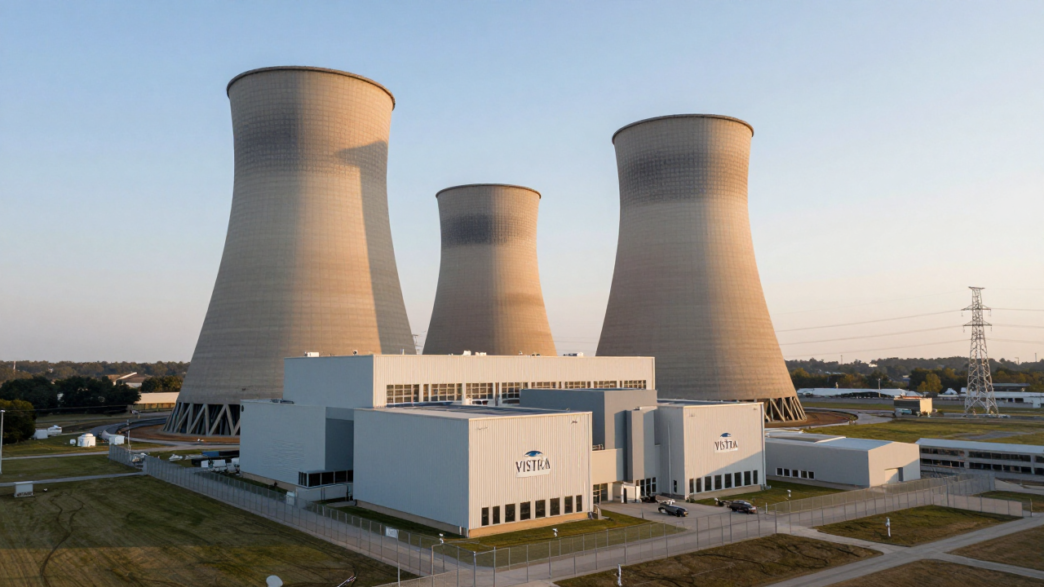
The three facilities are part of Vistra’s nuclear fleet in the PJM Interconnection, a regional grid operator serving parts of the Mid-Atlantic and Midwest. Perry and Davis-Besse are in Ohio, while Beaver Valley is in western Pennsylvania. Their location matters because planned output increases would feed a region facing growing electricity demand, including from data centers.
Vistra has already outlined capacity uprates at the three plants. In a January 2026 announcement, the company said planned equipment upgrades would add a combined 433 megawatts: 213 MW at Perry, 80 MW at Davis-Besse and 140 MW at Beaver Valley. The company described the additional output as part of a wider agreement to supply Meta with nuclear power and capacity.
Existing Meta agreements provide a commercial backdrop
Vistra and Meta announced 20-year power purchase agreements in January for a total of 2,609 MW of carbon-free power and capacity from Vistra’s plants in PJM. That figure includes 2,176 MW from existing generation at Perry, Davis-Besse and Beaver Valley, plus the 433 MW of planned uprated capacity. The agreements are a commercial commitment, not confirmation that the reported federal loan has been approved.
Vistra’s announcement said deliveries would begin in late 2026, with additional capacity coming online over time as the upgrades are completed. Its SEC filings say the uprates are expected to begin contributing a portion of their output by 2031, with full delivery of the planned 433 MW by the end of 2034. The timeline reflects a multi-year construction and commissioning process rather than an immediate increase in generation.
Loan details and next steps remain unclear
The reported $4 billion package would be substantial, but the information available on Friday did not specify whether it would be a direct loan, a loan guarantee or another financing structure. It also did not identify the interest rate, repayment period, conditions, or how much of the reported amount would be allocated to each plant. Those details would determine how the support could affect project financing and Vistra’s capital needs.
Nor did the report establish a public application, conditional commitment or closing date. Until Vistra or the Energy Department provides further information, the loan should be treated as a reported plan rather than finalized government financing. The company’s published plans for the uprates and its agreements with Meta remain separately documented.
Shares had fallen to an intraday low
Vistra’s Friday share-price movement showed a partial recovery from the day’s low after the loan report, but the stock remained slightly lower in the afternoon snapshot reported by Investing.com. The available figures do not establish the reason for the earlier decline, and the modest rebound alone does not show how investors assessed the proposed financing.
The next concrete milestones are disclosures about the reported package and progress on Vistra’s already announced plant upgrades. Until financing terms or an official commitment are made public, the scale and timing of any federal support remain unknown.