

Updated:
Electrical-equipment makers are benefiting from two sources of demand: investment in power grids and the expansion of artificial-intelligence data centers. But a sector screen published by Investing.com on October 2, 2026, cautioned that strong growth expectations have also pushed many stocks to valuations that leave less room for disappointment.
The report described its figures as snapshots and used U.S. electronic and electrical-components companies with market capitalizations above $2 billion as a proxy for the sector. It did not include several widely watched power-equipment companies, including GE Vernova, Eaton and Forgent Power Solutions, in its valuation comparison, limiting how broadly its stock-level conclusions can be applied.
Grid investment and equipment shortages underpin demand
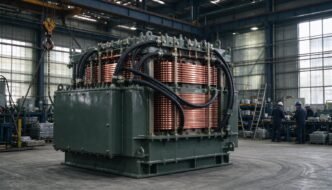
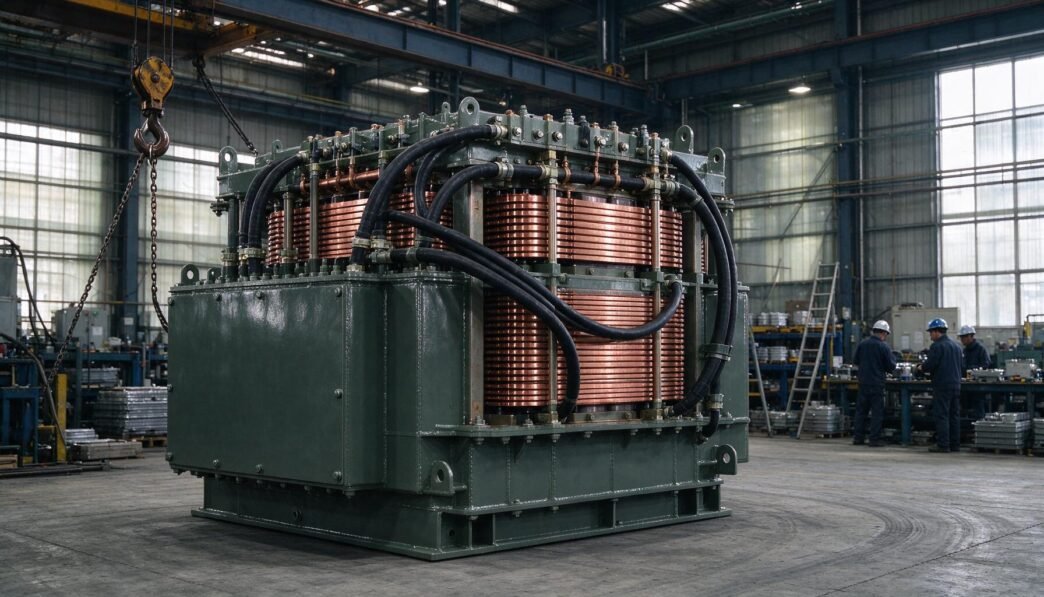
Demand is tied in part to electricity infrastructure that needs to serve rising loads. The U.S. Department of Energy has said that domestic grid supply chains face limited production capacity and that lead times for some critical equipment have reached two years or more. The department has also identified transformer production and standardization as areas where industry coordination could help ease constraints.
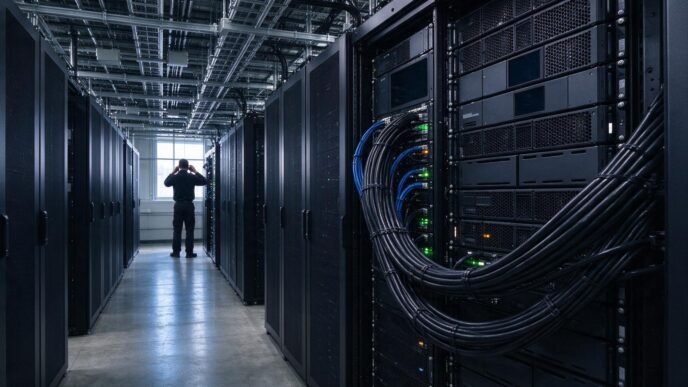
Data-center construction adds another source of demand for equipment used to distribute and manage electricity. The Investing.com report characterized spending on AI infrastructure as a significant growth driver, alongside grid modernization and electrification. Those drivers support the sector’s outlook, but do not guarantee that every supplier will translate demand into revenue, earnings or cash flow at the pace reflected in share prices.
Long delivery times can be consistent with tight supply, but the report’s broad claim that they give manufacturers pricing power should not be taken as proof that every company can raise prices or protect margins. Individual results depend on product mix, customer contracts, component costs, manufacturing capacity and whether projects proceed on schedule.
The valuation screen shows a mixed picture
Within the report’s selected-company sample, Amphenol had a cited forward price-to-earnings ratio of 30.3 and a 39.6% one-year share-price gain. The screen also cited revenue growth of 54.2%, while its fair-value model indicated 10.7% downside. These are the report’s measurements, not a guarantee of future returns or a comprehensive assessment of the company.
Other entries offered a different combination of growth and valuation signals. TE Connectivity was listed at 18.8 times forward earnings, with a 0.1% decline over one year and a modelled 11.6% fair-value upside. Zebra Technologies was listed at 17.2 times forward earnings and a 7.2% modelled upside. The screen also reported that Fabrinet’s shares had risen 22.2% over a year, while its fair-value estimate implied 3.6% downside.
Several companies with large share-price gains showed negative fair-value estimates in the screen: Flex was up 94.1% over one year with 5.4% modelled downside, and Sanmina was up 90.1% with 7.2% downside. The report also put Corning’s modelled downside at 27.6% and Jabil’s at 12.2%. Because the article did not detail the valuation model’s assumptions or provide a full methodology, those estimates are best understood as screening outputs rather than objective measures of intrinsic value.
Reported company growth does not remove execution risks
Forgent Power Solutions, excluded from the valuation table, provides a separate example of how demand may appear in company results. In its fiscal fourth-quarter results, the company reported revenue of $462 million, up 94% from a year earlier, and bookings of $1.5 billion, up 375% year over year. The figures point to sharply higher orders and sales at that company, but do not establish that the same growth rates apply across electrical-equipment manufacturers.
Bookings and backlog also have to be converted into shipments and recognized revenue. Forgent has warned in its investor materials that changes in demand, raw-material costs, tariffs, supply disruptions and delays to capacity expansions could affect its results. Its disclosures note that backlog may not produce revenue or profit in the amount or timeframe expected.
What remains uncertain
The Investing.com screen reported that only TE Connectivity and Zebra Technologies had positive fair-value upside among the companies it highlighted, while some analyst price targets were more optimistic for other names. These are competing estimates based on different methods; the report’s figures do not establish which outlook will prove more accurate.
The central tension is therefore between structural demand and the prices investors already assign to suppliers. The Department of Energy’s documentation supports the existence of grid-equipment supply constraints, while company results such as Forgent’s show that rapid growth is possible for some businesses. The screen offers a limited snapshot, however, and does not settle whether earnings growth will be sufficient to justify elevated valuations across the wider electrical-equipment industry.