

Updated:
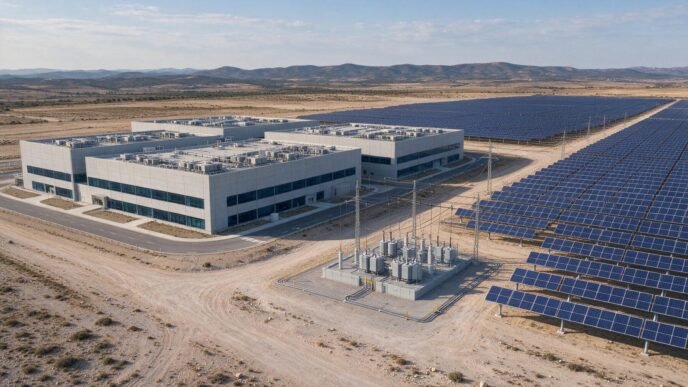
Aragón, a sparsely populated region in northeastern Spain, is attracting more than €60 billion ($67.55 billion) in planned data-center and digital-infrastructure investment over the coming decade. Companies and regional officials credit a fast-track permitting system with helping draw the projects, including major plans from Amazon and Microsoft. The investment could make Aragón one of Europe’s fastest-growing digital infrastructure hubs, while intensifying questions about electricity, water, public scrutiny and the benefits reaching local communities.
The scale of the proposals also puts the region at the center of a wider Spanish debate over how quickly data centers should be approved and what obligations they should meet. Spain’s national government is developing new rules for the sector, while local critics say accelerated procedures can limit meaningful review and leave small municipalities to negotiate the consequences of large developments largely on their own.
How Aragón’s permitting system works
Aragón offers qualifying developments a designation known as a Project of General Interest of Aragón, or PIGA. Reuters reported that the status can bring faster planning decisions, facilitate land expropriations and provide local tax breaks. A regional investor service helps companies navigate applications and gives weekly progress updates; the regional government says the process organizes complex procedures rather than dispensing with legal requirements.
According to the Reuters report, PIGA status can reduce approvals that might take years to less than 12 months. A dozen company officials, experts and campaigners interviewed by Reuters identified the region’s governance and permitting approach as a particularly important draw, alongside available land, renewable energy and Aragón’s position near major international cable routes.
Regional project records illustrate how the designation is being used. Aragón’s government has published information on PIGA proceedings for Microsoft’s planned data-center region and for an expansion of Amazon Web Services’ Aragón operations. These records document specific project processes; they do not, by themselves, establish that every proposed development will be completed on its announced timetable.
Amazon and Microsoft anchor the investment plans
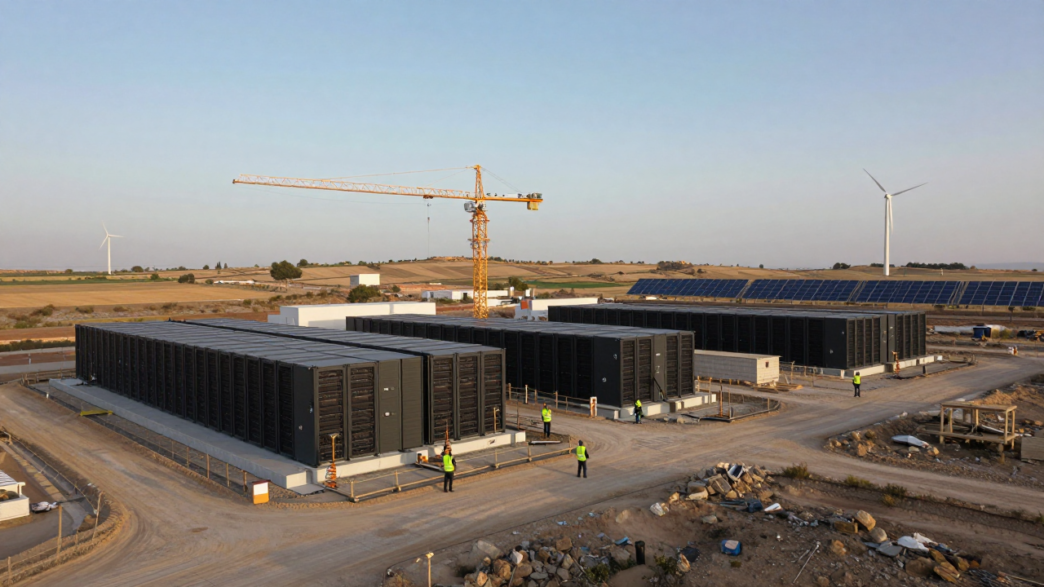
Amazon is investing €33.7 billion ($38.4 billion) in cloud services and artificial-intelligence infrastructure in Aragón, Reuters reported, describing it as the company’s largest investment of this kind outside the United States. Construction was under way near Villanueva de Gállego, north of Zaragoza, with hundreds of workers on site. Reuters said the project moved through most of its permitting process in about a year.
Regional data cited by Reuters showed that authorities had fast-tracked more than a dozen large data-center projects, including projects for Microsoft and other companies. Microsoft plans to invest up to €10 billion in Aragón, according to the report. Spanish property company Merlin Properties also has a €1.2 billion project among the developments receiving accelerated treatment.
The announced sums are plans and investment commitments, not a single measure of money already spent or facilities already operating. The overall €60 billion figure covers data centers and digital infrastructure across the coming decade, and its eventual economic impact will depend on which projects proceed, their construction and operating schedules, and the infrastructure needed to support them.
Scrutiny and the distribution of local benefits
Opponents argue that faster procedures can weaken public and environmental accountability. Manuel García, a researcher at Spain’s state-run science and technology centre CSIC, told Reuters that reducing administrative steps such as public consultation can make genuine scrutiny difficult. As an example, he cited a 23-day public review period at the end of 2024 for about 25,000 pages of Amazon project documentation.
Environmental group Ecologistas en Acción has challenged the fast-track treatment granted to Amazon in what Reuters described as a case believed to be Spain’s first lawsuit targeting a major data-center development. The legal challenge remains unresolved; experts cited by Reuters said a ruling could take years, potentially after facilities have begun operating.
Questions about local compensation have also surfaced in Aragón. In September, Calatorao’s mayor, David Felipe, told Cadena SER that the municipality had limited contact with the regional government over Blackstone-backed plans for a data-center complex. He said the PIGA approval meant the town would not receive certain construction-related fees and taxes, and that the municipality had negotiated directly with project manager QTS for a €3 million contribution to improve its water-supply network.
Felipe said a small municipality faced a difficult negotiating position when dealing with a large company. His comments concern the Calatorao project and do not establish that other towns have the same arrangements. They underscore a wider issue raised by critics: whether the economic gains from large developments will be shared with the communities hosting them, and how local services will handle associated demands.
National rules could change the outlook
Spain’s central government is preparing stricter proposed requirements for data centers, including rules concerning water and electricity use. The draft has drawn criticism from Aragón’s authorities and companies, which warn that additional conditions could put planned investments at risk. The debate has sharpened as electricity demand from the sector grows and Spain continues to address the consequences of a major blackout in the previous year, Reuters reported.
On October 6, El País reported that the government aimed to take the data-center decree to the Council of Ministers in late October or early November, although the timetable could shift. Its reporting said the proposal still faced required procedural steps, including review by the Council of State, and had attracted more than 600 submissions. The final version and its precise requirements were therefore not settled at the time of publication.
Amazon and Microsoft said their Aragón plans remained unchanged. Amazon urged Spain to align its rules with emerging European Union frameworks, while Microsoft emphasized legal certainty and predictable conditions for long-term investment. The European Commission has separately proposed data-center rules that include faster permitting; both companies cited Aragón favorably in submissions to the Commission.
The immediate questions are whether the regional projects advance through permitting and construction as planned, and what requirements Spain ultimately adopts. The proposals represent a substantial potential expansion of digital infrastructure, but their practical costs and benefits—for power and water systems, local budgets, communities and investors—will depend on project-by-project decisions and the final regulatory framework.