

Updated:
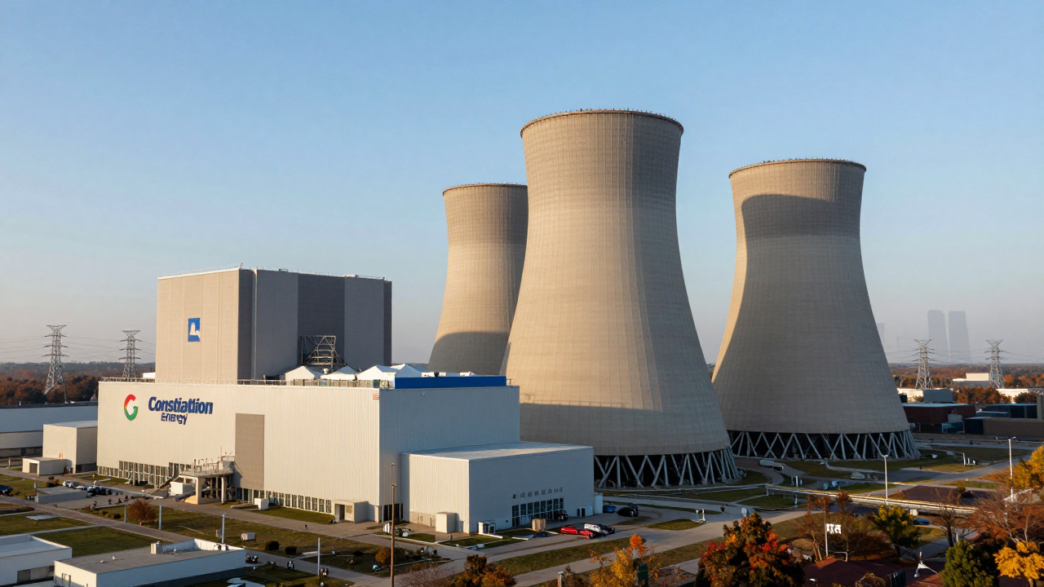
Constellation Energy shares rose about 5% in premarket trading Tuesday, Oct. 6, after the company and Google announced a 20-year power purchase agreement tied to 890 megawatts of additional nuclear capacity for the PJM Interconnection grid. The agreement will fund efficiency upgrades at 11 Constellation-owned nuclear units in Illinois, Pennsylvania and New Jersey, with the first added capacity expected by 2028.
Constellation said it plans to invest more than $4.3 billion in the upgrades, which it says will increase the plants’ thermal and electrical efficiency and add generation to the regional grid. The companies also announced a separate 15-year agreement covering 2,700 megawatts from Constellation’s existing PJM fleet, as well as a five-year technology partnership involving Google Cloud and Gemini Enterprise.
Upgrades aim to add power at existing plants
The 890 MW is expected to come from work on operating reactors rather than construction of a new nuclear plant. The companies described the planned changes as uprates: equipment and technology improvements intended to allow existing units to produce more electricity. Their announcement said the added capacity would increase total generation available across PJM.
Constellation’s investment is expected to support about 4,400 existing jobs and create roughly 7,200 construction jobs during the building period, according to the companies. The announcement did not provide a project-by-project breakdown of the 11 units, the investment timetable or the expected cost allocation among upgrades.
The first uprate is expected to deliver capacity in 2028, but the companies have not announced a full schedule for the remaining work. The timing and amount of additional output will depend on carrying out the plant upgrades and the relevant project processes; the release did not provide further milestones.
Separate agreement covers existing generation
The additional 2,700 MW agreement is distinct from the 20-year arrangement supporting new capacity. It covers power from Constellation’s operating generation assets in PJM over 15 years, according to the announcement. The companies did not disclose financial terms for either power agreement.
That distinction matters to understanding the deal’s scale: 890 MW represents planned incremental output, while the 2,700 MW agreement concerns energy and capacity from the existing fleet. The terms published Tuesday do not say that the existing-fleet agreement itself will add generating capacity.
PJM operates the regional grid serving parts of the Mid-Atlantic and Midwest, and the companies said it serves 67 million people. Google said the deal is intended to add supply alongside its growth, while Constellation characterized the collaboration as a way to invest in grid infrastructure through private-sector agreements.
Technology partnership and demand flexibility
Constellation also selected Google Cloud and Gemini Enterprise under an expanded five-year technology alliance. The companies said they would develop AI applications for energy operations, including work on capacity delivery, asset dispatch and infrastructure protection. The announcement describes intended uses, not completed deployments or measured results.
The commercial arrangement also includes demand flexibility, under which non-critical electricity use could be curtailed during periods of grid stress. The companies said this feature is designed to complement additional supply. They did not detail how much demand might be reduced or the specific circumstances that would trigger curtailment.
Google said the arrangement is designed to bring new capacity to PJM without shifting the cost of that new supply to residential customers. That is a stated aim of the companies’ agreement; the release did not outline a regulatory determination or provide detailed ratepayer protections beyond the commercial structure.
Shares respond as tech firms seek firm power
Investing.com reported Constellation shares were up about 5% in premarket trading following the announcement. That was a snapshot before the regular session, not the final daily performance. The report also noted Google and Constellation entered the agreement as electricity demand grows from digital infrastructure and other sectors.
The 20-year contract gives the planned upgrades a long-term commercial framework, while the separate 15-year agreement addresses existing generation. Still, Tuesday’s announcement leaves key details undisclosed, including the power purchase price, the precise allocation of investment across plants and the sequence for delivering capacity beyond the initial 2028 milestone.
What comes next
The next stated milestone is the expected delivery of the first uprate in 2028. Constellation and Google also said they would evaluate further opportunities in clean generation, energy storage and demand response, initially focusing on PJM. They did not identify specific projects or announce commitments under that broader framework.
For now, the confirmed agreements combine planned nuclear plant efficiency upgrades, a long-term purchase arrangement and a separate contract for existing fleet output. Whether the expected capacity arrives on schedule, and how the undisclosed financial terms affect the companies, remains to be seen.