

Updated:
Attacks on commercial vessels in and around the Strait of Hormuz have intensified even as Gulf oil exports recovered to prewar levels on several days in September, underscoring the gap between rising supply and the continuing danger to shipping. The United Kingdom Maritime Trade Operations agency reported nine attacks in the waterway during October, according to an October 6 report by Investing.com, while Reuters reported at least seven tanker incidents in the past week based on maritime intelligence firm Marisks.
The incidents have not yet produced a clearly measurable, sustained fall in shipments. But shipping executives and security officials cited by Investing.com said it was too soon to know whether the escalation would change traffic, and the vessels’ exposure matters for oil and liquefied natural gas supplies moving through a route central to world energy markets.
Recent incidents put tankers at risk
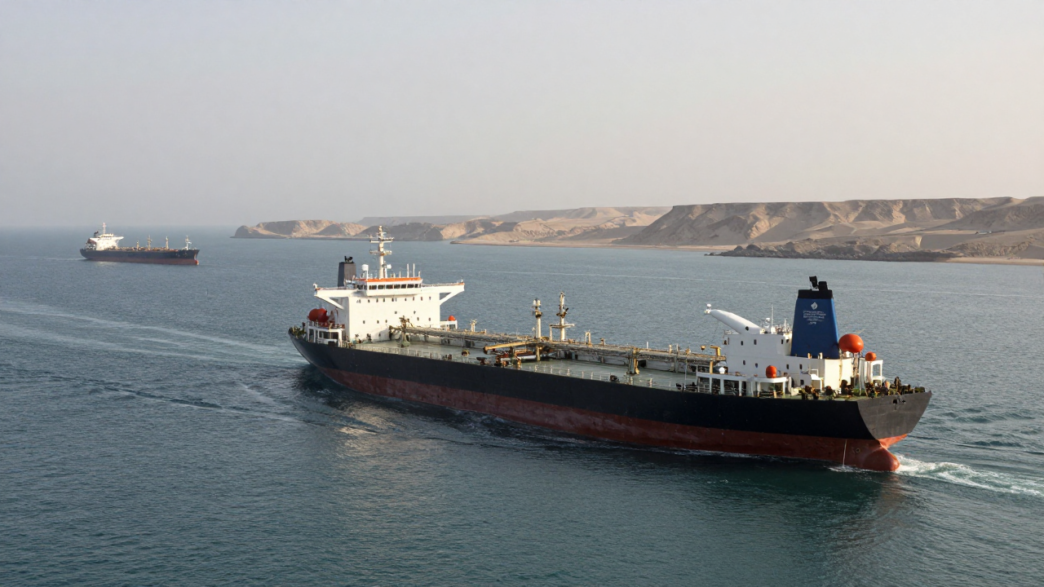
Reuters reported that the very large crude carrier Kazimah III was struck by an unknown projectile in the strait on October 1, starting a fire aboard. Marisks said the Liberian-flagged Aframax tanker Lipsi was hit by an unknown projectile while transiting northeast of Oman’s Jazirat Um Al Fayarin on October 4, damaging its engine room.
Marisks said the crews of both vessels were safe and that no casualties had been reported. The vessels’ respective owner and manager had not responded to Reuters’ requests for comment at the time of its report. The accounts did not establish who launched the projectiles; the incidents should therefore not be treated as confirmed Iranian attacks on those named ships.
Marisks said the latest pattern might not reflect deliberate selection of individual merchant vessels. The firm raised the possibility that missiles were being fired into a predetermined engagement area and could acquire radar signatures within it. That is an assessment, not a confirmed explanation of the incidents.
Export data show a recovery, not an all-clear
Provisional Kpler data cited by Reuters put the seven-day moving average for regional crude exports at 18.3 million barrels per day on September 30. Exports exceeded prewar levels on 14 days that month, while the average during the 12 months before the U.S.-Israeli war with Iran began on February 28 was about 18 million barrels per day.
The regional total includes oil carried through Hormuz as well as shipments routed through the Red Sea and volumes loaded at terminals or transferred between ships in the Gulf of Oman. It therefore does not mean that traffic through the strait alone returned to its former level. Vortexa separately put its 14-day average for Middle East crude and condensate exports at 18.6 million barrels per day, describing that figure as back at pre-conflict levels.
September’s recovery also extended to liquefied natural gas: Reuters reported that LNG cargoes leaving the strait rose to their highest level since February. Investing.com said oil shipments through Hormuz had climbed steadily since early summer and that some banks saw them approaching prewar levels, although traders at an industry forum in London put wider Middle East flows at around 80% of prewar volumes.
Saudi shipments and workarounds support supply
Saudi Arabia helped drive the September increase by loading crude from both Red Sea and Gulf terminals, Kpler said, three weeks after a September 10 attack on its East-West pipeline. The renewed use of Gulf routes alongside Red Sea exports contributed to the region’s overall rebound, but also highlights how export totals depend on several routes rather than the strait alone.
Reuters reported that the recovery required additional supertankers to shuttle crude through Hormuz. Trade sources and analysts said ship-to-ship transfers in the Gulf of Oman had reached their limits, a potential constraint on the workarounds that have helped keep oil moving.
Iraq’s state-owned Oil Tanker Company and some refiners chartered vessels to load Basrah crude inside the strait after Baghdad secured Iranian permission in August for Iraqi tankers to transit, Reuters reported. Saudi loading patterns and these Iraqi shipments show how individual export decisions and access arrangements have shaped the flow data; they do not remove the security risks faced by crews and operators.
Traffic and market effects remain uncertain
UKMTO has reported at least one attack a day in either the Strait of Hormuz or the Gulf of Aden since October 2, Reuters said. In its October 6 account, Investing.com noted that September’s total for the Strait of Hormuz and Persian Gulf included four attacks in the month’s final two days, suggesting the recent increase followed a late-September rise as well.
Before the conflict began, the strait typically handled about 125 large commercial vessels a day, including tankers, gas carriers, bulk carriers and container ships. Reuters said the route accounted for about 20% of global crude and LNG supply, making any sustained interruption consequential even if regional exports can be rerouted or supplemented by transfers elsewhere.
Investing.com reported that several consuming nations announced plans the previous week to release millions of barrels from emergency stockpiles. It also said U.S. President Donald Trump was examining options to reduce domestic fuel prices ahead of midterm elections. Those measures address supply and price concerns, but the reporting did not establish whether the new attacks would disrupt exports or alter stockpile plans.
Many tankers transiting Hormuz use a corridor near Oman’s coast and switch off their digital tracking signals, according to Investing.com, leaving traders and analysts to rely on satellite imagery and other shipping data. That complicates real-time measurement. Neither the cited reports established a confirmed schedule for further action or whether attacks would subside; the effect on oil and gas flows remains uncertain.