

Updated:
Brazil’s government cut its 2026 trade-surplus forecast to $84.4 billion from $90 billion on October 6, citing weaker export growth than previously expected. The revision came on the same day the country reported a September surplus of $7.741 billion, well above economists’ expectations of about $7.2 billion.
The Ministry of Development, Industry, Trade and Services now projects exports of $382.5 billion this year, down from its July estimate of $394.4 billion. It also lowered its import forecast to $298.1 billion from $304.4 billion. The changes point to a smaller expected surplus even as the latest monthly balance showed a substantial year-on-year increase.
September surplus beats forecasts
Brazil’s September surplus was 146.4% higher than the same month a year earlier, according to figures released by the ministry. Exports totaled $34.418 billion and imports $26.678 billion, leaving a positive balance of $7.741 billion.
The result exceeded economists’ consensus estimate of approximately $7.2 billion. September’s performance does not, by itself, reverse the government’s full-year reassessment: the annual projection incorporates expectations for trade over the remaining months as well as the data already recorded.
Both annual trade estimates revised down
The new projections lower expected exports by $11.9 billion and imports by $6.3 billion compared with the ministry’s July estimates. Because the export estimate was reduced by more than the import estimate, the projected surplus narrowed by $5.6 billion, from $90 billion to $84.4 billion.
The ministry’s stated reason for cutting the surplus outlook was weaker anticipated export growth. The available report does not identify a detailed breakdown of how much of the change came from individual products, destination markets or assumptions about prices and volumes, so the revision should not be attributed to a specific trade partner or commodity without further evidence.
Commodities underpin export growth
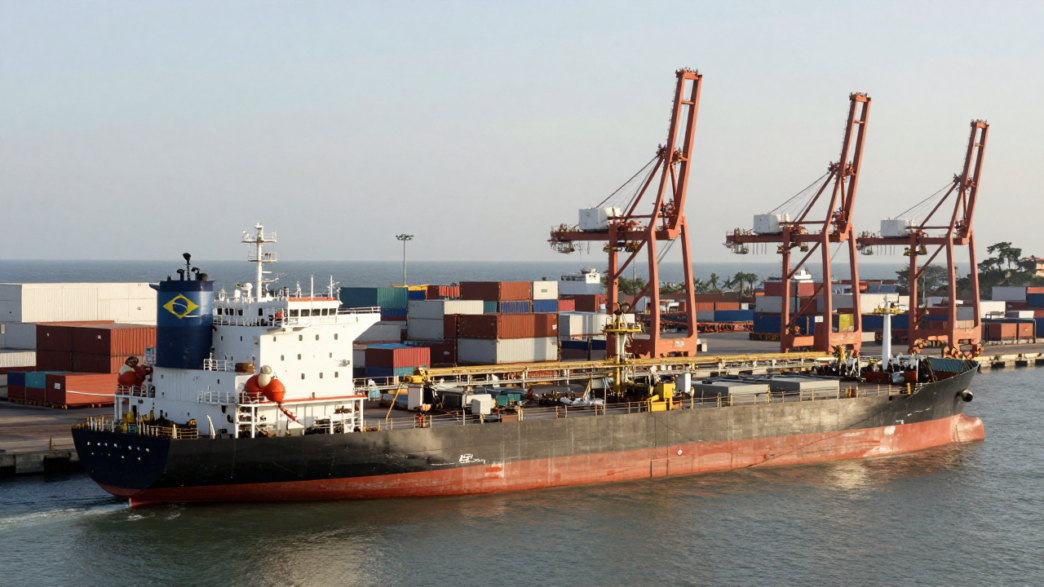
Brazil’s year-to-date exports have been supported by shipments including soybeans, crude oil, copper ore, beef and fuels, the ministry’s reporting said. These products connect the trade balance to agricultural harvests, energy production and international demand for raw materials, though the figures available do not quantify each product’s contribution to the September surplus.
Oil provided a notable part of the month’s export story. Reuters reported on October 6 that Brazil exported a record 11.7 million metric tons of crude oil in September, 42.2% more by volume than a year earlier. Export revenue from crude reached about $6.5 billion, up 77.3%, with the rise reflecting both greater volume and a higher average export price.
Reuters said the average export price for Brazilian crude was $556 per ton, 24.7% above September 2025. It also reported that production growth from offshore pre-salt fields, including Búzios and Mero in the Santos Basin, contributed to the country’s rising output. These oil figures provide context for one export category but do not explain the government’s entire annual forecast reduction.
Surplus remains above the 2025 level if forecast holds
The government’s revised $84.4 billion projection would still represent a surplus 24% above the 2025 result, according to the report. That comparison indicates the reduction is from the government’s own earlier expectation, not a forecast that Brazil’s goods trade will move into deficit or that the surplus will necessarily contract from last year.
Trade balances are calculated from the difference between exports and imports of goods. Brazil’s September release therefore offers a monthly snapshot, while the annual estimate remains a forecast subject to later trade data and possible revisions. The ministry’s current projections show both flows lower than it anticipated in July, with the sharper downgrade to exports driving the reduced expected balance.
What remains to be established
The September trade release and the revised annual projections were published on Tuesday, October 6. The reporting available does not specify a subsequent date for another forecast update or provide ministry commentary beyond the explanation that weaker export growth prompted the revision.
Further monthly releases will show whether September’s strong surplus is sustained and how actual exports and imports compare with the new annual estimates. For now, the verified figures show a strong September result alongside a lower full-year outlook: Brazil’s monthly surplus beat expectations, but the government expects export performance over 2026 as a whole to fall short of its July projection.