

Updated:
BorgWarner shares climbed in morning trading on Tuesday, October 6, after Morgan Stanley upgraded the auto-parts supplier to Overweight from Equal-weight and raised its price target to $95 from $71. The move followed the firm’s reassessment of BorgWarner’s established combustion-engine and hybrid businesses, alongside the potential for its emerging turbine-generator work to supply data centers.
Reuters reported the shares were up about 5.3% in premarket trading at $63.40, compared with Monday’s $60.26 close. The $95 target implies substantial upside from that closing price, but it is Morgan Stanley’s forecast, not a company projection or guaranteed outcome. Investing.com’s same-day report described the stock as up 5.2% in morning trading.
Morgan Stanley sees two sources of earnings potential
The upgrade rests on two parts of BorgWarner’s business, according to the reporting on the analyst call. Morgan Stanley pointed to resilient demand for vehicles using internal-combustion engines and hybrids, while also highlighting the company’s opportunity to manufacture turbine-generator systems for on-site electricity generation.
The analyst case reflects a changing outlook for vehicle powertrains: a slower-than-expected shift to fully electric vehicles could support demand for combustion and hybrid components for longer. The data-center business, meanwhile, could give BorgWarner a route to sell its engineering and manufacturing capabilities beyond automotive customers. These are Morgan Stanley’s arguments for the upgrade, rather than guarantees about future demand or earnings.
Reuters reported that Morgan Stanley expects the new power-generation activity to become a higher-margin source of growth and sees contracting activity accelerating by 2027. The bank also identified a risk: customers must first adopt the product. That qualification matters because the projected financial contribution depends on commercial orders and delivery, not merely on the existence of a product or factory plan.
TurboCell links BorgWarner to data-center demand
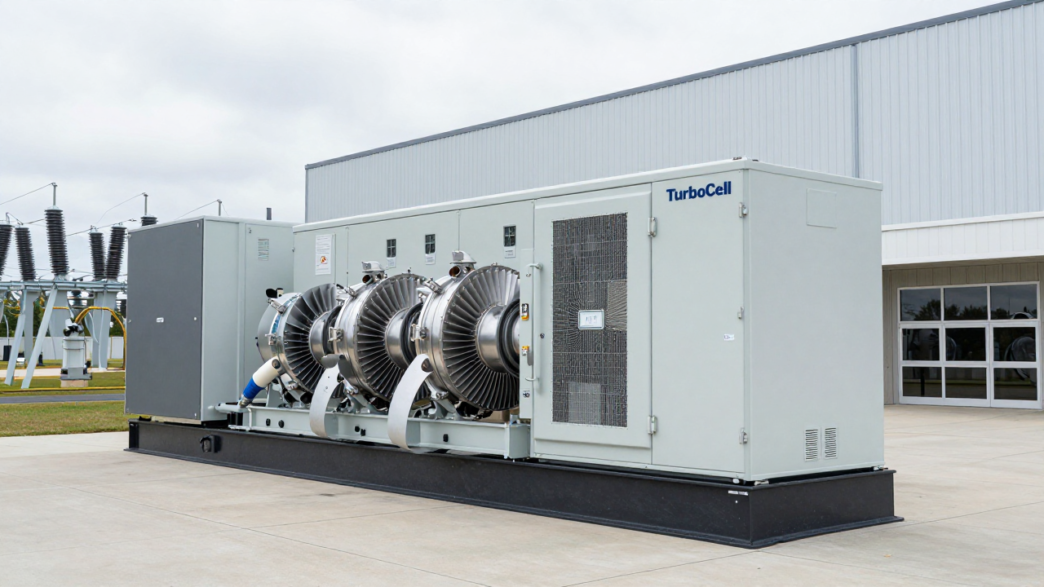
BorgWarner announced in February that it had signed a Master Supply Agreement with TurboCell, a subsidiary of data-center infrastructure developer Endeavour, to supply a modular turbine-generator system. The company said the equipment is intended for applications including backup and prime power, and could serve large AI campuses as well as microgrids.
BorgWarner’s announcement said production is expected to begin in Hendersonville, North Carolina, in 2027, with initial capacity of 2 gigawatts. The company said it expects to control about 65% of the system’s content, using capabilities including turbocharging, thermal management, power electronics, software controls and high-speed electric machinery. Those are company plans and expectations; the release did not establish that the full planned capacity is already operating or that customer deliveries have begun.
Morgan Stanley’s forecast, as reported by Investing.com, put the segment’s potential 2030 contribution at roughly $1.2 billion in EBITDA, or about 35% of BorgWarner’s total earnings. This is an analyst estimate for a business that has yet to begin commercial production, not a figure BorgWarner has included in its financial guidance. The gap between the projected contribution and the 2027 production start makes execution and customer uptake central uncertainties.
Recent results provide a different measure of the business
BorgWarner’s latest reported quarterly results offer a baseline for its existing operations. In its August 5 second-quarter release, the company reported sales of $3.648 billion, up about 0.3% year over year, while organic sales declined 1.2%. Adjusted operating margin was 11.3%, an increase of 100 basis points from the same quarter a year earlier.
Adjusted earnings were $1.42 per diluted share, up 17.4% year over year, and free cash flow was $492 million. BorgWarner raised its 2026 adjusted earnings-per-share guidance to a range of $5.05 to $5.30, from $5.00 to $5.20, while maintaining its sales, adjusted operating-margin and cash-flow expectations. The company attributed the earnings-guidance increase to the effect of share repurchases in the first half of the year.
The company’s release also documented progress on non-automotive opportunities, saying it planned to increase 2026 research-and-development spending to advance products for data-center and industrial markets. That establishes management’s stated intention to invest, but does not verify Morgan Stanley’s longer-term earnings forecast.
Next milestones and open questions
The next concrete milestones disclosed by BorgWarner are the planned 2027 start of TurboCell production in North Carolina and its third-quarter 2026 results conference call, scheduled for October 29. The company has not, in the materials reviewed, provided a confirmed start date for commercial deliveries beyond its production expectation or quantified the revenue and earnings it expects from the business.
Reuters also reported that LSEG data showed 12 of 16 brokerages rated BorgWarner Buy or better, with four at Hold and a median target of $80. Those figures provide context for Morgan Stanley’s more optimistic $95 target, but do not resolve the underlying questions: whether customer adoption will develop quickly enough, whether the planned capacity will be utilized, and how the new activity will affect consolidated results. Tuesday’s rally followed the analyst upgrade; its durability will depend on future business performance as well as investor expectations.