



Updated:
FireFly Robotics filed on Wednesday, October 7, to list its shares on Nasdaq through a direct listing, a route that would let existing shareholders sell stock publicly without the company issuing new shares or raising capital in the transaction. Registered stockholders plan to sell as many as 27.1 million common shares, Reuters reported, citing the filing.
The Salt Lake City-based maker of electric turfgrass harvesters and autonomous golf-course mowers intends to trade under the symbol FFLY. The filing marks a renewed effort to enter public markets after the company withdrew a planned conventional initial public offering in March. The timing of the listing and the price at which shares might begin trading were not specified in the available reporting.
Direct listing puts existing shares at the center
Unlike a conventional IPO that sells newly issued shares to investors, a direct listing generally enables existing holders to offer their shares for trading on an exchange. FireFly’s proposed registration of up to 27.1 million shares therefore concerns stockholder sales; it does not, on its own, indicate that the company will receive proceeds from those sales.
The registered amount is a maximum, not a guarantee that all shares will be sold when trading begins. The materials reported by Reuters did not identify the selling holders or disclose a reference price, expected opening valuation or a date for the start of Nasdaq trading. Those details may depend on further disclosures and exchange and regulatory steps.
A direct listing can provide public-market access without the conventional underwriting structure of an IPO, but does not itself ensure demand for shares or establish a stable market price. Investors will be able to assess the company’s financial disclosures and the supply of shares available for trading as the process advances.
Business spans turf harvesting and autonomous mowing
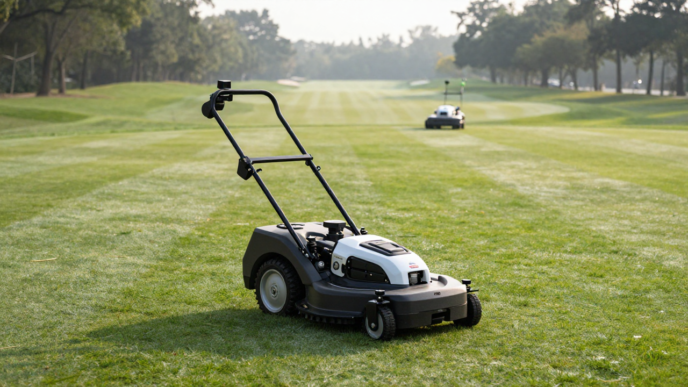
FireFly develops autonomous and semi-autonomous equipment for golf courses, sports fields and other turf-care settings, using electric-drive technology and software, Reuters reported. Its products include robotic mowers as well as automated turf harvesters, equipment used by turf farms to harvest strips of grass for landscaping and other applications.
The company said in its earlier SEC registration materials that it had developed its own software and mechatronic systems for its Precision Automated Turf Harvester, or PATH, and Autonomous Mowing Platform, or AMP. It introduced the AMP-L100 mower in late 2023 and began marketing it in 2024, according to those filings. FireFly has described its customers as including turf-harvesting businesses and golf-course operators.
Reuters reported that more than 900 autonomous mowing platforms, robotic harvesters and automated mowers were in service globally as of June 30. That installed base provides a measure of the company’s equipment footprint, though it does not by itself establish utilization, recurring revenue or profitability.
Revenue rose as six-month loss widened
For the six months ended June 30, FireFly reported revenue of $30.5 million, compared with $22.9 million in the same period a year earlier, Reuters reported. Its net loss widened to $9.1 million from $6.1 million, meaning the increase in sales did not translate into a narrower bottom-line loss during that period.
The figures offer an early financial snapshot for investors evaluating a prospective public listing, but do not establish the company’s full-year results or explain the causes of the larger loss. The SEC registration documents from FireFly’s previous IPO effort describe research and development, manufacturing and demand conditions as relevant business factors; those earlier disclosures should not be treated as a substitute for updated information in the new listing materials.
FireFly changed its name from FireFly Automatix to FireFly Robotics in June 2026, Reuters reported. The company’s prior SEC filings, made under its former name, describe a business founded in 2010 that expanded from automated turf-harvesting machinery into autonomous electric mowers.
Earlier IPO plan was withdrawn in March
In October 2025, FireFly filed to pursue a traditional IPO that was expected to raise up to about $29.3 million. The proposed offering contemplated 4.5 million shares at an indicated price range of $4.50 to $6.50 apiece, according to Reuters’ account of the earlier plan.
The company withdrew that registration in March 2026. Its SEC withdrawal filing dated March 13 referred to the registration statement initially filed in October 2025. The new direct-listing proposal is a different route to public trading: the earlier plan sought to sell newly issued shares, while the current report centers on existing stockholders registering shares for resale.
Whether the direct listing proceeds, when Nasdaq might permit trading to begin, and how many registered shares holders ultimately make available remain unresolved in the reporting available on Wednesday. The proposed symbol is FFLY, but the filing itself does not mean shares are already trading on Nasdaq.