

Updated:
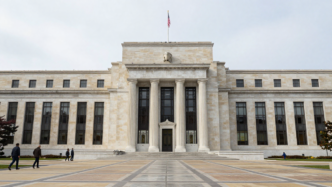
Most Federal Reserve policymakers judged that another interest-rate increase would likely be appropriate before the end of 2026, according to minutes released Wednesday, October 7, from the central bank’s September 15–16 meeting. The minutes also make clear that this was an expectation, not a commitment: officials said they would approach each meeting with an open mind and base future decisions on incoming economic information.
The release offers a view into the reasoning behind the Fed’s unanimous decision in September to raise its benchmark rate by a quarter percentage point, to a target range of 3.75% to 4%. Officials agreed inflation remained elevated, but differed over whether the increase was mainly insurance against persistent price pressures or a response to an economy strong enough to warrant more restrictive policy. The next scheduled policy meeting is October 27–28.
Officials agreed on the September increase, but not its rationale
The September move was the Fed’s first rate increase in more than three years. All participants supported it, the minutes said, citing inflation above the Fed’s 2% goal, solid economic activity and a labor market that appeared close to full employment. The committee’s vote was 12–0.
Within that consensus, policymakers described different reasons for raising rates. Many saw a higher policy path as prudent risk management against unexpectedly strong demand or further supply disruptions. Others viewed the increase as necessary under their main economic outlook, rather than simply protection against a less favorable scenario.
Some officials argued that higher rates could prevent cost increases tied to energy disruptions and artificial-intelligence investment from spreading through the wider economy. A couple also said their estimates of the neutral interest rate—the level that neither stimulates nor restrains activity—had risen. Several participants considered the existing policy rate not restrictive, or only mildly so.
Inflation and supply pressures remained central concerns
Fed staff estimated that inflation measured by the personal consumption expenditures price index reached 3.8% over the 12 months through August, while core inflation, which excludes food and energy, was estimated at 3.4%. Under a revised statistical methodology scheduled to take effect at the end of September, the staff’s estimates were lower: 3.6% for overall inflation and 3.2% for core inflation.
The minutes identified past tariffs, higher energy and input costs associated with geopolitical developments, and technology-related consumer goods prices linked to AI investment as contributors to elevated inflation. Participants also pointed to higher oil and refined-fuel prices, persistent increases in some service and goods prices, and the possibility that businesses could pass more of their costs on to customers.
Most officials viewed inflation risks as tilted to the upside. Some warned that a prolonged period of above-target inflation could influence expectations and wage- and price-setting. The minutes also recorded concerns that energy-price increases or AI-related demand could become broader and more persistent sources of inflation.
Growth was solid, while labor-market signals were mixed
The staff assessment described economic activity as expanding at a solid pace, with consumer spending firming and business investment supported by the AI buildout. The unemployment rate stood at 4.1% in July and August, while payroll gains picked up in August. A majority of participants said the labor market had strengthened somewhat, though some noted low hiring and job-finding rates and persistent long-term unemployment.
That combination complicated the policy outlook. Policymakers generally expected labor-market conditions to remain stable and judged risks to employment broadly balanced, while inflation risks were more clearly tilted upward. Some participants said aggregate wage growth was moderate and consistent with inflation returning to target; others saw demand and cost pressures as a reason not to ease off rate increases.
The Fed staff’s outlook anticipated inflation declining over time, but projected it would reach the 2% objective only in 2029. Growth was expected to pick up in the second half of 2026 and remain stronger than potential through 2028. Staff described substantial uncertainty around the forecasts, including from inflation persistence, geopolitical developments and the scale and effects of AI investment.
October decision remains open
The minutes did not specify when a further increase would occur or guarantee that one would happen. They said future decisions would depend on how incoming information affected the outlook and balance of risks. Reuters reported that investors had pulled back from expectations of consecutive increases after weaker-than-expected employment and inflation data and more cautious public comments from Fed officials.
Policymakers also discussed rising longer-term Treasury yields, which they linked in part to stronger economic data, expected borrowing for AI infrastructure and geopolitical developments. Many nevertheless judged financial conditions supportive of growth, pointing to higher equity prices and relatively narrow corporate-bond spreads. Mortgage borrowing remained a notable exception, with rates elevated and housing activity constrained.
The October 27–28 meeting is the next scheduled decision point. The September minutes establish that most participants considered another increase likely by year-end, while leaving the timing and final decision dependent on subsequent data and debate.