


Updated:
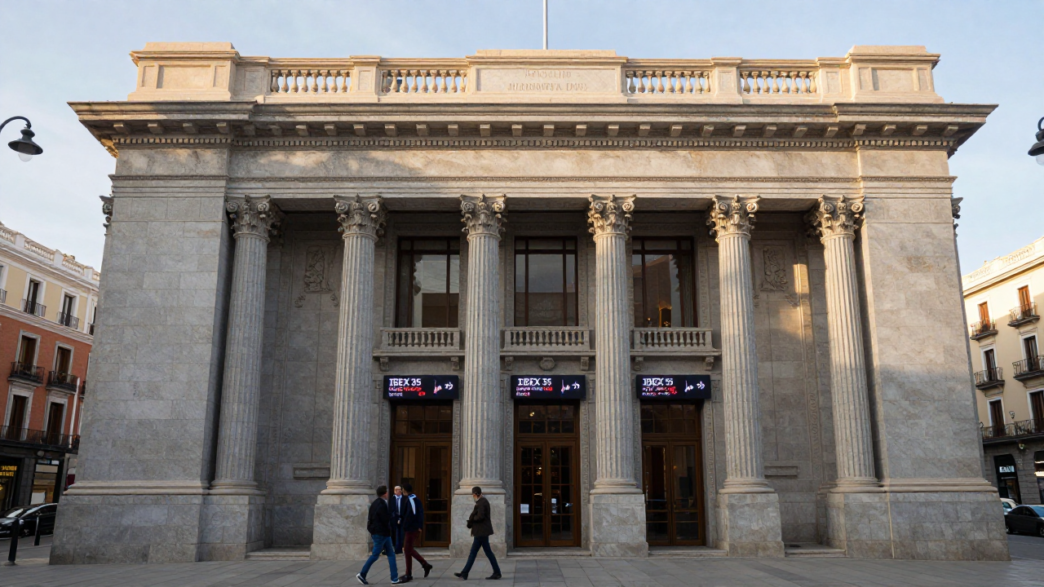
Spain’s IBEX 35 rose 0.75% on Tuesday, October 6, closing above 19,400 points as advancing shares substantially outnumbered decliners on the Madrid Stock Exchange. The benchmark had climbed more than 1% intraday and briefly reached 19,500 before surrendering part of its gains, according to Cinco Días.
The advance came amid a broader, measured recovery in European equities and a renewed rise in U.S. stocks. Softer oil prices offered some relief to investors concerned about inflation and elevated bond yields, though market coverage also described the improvement in sentiment as cautious rather than a resolution of those risks.
Gains spread across most Madrid-listed shares
Investing.com reported that 129 shares rose on the Madrid Stock Exchange, while 58 fell and 17 were unchanged. The broad participation showed that the session’s advance extended beyond the index’s largest companies, although the available reports do not quantify how much each constituent contributed to the IBEX’s gain.
Solaria Energía y Medio Ambiente led the IBEX 35, rising 3.95% to €16.59. Acciona Energía gained 2.80% to €22.02, while Banco de Sabadell advanced 2.56% to €3.65, according to the closing-market report.
Losses were concentrated in several large listed companies. Repsol fell 1.44% to €28.76, Telefónica declined 1.26% to €3.38 and Acerinox slipped 1.22% to €17.06. Their declines did not prevent the benchmark from ending higher, but they underscored the uneven performance beneath the index’s headline result.
Oil retreat eased one source of market pressure
Energy prices moved lower during the session. Investing.com’s report showed Brent crude for December delivery down 0.58% at $99.74 a barrel, while November U.S. crude futures fell 0.31% to $89.15. Cinco Días said Brent had fallen below $100 for a fourth consecutive day, linking the move to increased crude shipments by Gulf producers through the Strait of Hormuz.
Cinco Días also cited Bloomberg data indicating that Kuwait’s production had reached about 75% of levels before the war. Lower energy prices can reduce immediate inflation pressure, but the coverage did not establish that oil was the sole or direct cause of Tuesday’s equity gains; it described the decline as a source of relief for investors.
The pullback in oil came against a backdrop of ongoing geopolitical uncertainty and borrowing costs near multi-decade highs. The Spanish 10-year government bond yield stood around 4.1%, while its French counterpart was near 4.8%, according to the Spanish financial daily. Those levels remained a concern even as the rise in yields paused.
European and U.S. markets also advanced
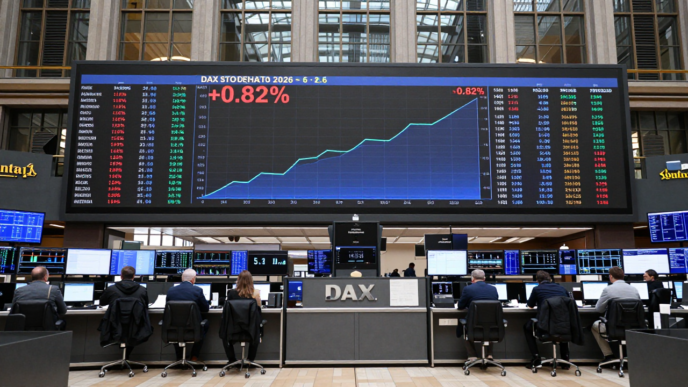
Spain’s gain broadly tracked other European markets. Cinco Días reported that major European indices advanced by roughly 0.4% to 0.8%, with Germany’s DAX at the stronger end and Britain’s FTSE at the weaker end of that range.
Across the Atlantic, the Nasdaq’s recent strength again supported broader U.S. equities. At the European close, the S&P 500 was up about 0.8% and moving toward its first record closing high since mid-August, the report said. That followed a record for the Nasdaq a day earlier, though the benchmark’s advance on Tuesday was still unfolding at the time of the European market account.
The IBEX’s move extended gains from Monday, when Spanish stocks had risen about 1.1%. Cinco Días said that earlier session was buoyed by the first-round results of Brazil’s presidential election, which lifted Spanish companies with Brazilian business exposure. Tuesday’s more moderate climb maintained the upward direction, but the reports did not identify a new Brazil-related catalyst for the later session.
Investors look ahead to U.S. earnings
Market attention is turning to the start of U.S. third-quarter earnings season next week, when major American banks are expected to report first. Cinco Días characterized expectations as demanding and noted that disappointing results could be penalized, while FactSet data cited in the report showed 44 S&P 500 companies had lowered earnings-per-share forecasts—below the average for the preceding five years.
For the IBEX, the next test is whether the day’s gains can persist as investors weigh earnings prospects against inflation, geopolitical risks and high bond yields. The reports available at publication did not specify a scheduled Spanish market event expected to drive the next session, nor did they identify a single company announcement behind Tuesday’s broad advance.