

Updated:
Oil prices climbed about 5% on Thursday, October 8, as new attacks on commercial vessels and a renewed fall in traffic through the Strait of Hormuz raised doubts about a recent recovery in Gulf oil shipments. Brent crude futures reached $104.75 a barrel by 1205 GMT, while U.S. West Texas Intermediate rose to $92.28, according to Reuters. Both benchmarks had gained more than $5 earlier in the session.
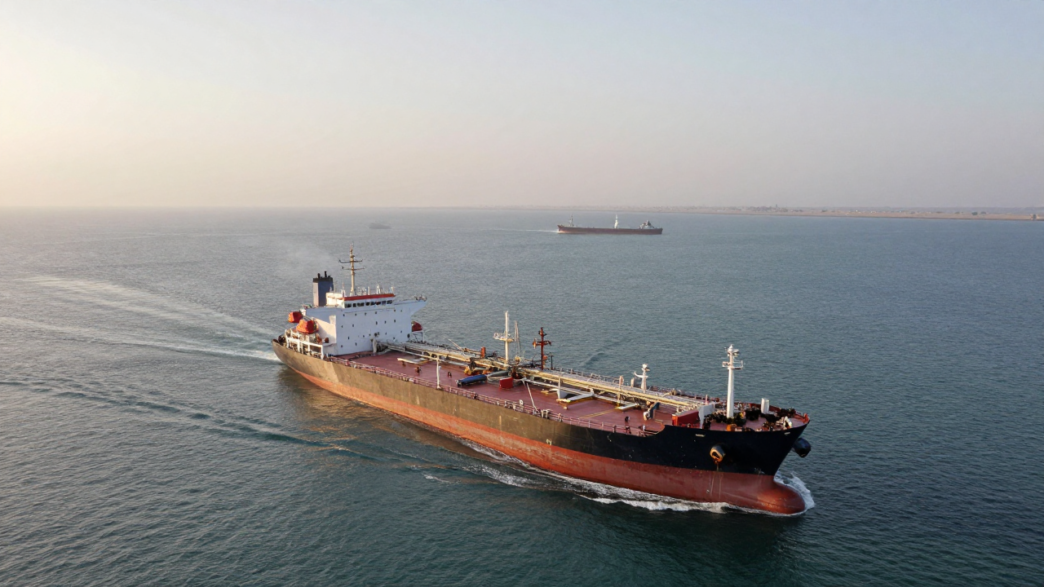
The price move followed reports of attacks on tankers in the Gulf, including a vessel struck by multiple projectiles off Qatar on Wednesday. The United Kingdom Maritime Trade Operations agency said casualties were reported but did not identify the ship or provide further details. The renewed threat comes as the waterway, which carried about a fifth of global oil and fuel shipments before the war, remains central to concerns over the region’s ability to supply world markets.
Shipping recovery loses momentum
Flows through Hormuz had improved in the second half of September, easing some supply concerns. A Financial Times report, summarized by a secondary news service, cited data from trade consultancy Kpler showing average weekly flows rising to about 15 million barrels a day in late September, nearly 90% of prewar levels.
That recovery has since reversed. The FT summary put flows at roughly 11 million barrels a day, with preliminary data showing only about 4 million barrels crossing on Tuesday. The figures suggest that a brief improvement in tanker movements has not yet translated into dependable, sustained passage through the chokepoint.
The security picture has worsened alongside the flow data. Reuters reported that attacks on tankers transiting Hormuz reached their highest weekly level since the Iran war began. The Guardian, citing maritime security sources, reported at least 12 attacks on oil, liquefied natural gas and liquefied petroleum gas tankers around the strait in the week to October 5.
Attack off Qatar adds to risk
The latest reported incident took place north of Qatar, around 500 kilometers west of Hormuz, according to the UK maritime agency as reported by The Guardian. The ship reported being hit by multiple projectiles. The agency did not identify the vessel’s origin, and responsibility for that specific attack was not established in the reporting.
The incident followed an attack on a Panama-flagged oil tanker passing through the strait. India’s foreign ministry said on Tuesday that 12 crew members were injured in that attack, The Guardian reported. Reuters also noted rising threats to shipping across the Gulf, as producers were trying to increase exports.
Market concern extends beyond whether individual ships can pass. Repeated attacks can discourage operators from making voyages through the area and raise the cost and complexity of moving cargo, while uncertainty about future transit volumes makes supply expectations harder to gauge. Reuters quoted UBS analyst Giovanni Staunovo saying renewed regional tensions had revived questions about whether higher passage volumes could be sustained.
Hormuz remains a critical supply route
Before the conflict, shipments equivalent to about 20% of global oil and fuel supply passed through Hormuz, Reuters reported. The strait links Gulf producers with international markets, leaving buyers and sellers exposed to interruptions when vessels face attacks or threats while transiting.
Iranian officials have asserted control over the waterway and threatened to close routes used by ships. The Guardian reported that Tehran said it would shut routes it considers illegal, including a southern passage near Oman’s coast. U.S. Secretary of State Marco Rubio disputed Iran’s account of control on Wednesday, saying that Iran had lost complete control of the strait, according to the newspaper.
Those conflicting claims underscore the uncertainty around how much oil can move through the region and under what conditions. The reported late-September rise in flows offered a temporary sign of improvement, but the renewed attacks and latest decline in transit volumes have put the durability of that recovery in question.
Other supply concerns amplify the move
Shipping risks were not the only factor supporting oil on Thursday. Reuters reported that Hurricane Isaias was approaching offshore production areas in the Gulf of Mexico, prompting companies to reduce operations. Shell and Chevron said they were curtailing offshore activity, and U.S. Gulf producers had shut in about 25% of current oil production as of Wednesday, according to the U.S. Marine Minerals Administration.
Recent inventory figures also lent support to prices. U.S. crude stockpiles fell by more than expected, while diesel inventories declined slightly, Reuters reported. Those developments added to the market’s immediate supply concerns, though the shipping threat around Hormuz remained a major focus for traders.
Prices had settled lower on Wednesday after the International Energy Agency agreed to accelerate an oil-stock release and prioritize diesel supplies, Reuters reported. The latest rally showed that the announcement had not removed concerns about near-term availability amid disrupted shipping and production interruptions.
What remains uncertain
There was no confirmed timetable in the reports for a sustained restoration of normal tanker traffic. The FT-reported Kpler figures are estimates of recent flows, while Tuesday’s 4-million-barrel figure was preliminary; neither establishes how much oil will transit in the coming days.
For now, oil markets are reacting to the combination of fresh vessel attacks, diminished traffic from late-September levels and separate U.S. offshore production cuts. Whether the September rebound resumes will depend in part on whether ship operators continue to use the route and whether attacks or threats escalate further.