

Updated:
Stellantis is expected to build about 450,000 vehicles in Italy in 2026, recovering from last year’s steep decline but falling short of an earlier union forecast, the FIM-CISL metalworkers’ union said on Tuesday. The estimate covers cars and commercial vehicles and was presented by union leader Ferdinando Uliano in the group’s quarterly production report.
Factories produced 340,745 vehicles in the first nine months, up 28.3% from 265,490 in the same period of 2025, according to the union’s figures reported by Italian news outlets. The rebound is uneven: passenger-car output rose faster than commercial-vehicle production, while the Cassino plant in central Italy remained a weak spot.
Forecast lowered from earlier expectations
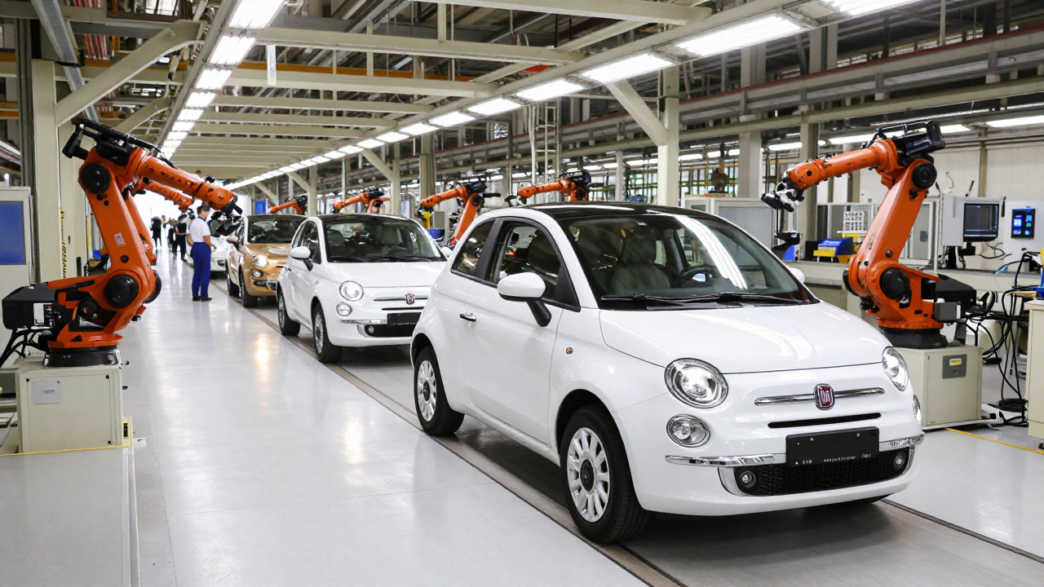
FIM-CISL now expects full-year production of roughly 450,000 vehicles, including more than 250,000 cars. That is below the union’s first-quarter projection, reported in April, of around 500,000 vehicles and more than 300,000 cars. Uliano said the revised outlook was less positive than previously expected, citing a decline in production of the Fiat 500.
The forecast remains an estimate, not a company production target or a final tally. Stellantis had not announced a corresponding full-year Italian production figure in the reporting available Tuesday. The union’s quarterly assessment is based on output across the automaker’s Italian operations.
Cars lead the nine-month recovery
Passenger-car production reached 206,945 units in the first nine months, a 36.7% increase year over year, while commercial-vehicle output rose 17.3% to 133,800, according to figures published by Corriere della Sera. The combined total was still below the production levels seen before the sharp downturn of 2025.
FIM-CISL attributed part of the improvement in car output to the Jeep Compass, produced at Melfi, and the hybrid Fiat 500 at Mirafiori, alongside continued production of the Fiat Panda. Among passenger-car assembly plants, the union’s figures showed Mirafiori output up 151.1% and Melfi up 77.2%. Those growth rates are against a depressed prior-year comparison and do not, by themselves, show a return to earlier production levels.
Commercial-vehicle output at Atessa, in Abruzzo, totaled 133,800 units in the nine-month period, accounting for 39.3% of Stellantis’s reported Italian production. The union said output there increased 17.3% from a year earlier and that the plant had stopped using temporary social-support measures.
Cassino remains the principal plant-level concern
Cassino was the only passenger-car assembly plant reported to have lower output than in the comparable 2025 period. FIM-CISL put its decline at 37.1%, describing conditions at the Lazio-region factory as increasingly serious. The union’s figures highlight how national growth can coexist with continued strain at individual sites.
Other plants had different trajectories. Modena’s increase was linked in part to the transfer of Maserati GranTurismo and GranCabrio production from Turin at the end of 2025, according to Corriere. The report therefore reflects not only changes in overall demand but also shifts in which models are assigned to particular facilities.
Production gains and employment pressures
The union said use of temporary support measures, including wage supplementation, fell by more than 30% over the first nine months, attributing the change to new model launches and lower employment. It nevertheless expected support measures to continue at some plants, with Cassino, Pomigliano and Mirafiori identified as exceptions to a broader expectation of reductions.
FIM-CISL’s earlier, more optimistic 2026 projection had depended on new models and the performance of vehicles already in production. The updated estimate indicates that those factors have not translated into the previously anticipated volume, particularly given the weaker Fiat 500 production outlook. The union did not provide a revised plant-by-plant year-end forecast in the reporting available.
Union meeting set for October 15
Italian media reported that unions are scheduled to meet Stellantis management on October 15 to review production and progress on the company’s industrial plan. The meeting is the next specific milestone identified in the reporting, though no decisions or production commitments were announced ahead of it.
The 450,000-vehicle estimate would mark an increase from the 2025 comparison but remain far below the one-million-vehicle annual level discussed in Italian industrial policy debates. FIM-CISL’s report is a union assessment; actual full-year output and any company response remain to be seen.