

Updated:
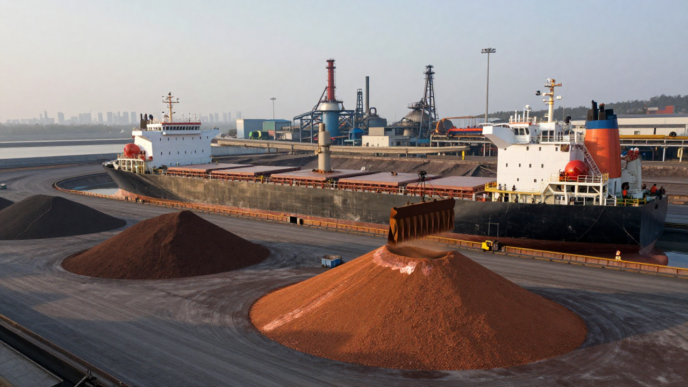
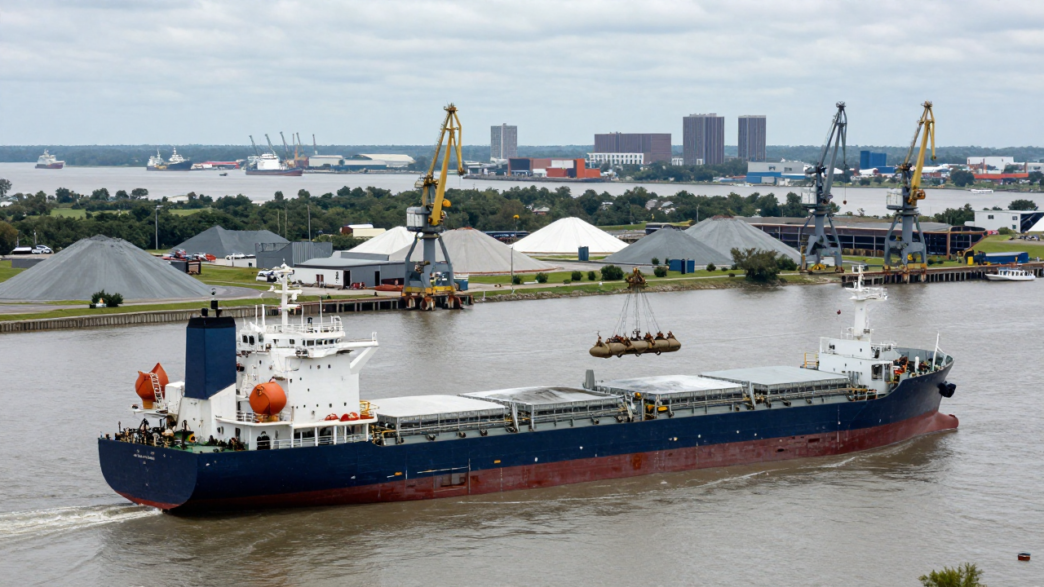
A shipment of 30,000 tonnes of Belarusian potash is expected to arrive at the port of New Orleans in October, marking the first physical delivery of the fertilizer from Belarus to the United States in four years, according to reporting citing industry agency Argus Media. The shipment follows Washington’s removal of sanctions on major Belarusian potash producers and comes as US and Belarusian officials pursue closer economic ties.
The expected cargo is potassium chloride, commonly known as muriate of potash, or MOP. While its arrival would demonstrate that trade has resumed after US restrictions were lifted, the reported volume is small compared with annual American imports, and does not by itself indicate a large-scale supply agreement.
A first cargo after sanctions relief
The United States sanctioned state-owned producer Belaruskali in 2021. Restrictions later covered the Belarusian Potash Company and other related entities, preventing American companies from conducting certain transactions with them.
Washington began easing restrictions as part of negotiations with President Alexander Lukashenko’s government over the release of political prisoners. In December 2025, the administration announced an initial relaxation after 123 prisoners were released. In March 2026, the US Treasury removed Belaruskali, the Belarusian Potash Company and Agrorozkvit from its sanctions list as Belarus released 250 prisoners, according to contemporaneous reporting.
The sanctions changes removed a major legal obstacle to US purchases, but they did not automatically return funds or property frozen during the restrictions. Belarusian officials have separately raised the issue of money they say remains blocked at Citibank.
Shipment’s scale is limited
The 30,000-tonne cargo would be modest relative to the United States’ broader potash demand. Reporting on the expected shipment estimates annual US imports at roughly 5.5 million to 8.7 million tonnes, depending on how the product is measured. Canada remains the dominant supplier to the American market.
That comparison makes the shipment significant primarily as evidence that Belarusian product can reach a US port, rather than as a substantial change in supply. The reported arrival does not establish the volume, timing or terms of any subsequent purchases.
President Donald Trump said on September 21 that the United States was working on a “massive” deal to buy Belarusian potash and suggested it could be cheaper than Canadian fertilizer. However, no detailed agreement specifying quantities, delivery schedules or transport arrangements has been publicly established in the reporting available.
Transport routes remain a constraint
Belarus is landlocked, making export logistics central to any effort to expand shipments. Before sanctions and restrictions disrupted established trade, much of its potash travelled through Baltic ports, particularly Klaipėda in Lithuania. Recent exports have instead relied on Russian railways and ports.
The European Union continues to restrict Belarusian potash, creating a potential obstacle to transit through EU territory even where US sanctions have been lifted. In May, Radio Free Europe/Radio Liberty reported that US officials had asked Lithuania, Poland and Ukraine to consider routes for Belarusian fertilizer exports. Lithuania denied receiving the specific proposal reported by the outlet, while Ukraine confirmed it had received a US document.
Carnegie Endowment analysis published in September noted that Washington’s announced purchase plan had not specified a route or volume, and that reopening Lithuanian transit would require overcoming continuing European sanctions and political objections. A cargo reaching New Orleans would therefore be a concrete trade development, but it would not settle the broader question of how larger volumes could be transported reliably.
Trade talks continue amid political disputes
Washington’s engagement with Minsk has combined prisoner-release negotiations with sanctions relief and discussions about commercial ties. In a September meeting with US envoy John Coale, Lukashenko pressed for further sanctions to be lifted and raised Belarusian exports and frozen assets, the Associated Press reported. The talks have not removed the wider disagreements between Belarus and Western governments over political repression and Minsk’s support for Russia’s war in Ukraine.
The shipment’s expected arrival in October is the next observable step in the commercial relationship. Its precise arrival date, the buyer, the shipping route and whether further cargoes are planned have not been confirmed in the available reporting. A larger deal remains a stated ambition rather than a publicly detailed contract.