


Updated:
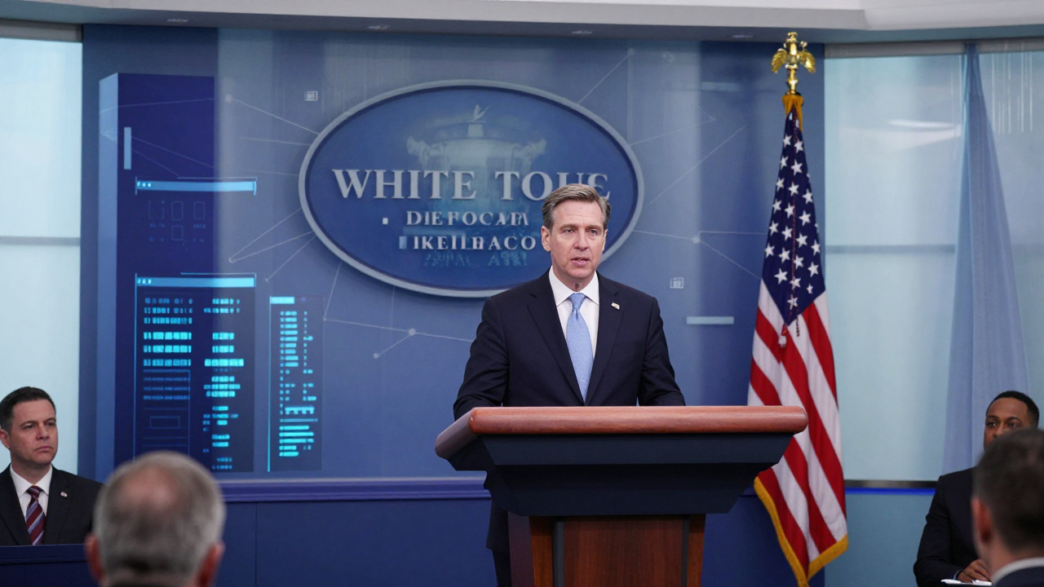
U.S. Director of National Intelligence Jay Clayton will lead a new White House task force examining artificial intelligence’s risks and opportunities, with a report due within 120 days, according to a Wall Street Journal report published Saturday, October 3. The group, called the “Super Intelligence Force,” will also recommend what role the federal government should play in overseeing the technology.
The appointment makes Clayton President Donald Trump’s senior adviser on AI, Reuters reported, citing the Journal’s interview with him and the task force’s charter. The review puts the administration’s stated goal of maintaining U.S. leadership alongside questions about public safety, incident response and the limits of government oversight.
A 120-day review of federal responsibilities
Clayton told the Journal the president had asked for a group to ensure the United States remains a leader in advanced AI while protecting Americans’ interests. He also warned that falling behind other countries could carry risks, particularly from U.S. adversaries, according to the Journal’s account republished by Investing.com.
The task force is expected to assess both the technology’s potential and its hazards, then propose how federal responsibilities should be defined. Its work may continue beyond the initial 120-day period or eventually be transferred to a government agency, the Investing.com report said.
The group’s remit includes examining how the government receives and handles warnings about AI-related breaches, hacks and model “jailbreaks,” or attempts to bypass a system’s safeguards. It will also review existing laws and consider whether Congress may need to act, while recommending ways to strengthen the federal response under current authorities, Reuters reported.
Officials and outside advisers named
Three officials will serve as vice chairs: Emil Michael, the undersecretary of war for research and engineering; Office of Personnel Management Director Scott Kupor; and Federal Trade Commission Chairman Andrew Ferguson. According to the Journal’s reporting, Michael will coordinate with AI companies, Kupor will engage critical-infrastructure providers and other industry stakeholders, and Ferguson will focus on consumer interests.
The reported membership also includes Vice President JD Vance, Defense Secretary Pete Hegseth, Treasury Secretary Scott Bessent, White House chief of staff Susie Wiles and deputy chief of staff Richard Walters. Venture capitalist David Sacks and former Secretary of State Condoleezza Rice are among the outside advisers, with Rice expected to advise on national security, the report said.
The task force plans to work with AI companies to identify risks rather than replace industry-led safeguards. That approach makes its review of existing government reporting systems and the potential need for additional oversight a central part of the assignment.
Policy direction emphasizes competition
The task force’s stated aim is to keep the United States at the forefront of AI development while protecting Americans and avoiding regulation that could impede innovation and competition, according to the Journal’s account. Reuters reported that Trump has argued excessive oversight could weaken U.S. competitiveness against China.
The initiative follows a White House meeting at which industry leaders, including OpenAI President Greg Brockman, Anthropic Chief Executive Dario Amodei and Nvidia Chief Executive Jensen Huang, agreed to voluntary principles. Those principles cover monitoring models, independent reviews and notifying company boards about safety concerns, according to Investing.com’s report.
The voluntary framework and the task force’s stated intention to work with companies indicate that the group is not, at its outset, announcing a new binding regulatory regime. Its report could nevertheless shape whether officials recommend changes to federal practices, seek congressional action or maintain the current reliance on existing laws and company safeguards.
Recent White House action and open questions
The task force follows an executive order signed by Trump on September 29 that directs executive-branch agencies, to the extent permitted by law, to use “Super Intelligence” and “SI” instead of “artificial intelligence” and “AI” in official communications and policy documents. The order defines those terms by reference to the existing statutory definition of artificial intelligence and directs the White House science and technology adviser to submit proposed legislative language within 60 days.
The executive order establishes terminology and requests a proposed federal definition; it does not itself set out the task force’s findings or a new system for regulating AI. The panel’s recommendations, due within 120 days, are the next stated milestone. The reports reviewed do not specify the precise date the report will be released, what legal changes the group will recommend, or whether its work will lead to a permanent agency.