

Updated:
The U.S. Transportation Department has approved a five-year exemption allowing Aurora Innovation and other qualifying autonomous-truck operators to use cab-mounted warning beacons instead of placing traditional warning devices around a stopped truck. The decision, announced Wednesday, October 7, gives driverless freight vehicles a way to meet roadside-warning requirements without requiring someone to leave the truck to set out equipment.
The Federal Motor Carrier Safety Administration (FMCSA), part of the Transportation Department, said the beacon approach offers a level of safety equivalent to or greater than the existing rules, according to Reuters. The exemption is a regulatory step for the wider use of commercial self-driving trucks, but it is confined to warning devices for stopped vehicles; it is not a general approval of autonomous trucking operations.
What the exemption changes
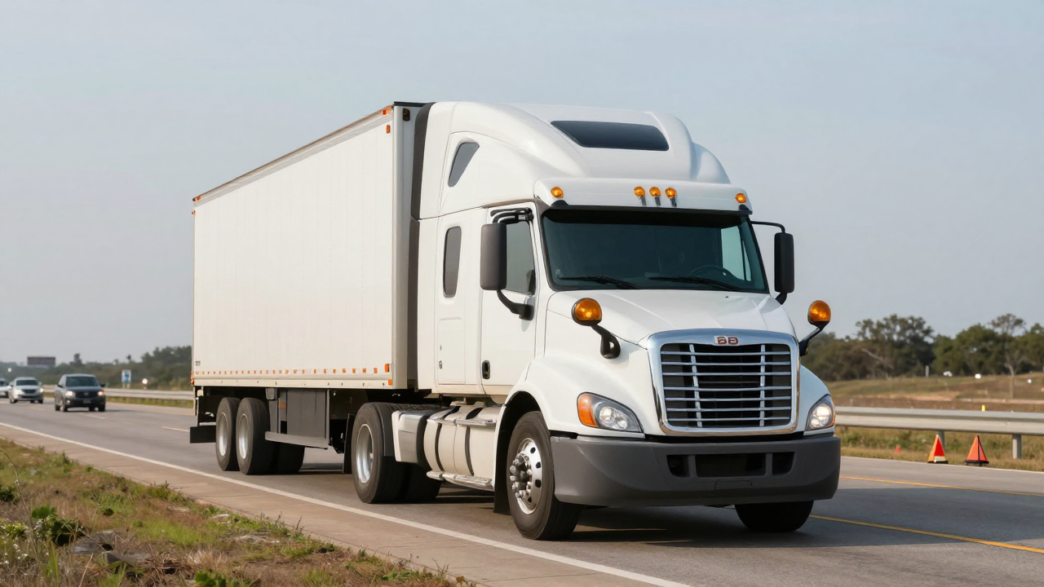
Under the existing rules, drivers of commercial trucks stopped on a roadway or shoulder in specified circumstances must place warning devices around the vehicle. The requirement is intended to alert approaching traffic to a stopped truck. Aurora’s proposed alternative uses warning beacons mounted on the truck cab, avoiding the need for a person to exit the vehicle and position devices on the road.
The relief applies to Aurora and can extend to other motor carriers operating trucks equipped with Level 4 automated driving systems, provided they notify FMCSA in writing before operating under the exemption. Companies using it must also report crashes involving a truck when its warning beacons were activated or should have been activated, Reuters reported. The agency can revoke an exemption if it results in a lower level of safety than the regulations it replaces.
A new decision after an earlier application
Aurora and Alphabet’s autonomous-driving unit Waymo jointly sought a five-year exemption in 2023. Their request concerned rules for placing warning devices around stopped trucks, the requirement that certain warning lamps burn steadily, and which types of warning devices are permitted. FMCSA initially declined the joint request in December 2024.
Aurora then sued the agency in early 2025 over the decision. It dismissed the lawsuit after the department issued a temporary waiver in October 2025, allowing Aurora to use cab-mounted beacons while the company pursued longer-term regulatory relief. FMCSA records show that temporary waivers were renewed in three-month periods, with a waiver granted in July 2026 set to run through October 9.
In April 2026, Aurora filed a separate application for a five-year exemption. The department’s notice at that time described the request as an application open to public comment, not as an approval. The October decision marks the change from temporary relief to a longer-term exemption, while leaving reporting and notification conditions in place.
Why the rule matters to driverless operations
Traditional roadside-warning requirements assume a driver is available to exit a truck and place devices at prescribed locations. For a vehicle operating without a human driver, that task creates a practical obstacle when the truck stops because of a breakdown or other non-routine event. Cab-mounted beacons offer a different method of alerting nearby road users while keeping the warning equipment on the vehicle.
Aurora said the department’s decision recognized the economic and community benefits of autonomous trucking. The company described high-visibility, cab-mounted beacons as a way to alert road users without putting a person in harm’s way. That is the company’s stated rationale; the agency’s safety determination, rather than the company’s characterization, establishes the regulatory basis for the exemption.
Scope and safeguards
The exemption does not remove the obligation to warn other drivers when a covered truck is stopped. Instead, it allows a specified warning method in place of particular requirements for roadside devices. FMCSA’s conditions—including advance notification and crash disclosure—give the agency a way to track use and safety outcomes as operators adopt the alternative.
Aurora had around 20 self-driving trucks in on-road operations at the time of the Reuters report. The five-year decision is relevant to the company’s effort to expand autonomous freight operations, but the available report does not provide a rollout schedule, the number of other carriers expected to use the exemption, or details of any additional operating permissions. The exemption’s effect will therefore depend on which eligible carriers notify FMCSA and how the system performs under the agency’s reporting and oversight conditions.