

Updated:
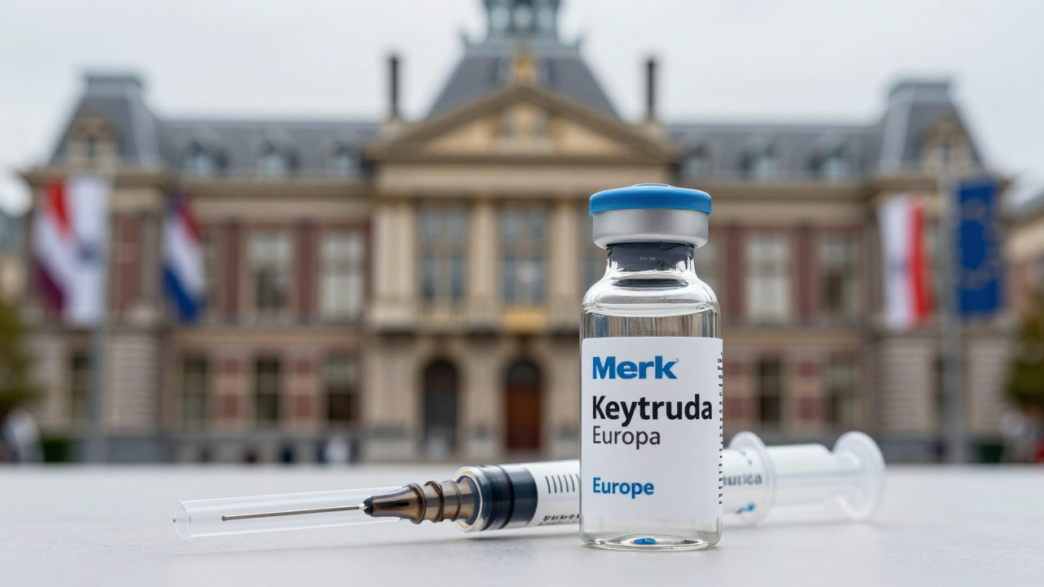
A specialized patent court in The Hague has ordered Merck & Co. to stop manufacturing and commercializing its subcutaneous version of Keytruda in eight European markets, ruling that the product infringes a Halozyme Therapeutics patent. Halozyme announced the decision on October 7, 2026, saying the order applies to Belgium, Denmark, France, Ireland, Italy, Sweden, Switzerland and the Netherlands.
The order covers Keytruda SC, the under-the-skin formulation of Merck’s cancer immunotherapy pembrolizumab—not the established intravenous version. Halozyme said the Dutch court also rejected Merck’s challenge to the patent’s validity. Merck strongly disputed the decision, according to Reuters, saying it considered the patent invalid and the infringement claim without merit, and was reviewing its options.
What the Dutch injunction covers
Halozyme identified the patent at issue as European Patent EP 2,797,622, part of its MDASE technology portfolio for subcutaneous drug delivery. The company said the court ordered MSD BV, Merck’s European marketing-authorisation holder and a packaging and distribution hub, to refrain from manufacturing, offering, selling, using, importing or stocking Keytruda SC in the named markets.
The injunction also restricts MSD BV from facilitating infringement by affiliates, including through use of the product’s European marketing authorisation, Halozyme said. The company’s announcement describes the result from its perspective; the full judgment and detailed legal reasoning were not included in the materials available for this report.
Halozyme said patients can continue to receive intravenous Keytruda, which it said is outside the patent and the court order. The ruling therefore targets one formulation and specified markets, rather than banning Keytruda generally across Europe.
Merck’s position and the wider dispute
Merck told Reuters it disagreed with the cross-border injunction and considered Halozyme’s patent invalid globally. The company also rejected the allegation that Keytruda SC infringes the patent, and said it was evaluating next steps. No appeal filing or schedule was identified in the reporting available on October 7.
The Dutch case is one part of a broader dispute over the technology used to deliver the subcutaneous drug. Halozyme said it previously obtained a preliminary injunction in Germany on December 4, 2025, preventing Merck from launching Keytruda SC there. Merck’s June 2026 quarterly filing separately disclosed that it had filed actions seeking revocation of EP 2,797,622 in several European jurisdictions, including the Netherlands, and that the Dutch case had been heard in late July.
Halozyme has also sued Merck in federal court in New Jersey, alleging that the U.S. subcutaneous formulation, marketed as Keytruda QLEX, infringes 15 of its patents. That is a separate proceeding; the Dutch ruling does not resolve the U.S. claims.
Why the formulation matters to Merck
Keytruda is a major product for Merck, and the company has been preparing for the eventual loss of protection on the original intravenous formulation. A subcutaneous version offers a different administration route, and Merck has described the timing of its availability in individual European Union countries as dependent on factors including reimbursement procedures and the outcome of litigation with Halozyme.
The immediate commercial effect of the Dutch order will depend on how it is implemented and on any subsequent legal steps. The available reports do not specify a timetable for an appeal, whether Merck will seek a stay, or how the decision will affect launch plans in each named country. For now, Halozyme says the injunction blocks the SC formulation in those eight markets, while the IV treatment remains outside its scope.