


Updated:
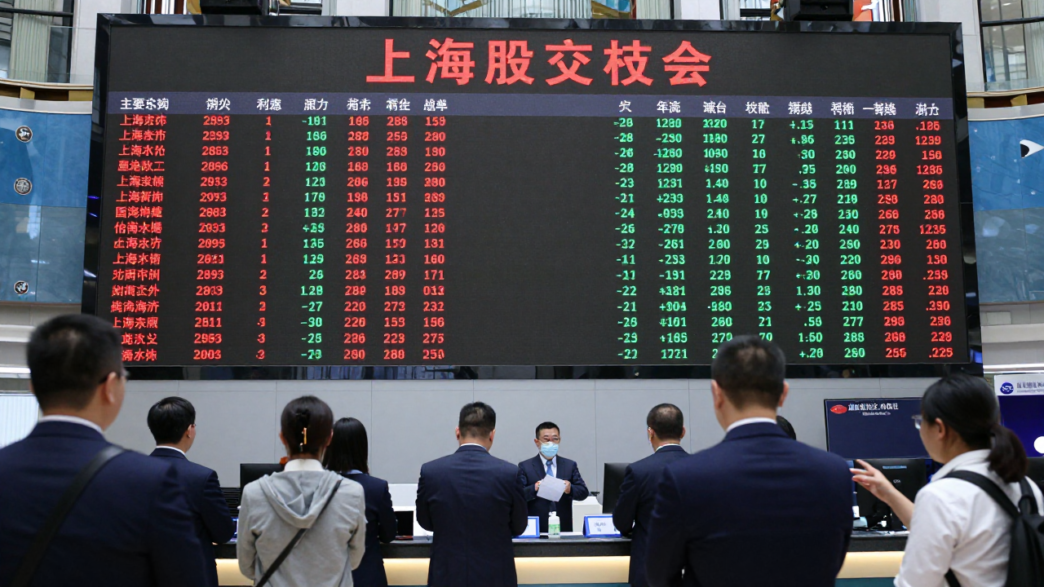
Chinese mainland stocks opened modestly higher on Thursday, October 8, as investors returned from the National Day Golden Week break to weigh fresh government support against higher global bond yields, rising oil prices and signs of cautious consumer spending. The Shanghai Composite rose 0.26% to 3,852.0 in morning trading, while the CSI 300 gained 0.3% to 4,372.06, according to Investing.com.
The muted gains followed a week in which mainland exchanges were closed but Hong Kong traded for part of the holiday. That left mainland investors to catch up with moves in overseas markets and the Hang Seng’s losses, while assessing whether Beijing’s recent pledges and liquidity measures could offset broader economic and financial pressures.
A cautious return after the holiday gap
Before reopening, Investing.com reported that the Shanghai Composite’s last pre-holiday close was 3,842.19 on September 30. It had fallen 2.30% over the prior month and stood 3.63% lower year to date at that close. Those figures provided a reference point for the first session back, but did not determine how investors would respond to news and price changes during the closure.
Hong Kong offered one partial signal. Its Hang Seng index fell about 3% on October 2, reaching an 11-week low near 23,900, before recovering part of that decline. It was down 0.45% on Thursday morning and 2.05% from late September, Investing.com reported. The different holiday calendars meant mainland stocks had not traded during the October 2 drop, adding to the potential for a catch-up move when domestic trading resumed.
Despite those risks, the opening session was not an across-the-board decline. Shipping shares were among the stronger performers, while local banks and property stocks also advanced, according to the market report. The indexes’ modest early gains, however, did not resolve whether investors would continue buying once the initial reopening trades gave way to fresh assessments of company and economic conditions.
Policy support and property remain in focus
Beijing’s support measures were a key counterweight to the external pressures. On September 29, the State Council pledged counter-cyclical support and measures to stabilize the property market, according to the pre-holiday Investing.com report. Property developers had rallied after the announcement, with Vanke rising nearly 8% at the time; Thursday’s gains in property shares put attention on whether support would attract sustained demand.
The People’s Bank of China had also been providing liquidity. Investing.com said the central bank planned reverse-repurchase injections of up to 1 trillion yuan per day through October 8, making the scale and timing of subsequent operations a point for investors to monitor. Its separate Thursday report said the PBOC had been cutting interest rates and injecting liquidity since late September. The available reports did not establish what the central bank would do after the planned operations or whether the measures would translate into stronger borrowing, investment or household demand.
Developments in property matter beyond listed developers because the sector is a focus of the government’s stated stabilization efforts. Still, the opening-day share moves alone do not show whether the wider property market has turned around. Follow-through from policy announcements, including any specific implementation details, remained uncertain in the reporting available by Thursday morning.
Yields and energy costs add pressure
Higher global bond yields were another headwind cited in the reports. Investing.com said Hong Kong’s decline during the mainland closure coincided with a sharp rise in global yields, while technology shares were particularly vulnerable to higher rates. The pressure on tech stocks persisted into Thursday, with the market report saying that rising yields had overshadowed optimism connected with artificial intelligence.
Oil and supply concerns added a separate risk. Before the holiday, Beijing reportedly halted refined-fuel exports because domestic inventories were at multi-year lows, according to Investing.com; the report said the news helped push oil above $100. On Thursday, oil was again rising amid concerns about potential supply disruptions in the Middle East and the U.S. Gulf Coast, weighing on sentiment. Refiners and businesses sensitive to energy costs were among the areas identified for investor attention.
The combination of higher financing costs and more expensive energy presented a challenging backdrop for rate-sensitive technology businesses and companies that use large amounts of fuel. But the available reporting did not quantify the eventual effects on corporate earnings, nor did it identify a single cause for the market’s modest opening gains.
Holiday demand and the next policy signal
Consumer spending was another open question. Before the holiday, Reuters reported that China’s Golden Week travel surge was accompanied by cautious spending, and Investing.com’s Thursday coverage said recent data showed consumers remained pessimistic and spending sluggish despite the extended break. Travel demand improved marginally during the holiday, but the report said it was unclear whether that translated into firmer economic growth.
That leaves holiday visitation and spending figures relevant to consumer-facing and travel-linked companies, including Macau-related businesses highlighted in the pre-opening watchlist. The reporting available at the time did not provide a complete set of final holiday figures, so investors could not yet infer from travel activity alone whether household demand had strengthened.
The next major policy event identified in the Thursday market report was the Communist Party’s fifth plenum, scheduled for October 26–29. Investors are expected to look for indications of Beijing’s plans to support sluggish growth, but the available reporting did not specify what measures might be announced. In the meantime, the market’s direction will depend on how investors balance domestic policy support and liquidity against global yields, oil costs and evidence about consumer demand.