

Updated:
Oil futures rose early Thursday, October 8, as traders weighed the prospect of storm-related supply disruptions along the U.S. Gulf Coast against continued Middle East tensions. December Brent crude gained 0.9% to $101.10 a barrel and November West Texas Intermediate rose 0.9% to $89.08, according to Investing.com, citing prices at 20:02 ET on Wednesday.
Tropical Storm Isaias was forecast to strengthen into a hurricane and approach the northern Gulf Coast by the weekend. The storm put offshore production in focus, while uncertainty over oil movements through the Strait of Hormuz and plans to release emergency stocks added competing signals for the market.
Storm threat puts offshore production in focus
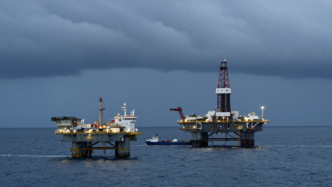
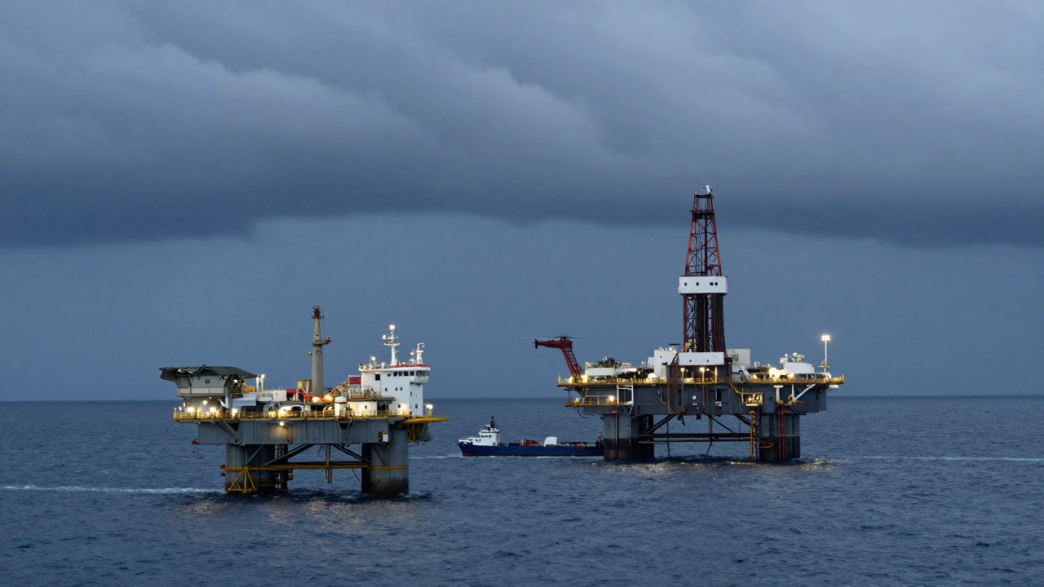
U.S. forecasters expected Isaias to bring intense rainfall and hurricane-force winds to the Gulf of Mexico region. Several oil and gas producers were reported to be evacuating non-essential personnel from offshore facilities. BP, Chevron and Shell were among the companies identified as having notable exposure to potential production interruptions.
A Reuters-cited model estimated that as much as 11.2 million barrels of oil production could be lost across the Gulf over the storm’s duration. That is a forecast of potential cumulative losses, not a confirmed outage. The Associated Press reported that producers had already temporarily halted about 25% of the region’s oil output by Wednesday, equivalent to roughly 511,000 barrels a day, citing the Marine Minerals Administration.
AP also reported that eight of 371 manned Gulf oil platforms had been evacuated. Jim Burkhard, S&P Global Energy’s global head of crude oil market research, described the oil-market risk as moderate but rising, and said the storm’s proximity to refineries would be a key concern. The amount of production or refining capacity ultimately affected remained uncertain as Isaias’ path and timing could still shift.
Inventory draw adds to the supply picture
U.S. crude inventories fell by 3.2 million barrels in the week ending October 2, Investing.com reported, citing data released Wednesday. The decline ran counter to expectations for an increase and added another near-term supply consideration for traders already monitoring possible Gulf outages.
However, the inventory figure does not establish how long any storm-related disruption might last or how much oil supply would be lost overall. The available reporting also did not specify which facilities had suspended operations or quantify any damage to infrastructure.
IEA stock release limits some price gains
The International Energy Agency’s planned stock release helped restrain oil’s advance. The agency said that completing as soon as possible a previously announced release of 400 million barrels would bring about 100 million barrels to market, according to Investing.com. It was not immediately clear whether that statement meant additional stock would be released beyond the existing plan.
The release is intended to add supply, but its near-term effect depends on timing and how quickly oil reaches the market. Prices had pared some gains on Wednesday following the IEA announcement, before the renewed Gulf weather threat helped lift futures.
Hormuz shipping and regional tensions remain in view
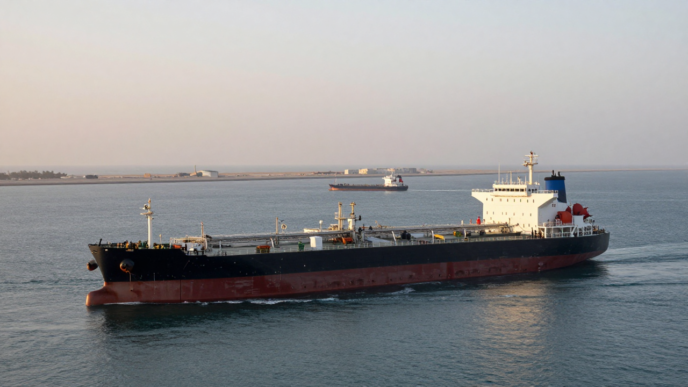
Middle East developments continued to complicate the supply outlook. Investing.com reported that United Kingdom Maritime Trade Operations data showed an increase in Iranian attacks on ships transiting the Strait of Hormuz. At the same time, recent data indicated that shipping through the strategic waterway briefly reached pre-war levels, suggesting flows had improved even as security concerns persisted.
Continued hostilities between Saudi Arabia and Yemen’s Iran-backed Houthis also kept traders alert to potential disruptions. The Houthis attacked a refinery in Riyadh earlier in the week, according to the report. These risks were weighed against indications that Middle Eastern supplies increased in September and that Hormuz flows had, briefly, surpassed pre-war levels.
For the next several days, the key developments are the storm’s track, any further precautionary shutdowns and the scale and duration of actual production interruptions. The reports available at publication did not establish the final landfall location or confirm how much Gulf output would be lost; both remained contingent on Isaias’ evolution.