


Updated:
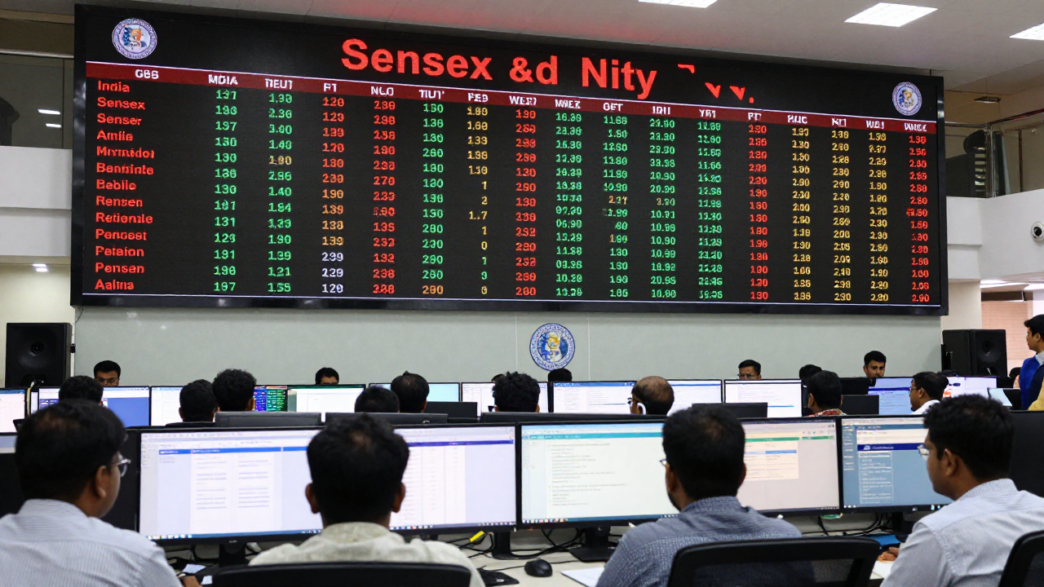
Indian shares fell on Wednesday, October 7, after the Reserve Bank of India raised its benchmark repo rate for the first time in nearly four years, lifting borrowing costs as inflation pressures mounted. The Nifty 50 and BSE Sensex were down during morning trading, although both pared part of their initial losses after the decision.
The RBI’s six-member Monetary Policy Committee voted unanimously to raise the repo rate by 25 basis points to 5.50% and shifted its policy stance from “neutral” to “calibrated tightening.” The move marked a turn in policy as the central bank weighed rising prices against robust economic growth. ([investing.com](https://www.investing.com/news/economy-news/india-raises-policy-rate-by-25-bps-in-first-hike-in-nearly-four-years-4935589))
Benchmarks recovered from early losses
At 10:31 a.m. India time, the Nifty 50 was down 0.4% at 22,694.55, while the Sensex had fallen 0.55% to 72,684.51, according to Investing.com. Both indexes had been down nearly 1% earlier in the session. These were intraday readings, not closing prices. ([in.investing.com](https://in.investing.com/news/stock-market-news/india-stocks-dip-after-rbi-hikes-rates-for-first-time-in-nearly-4-yrs-5621388))
Trading later showed a mixed response across sectors. The Economic Times reported that the Nifty Auto index fell more than 1% and the Nifty Bank index slipped about 0.7%, while a separate Livemint report said banking shares subsequently strengthened and the main indexes recovered from their lows. The differing snapshots reflect movement through the trading session rather than a single end-of-day result. ([economictimes.indiatimes.com](https://economictimes.indiatimes.com/markets/stocks/news/rbi-to-hike-repo-rate-by-25-bps-these-rate-sensitive-sectors-will-be-in-focus-on-wednesday/articleshow/134754911.cms))
Pressure was not limited to rate-sensitive companies. The Economic Times reported declines in metals and some consumer-related shares, while broader market performance was mixed. The RBI decision arrived after a two-day relief rally, according to that publication, with investors also tracking oil prices, global bond yields and foreign investor selling. ([economictimes.indiatimes.com](https://economictimes.indiatimes.com/markets/stocks/news/rbi-to-hike-repo-rate-by-25-bps-these-rate-sensitive-sectors-will-be-in-focus-on-wednesday/articleshow/134754911.cms))
Inflation prompts a policy turn
Consumer inflation accelerated to 4.82% in August from a year earlier, its third consecutive month above the RBI’s 4% medium-term target, Reuters reported. Fuel and food costs were contributing to price increases across a broad share of the consumer basket. Higher oil prices linked to the Iran war and weak monsoon rains associated with El Niño were cited as additional pressures. ([investing.com](https://www.investing.com/news/economy-news/india-raises-policy-rate-by-25-bps-in-first-hike-in-nearly-four-years-4935589))
In its policy address, Governor Sanjay Malhotra said the inflation outlook was no longer benign. By adopting “calibrated tightening,” the committee signalled a preference for containing price pressure rather than maintaining its previous neutral posture. The rate increase was widely anticipated: nearly 60% of economists in a Reuters poll had expected a 25-basis-point move. ([investing.com](https://www.investing.com/news/economy-news/india-raises-policy-rate-by-25-bps-in-first-hike-in-nearly-four-years-4935589))
The hike was the first since February 2023, according to Reuters. Its significance lies not only in the quarter-point increase but also in the change of stance, which indicates that the RBI is alert to the possibility of persistent inflation even as economic activity remains strong. The reports do not establish a fixed schedule for additional increases. ([investing.com](https://www.investing.com/news/economy-news/india-raises-policy-rate-by-25-bps-in-first-hike-in-nearly-four-years-4935589))
Strong growth gives the RBI room to act
India’s economy expanded 7.8% year over year in the April-to-June quarter, exceeding the central bank’s 7% forecast for that period, Reuters reported. The RBI also raised its growth projection for the current financial year to 7.1%, from 6.7%, according to market coverage of the decision. The growth outlook offers a contrast to the inflation concerns behind the rate move. ([investing.com](https://www.investing.com/news/economy-news/india-raises-policy-rate-by-25-bps-in-first-hike-in-nearly-four-years-4935589))
The RBI’s message left markets balancing two forces: stronger activity can support company revenues, while higher policy rates increase financing costs and can weigh on demand and equity valuations. The day’s trading reflected that tension, with some rate-sensitive shares falling even as banks and benchmark indexes recovered part of their early declines. ([in.investing.com](https://in.investing.com/news/stock-market-news/india-stocks-dip-after-rbi-hikes-rates-for-first-time-in-nearly-4-yrs-5621388))
Investors watch for the next policy signal
Capital Economics analysts said the decision supported their expectation of further RBI rate increases, with 25-basis-point hikes forecast for December and February, Investing.com reported. That is an analyst forecast, not a commitment by the central bank. The RBI’s stated stance signals tighter policy, but its next decisions will depend on incoming inflation and growth data. ([in.investing.com](https://in.investing.com/news/stock-market-news/india-stocks-dip-after-rbi-hikes-rates-for-first-time-in-nearly-4-yrs-5621388))
For markets, the immediate question is whether elevated energy and food costs continue to spread through consumer prices, and how the RBI responds if they do. On October 7, investors also had to assess that domestic policy shift alongside global financial conditions and ongoing foreign outflows, factors cited in Indian market coverage as weighing on shares. The available reports provided no official future rate decision or schedule beyond the RBI’s policy announcement. ([economictimes.indiatimes.com](https://economictimes.indiatimes.com/markets/stocks/news/rbi-to-hike-repo-rate-by-25-bps-these-rate-sensitive-sectors-will-be-in-focus-on-wednesday/articleshow/134754911.cms))