

Updated:
Shipowners are offering tanker captains compensation equivalent to $100,000 a month, plus a $50,000 bonus for each Strait of Hormuz passage, as attacks and falling traffic raise the risks of moving oil through the Gulf. The figures were reported by Investing.com on October 7, based on three people familiar with tanker owners and crews who spoke to the Financial Times.
The exceptional pay is intended to keep seafarers on vessels serving Gulf oil routes while regional producers try to sustain exports. But the premium comes amid evidence of mounting danger: security firm Vanguard counted at least 14 attacks on vessels since September 20, while maritime tracking company Windward estimated that just 13 vessels transited the strait on October 4, down from 24 a week earlier.
Pay rises sharply for the most dangerous leg
Captains typically earn about $15,000 a month, while ordinary sailors can earn as little as $1,500, according to the report. Pay is doubled when ships operate in the southern Red Sea and Gulf of Oman; ordinary crew members can receive four to six times their usual compensation during a Hormuz transit.
Some tankers are assigned to repeated shuttle trips, meaning crews may receive enhanced pay for months while navigating waters exposed to missile and drone attacks. The report did not specify how the captain’s monthly figure and per-transit bonus are calculated across different contracts or how many captains are receiving the top package.
The crew has much less control over the risk than the size of the headline pay might suggest. Manoj Yadav, secretary-general of the Forward Seamen’s Union of India, said some owners were offering large packages, while others were pressuring reluctant seafarers to sail by warning they could be replaced and that repatriation costs might be deducted from wages.
Attacks weigh on traffic and shipping capacity
Windward’s estimate of 13 crossings on October 4 compared with 24 on the corresponding day of the previous week, following a rise in attacks. It also estimated that about 2% of ships that crossed Hormuz in the third quarter were hit. These figures describe different periods and measures: the transit count is a one-day snapshot, while the attack share covers the quarter.
The International Maritime Organization has recorded at least 93 ships hit and 24 sailors killed since February 28, according to the report. Scott Bergeron, executive director of Oldendorff Carriers, told a UK shipping conference that seafarers and their vessels had become targets, underscoring the human stakes behind efforts to maintain commercial traffic.
Many ships reportedly transit at night with GPS signaling equipment switched off. The U.S. Navy has deployed defensive air capabilities for vessels using a route close to the Omani coast, but the report did not provide details on the number of ships covered or a timetable for the operation.
Record freight costs add to the burden
Daily freight rates for cargoes moving through the contested waterway reached a reported record of $1.3 million this week, compared with about $20,000 to $50,000 a day last year. A voyage into the Gulf to load and return typically takes around four days, and only a handful of ships are willing to undertake the journey, according to the report.
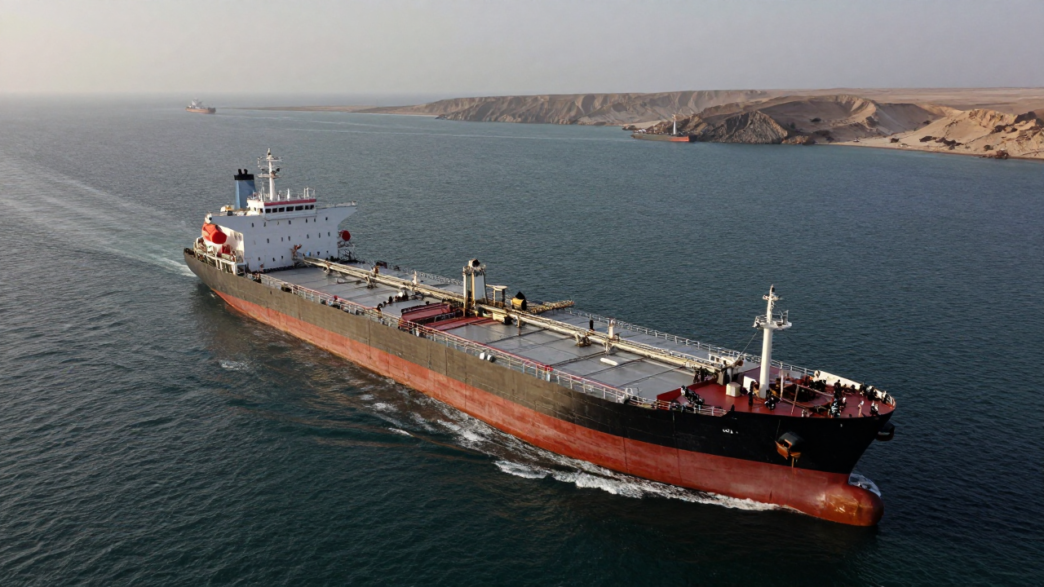
Some tankers carry oil to waters off Fujairah, in the Gulf of Oman, where cargo can be transferred to other vessels for onward delivery. A typical very large crude carrier can carry around 2 million barrels and have a crew of up to 35, making both safe passage and staffing central to the operation.
Insurance is another major expense. Brokers cited by the report said shipowners were paying war-risk premiums equivalent to 6% to 10% of a vessel’s hull value to operate in the region; for a supertanker, the insurance cost for a Gulf voyage could reach $20 million. Fuel oil used by tankers in Fujairah was reported at $686 per tonne on Monday, 67% above the level a year earlier.
Energy flows remain below prewar levels
Before the conflict, about 135 vessels passed through Hormuz each day, carrying roughly one-fifth of the world’s oil and liquefied natural gas supply, the report said. Oil flows through the strait remain around one-third below prewar levels, according to Kpler, with some volumes redirected through alternatives such as pipelines.
Companies identified as sending ships through the waterway include South Korea’s Sinokor, Greece’s Dynacom, Abu Dhabi’s state-owned Adnoc and Kuwait Oil Tanker Company. The report provided no company-by-company transit figures or public statements from those firms on the pay offers.
For now, the immediate developments to watch are whether vessel attacks continue and whether transit numbers recover from the October 4 estimate. The reporting did not identify a scheduled change to the pay arrangements, an end date for the heightened-risk operations or a timetable for Hormuz traffic to return to prewar levels.