

Updated:
U.S. President Donald Trump said on Friday, October 2, that he had not “jumped the gun” by announcing South Korean investment in Alaska’s proposed liquefied natural gas project, even as officials in Seoul maintained that no investment decision had been made. The disagreement leaves the project’s financing uncertain and highlights a gap between Washington’s presentation of the plan and South Korea’s stated conditions for participation.
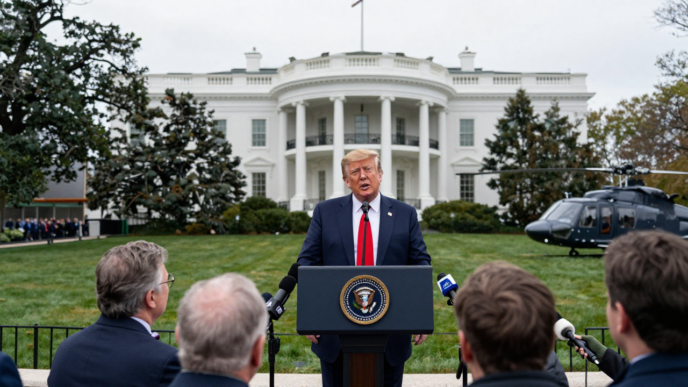
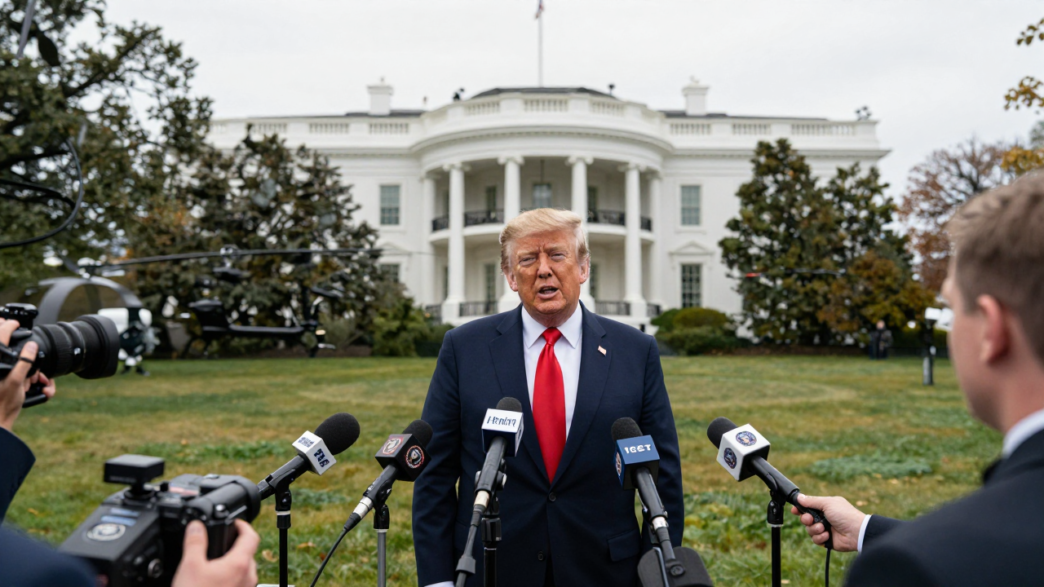
Asked at the White House about the announcement, Trump said South Korean representatives had been present and added that if the country did not want to proceed, he would “just charge them more.” His comments came two days after he described a $54 billion contribution to the Alaska project as part of a broader package of South Korean investment in the United States.
South Korean officials have said that any participation depends on a review of the project’s commercial viability and domestic legal procedures. Reuters reported that the planned Alaska LNG development still lacks binding commitments, meaning Trump’s public defense did not resolve whether Seoul will fund it or how much it might invest.
Disputed status of the proposed investment
Trump’s September 30 announcement framed Alaska LNG as one of several projects included in a wider investment package. South Korean representatives, however, have distinguished between agreeing to examine the project and committing capital to build it. The Korean government has not confirmed the $54 billion figure as an agreed investment.
Yonhap reported that Trump said the two countries had largely agreed on two other projects: a gas-fired power plant in Texas and eight large-scale nuclear power plants. It described the Alaska project as still subject to a different status, with Seoul saying participation had not been finalized. The distinction matters because an announcement of a project under discussion is not the same as a binding funding agreement.
South Korea’s industry minister, Kim Jung-kwan, had protested the U.S. characterization after the September 30 announcement, according to reporting by Alaska Beacon. The outlet reported that Kim said the announcement went beyond what had been agreed. Reuters also reported that a South Korean ministry official was surprised by Trump’s separate Friday claim concerning an $8.4 billion oilfield project.
What the Alaska project would involve
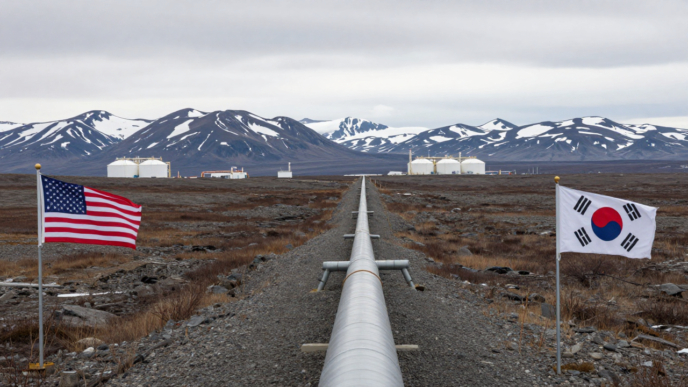
The proposed development would move natural gas from Alaska’s North Slope through a pipeline of more than 800 miles, or about 1,300 kilometers, to a liquefaction and export facility at Nikiski, south of Anchorage. Liquefied natural gas can be shipped to overseas buyers, but the project would require major infrastructure investment before exports could begin.
The proposal has been discussed for decades and has attracted successive efforts to secure international partners. Alaska Beacon’s historical reporting noted earlier attempts to draw interest from Asian investors, including Japanese and Chinese entities. Those efforts did not eliminate the commercial and financing questions that continue to surround the current plan.
The project’s scale and cost are central to the uncertainty. Reuters reported that the Alaska development would cost more than twice as much as a comparable Gulf Coast facility. Without a confirmed South Korean commitment or other binding financing arrangements, the announcement does not establish that the pipeline and export terminal will be built.
Trade package and next steps remain unclear
Trump linked the proposed investment to a broader strategic investment package negotiated as part of a trade agreement with South Korea. Reuters described the September announcement as the first set of major projects under that arrangement, while also reporting that the overall package included $200 billion in projects presented by Trump. The Alaska portion remains conditional in Seoul’s account.
South Korean officials have said investment decisions must follow domestic procedures and satisfy commercial-viability requirements. No final decision date, binding investment contract or confirmed funding schedule for Alaska LNG was identified in the reporting available Friday. Until those details emerge, the announced $54 billion should be treated as Trump’s stated figure, not as a verified South Korean commitment.
Trump’s response leaves the diplomatic disagreement unresolved: he defended the timing of his announcement, while Seoul’s position remained that the project requires further assessment. The next substantive milestone would be a confirmed investment decision or formal financing agreement; neither had been announced by Friday.