

Updated:
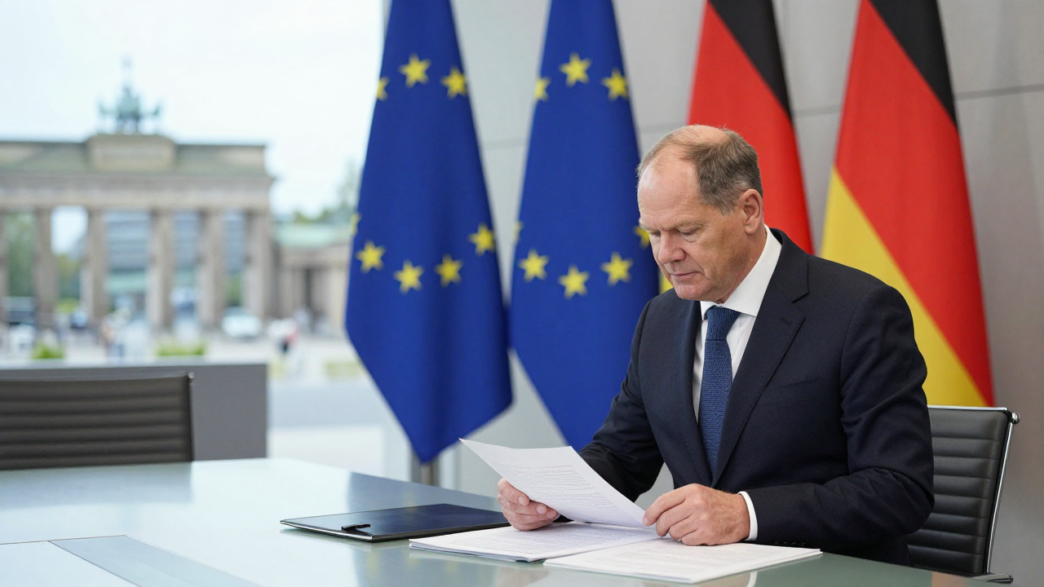
German Chancellor Friedrich Merz is set to meet Klaas Knot and Pablo Hernández de Cos, the two leading contenders to succeed European Central Bank President Christine Lagarde, according to a Bloomberg report published Saturday, October 3. The reported discussions would bring Germany directly into a succession contest that has gained urgency as several senior ECB posts approach vacancies in 2027.
Knot, the former head of the Dutch central bank, is expected to meet Merz in the coming days, while a meeting with Hernández de Cos, a former governor of the Bank of Spain, is expected in the next few weeks, Bloomberg reported, citing people familiar with the discussions. The meetings have not been publicly confirmed: a German official and Knot declined to comment, Hernández de Cos was not immediately available, and Merz’s office was not reported to have provided a public account.
Three senior ECB posts are approaching turnover
Lagarde’s scheduled term as ECB president ends on October 31, 2027. She has recently left open the possibility of departing a few months before that date, Bloomberg reported. Her term’s formal end date is listed by the ECB, while the timing of any earlier departure remains uncertain.
Two other Executive Board positions are also due to become vacant in 2027. Chief economist Philip Lane’s term ends on May 31, and board member Isabel Schnabel has said she will leave on January 3, ahead of the scheduled end of her term in December. Schnabel is moving to a senior role at the International Monetary Fund, effective January 4, the ECB said.
The succession decisions are linked politically, but each appointment is a separate formal process. Greek Prime Minister Kyriakos Mitsotakis recently suggested that European leaders could pursue a broader agreement covering the three vacancies, Bloomberg reported. No such agreement has been announced.
Germany and France are central to the political discussions
Germany is the euro area’s largest economy, and the report described Berlin’s position as important to any eventual deal. It also identified French President Emmanuel Macron as a key counterpart. Macron has not met the two candidates, according to Bloomberg, though French Finance Minister Roland Lescure and other senior French officials have held discussions with them.
Hernández de Cos and Knot have each received public backing from their national leaders, according to the report. Spanish Prime Minister Pedro Sánchez and his Dutch counterpart endorsed their respective candidates the previous week. That support does not determine the outcome: the ECB president is selected through a euro-area-wide appointment procedure.
The stakes extend beyond national representation. The ECB president chairs the bank’s Executive Board and Governing Council, the body that sets euro-area interest rates and monetary policy. The leadership changes will therefore determine who guides the institution through a period in which its top posts are being renewed close together.
Berlin’s options may extend beyond the presidency
Bloomberg’s sources said Merz’s planned meetings suggest Germany is no longer considering nominating Bundesbank President Joachim Nagel for the ECB presidency. That is an account of private deliberations, not an official German decision. The report said Berlin could instead seek another prominent role, including Lane’s chief-economist position or Schnabel’s markets-related portfolio.
Potential German names mentioned in the report included Princeton economist Markus Brunnermeier, Berkeley economist Ulrike Malmendier, former IMF official Tobias Adrian and former German finance minister Jörg Kukies. The report did not say that any had been formally nominated. Nor has Berlin publicly identified a preferred candidate for any of the expected vacancies.
The timing of decisions could be affected by events beyond the ECB. Bloomberg cited recent bond-market tensions and the prospect of possible elections in Spain before year-end as factors that might add pressure to negotiations. These are potential considerations, not confirmed reasons for the reported meetings or evidence that a timetable has been agreed.
Appointments require approval across the euro area
National leaders can shape the negotiations, but they cannot appoint the ECB president alone. Under the EU process, euro-area countries propose candidates; finance ministers in the Eurogroup discuss a nominee; the Council makes a recommendation; and the European Parliament and ECB Governing Council are consulted before the European Council makes the appointment.
The European Council decides in its euro-area configuration by reinforced qualified majority. The Council says that, among the 21 euro-area countries, a successful decision requires at least 16 countries representing at least 65% of the bloc’s population. Executive Board members serve non-renewable eight-year terms and must be nationals of euro-area countries with recognized monetary or banking experience.
The next concrete steps remain uncertain. Bloomberg said euro-area finance ministers could begin discussions on filling Schnabel’s seat as soon as the following week, but it did not report a confirmed date for that discussion or for Merz’s meetings. The European Council’s eventual decisions will clarify whether governments seek to settle the ECB’s overlapping vacancies together or handle them in separate negotiations.