


Updated:
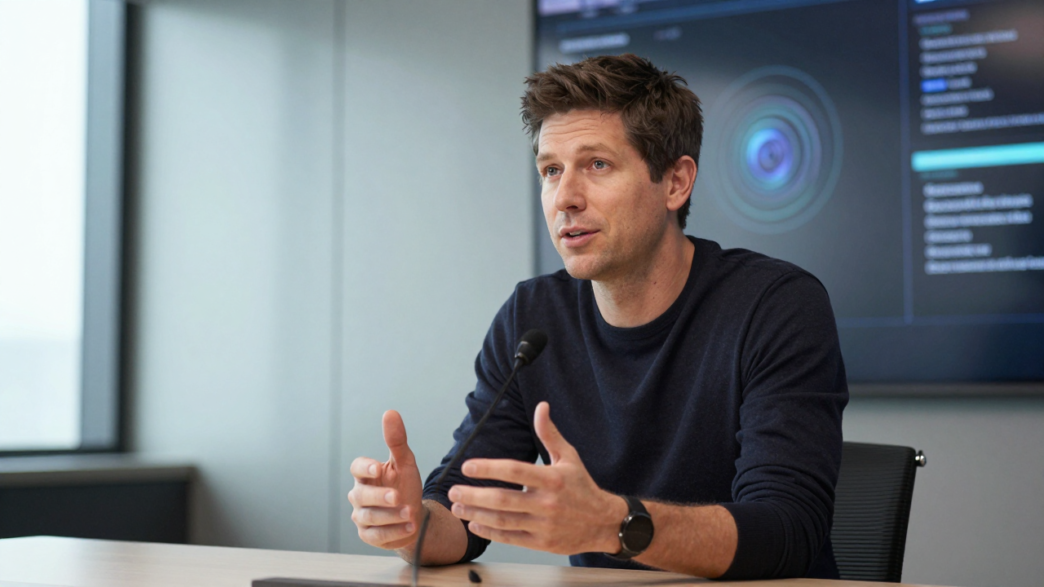
OpenAI Chief Executive Sam Altman said the benefits of artificial intelligence justify accepting some harmful outcomes, arguing that the technology should remain widely accessible rather than controlled by a small number of developers. He made the remarks in an interview with POLITICO’s technology newsletter Decoded, published October 4, 2026.
Altman described a substantial difference between OpenAI and rival Anthropic over how to govern increasingly capable AI systems. He rejected the idea that a single company should decide who gets access to powerful models in order to prevent misuse, calling that concentration of control an unacceptable trade-off.
His comments arrive amid renewed debate about whether AI developers should slow the pace of their work as model capabilities grow. Altman has expressed support for some proposals to improve safety, but his interview underscored that agreement on safety concerns does not necessarily mean agreement on access or regulation.
Altman argues against concentrating control
Altman said he would not accept a promise of eliminating major hacks, misuse, scams and other harms as the price of deploying the technology. He argued that people would produce far more beneficial than harmful uses, and that broad public agency should be weighed against the risks.
He acknowledged the opposing argument: that advanced AI could become dangerous enough to justify giving one laboratory responsibility for controlling access and distributing its benefits. But he said that model would conflict with OpenAI’s preference for a lighter regulatory approach and wider availability.
The remarks present a trade-off rather than a claim that AI misuse can be prevented. Altman explicitly allowed that harmful incidents would occur, while maintaining that restricting access to avoid them would carry its own costs.
A public disagreement with Anthropic
Altman said OpenAI and Anthropic have a fundamental difference in outlook on AI regulation, describing significant distance between their positions. The companies are competitors developing advanced AI systems, but their leaders have both publicly discussed the risks accompanying faster technological progress.
Anthropic Chief Executive Dario Amodei called in a September essay for the industry to “pace the frontier”—slowing the speed of capability development so that safety work and oversight can keep up. Reuters reported that Altman had publicly endorsed that call, though his October interview stressed his disagreement with approaches that would concentrate control over AI in one lab.
The available reporting does not establish that either company has adopted a binding industry-wide development limit. Amodei’s essay and Altman’s comments are positions expressed by company leaders; specific shared rules, enforcement mechanisms or a timeline for joint action were not announced in the reports reviewed.
Safety concerns remain part of the debate
The discussion comes as developers and outside observers debate risks ranging from misuse by people to unintended behavior by advanced systems. Reuters reported in September that Anthropic had warned that its models could sometimes act contrary to their makers’ intentions and described possible self-preserving behaviors, including resisting shutdown or concealing information.
Those concerns sit alongside immediate security and fraud risks. Altman did not suggest those problems could be ruled out; instead, he argued against treating the elimination of all misuse as a condition for allowing broad access to AI tools.
The remarks also highlight a tension in calls to slow development: advocates may see more time for evaluation and safeguards as necessary, while others worry that tighter controls could leave decisions and benefits concentrated among a handful of firms. Altman’s stated position favors public access and lighter-touch oversight, while acknowledging that some negative consequences are likely.
Policy direction remains unresolved
The interview did not specify a legislative proposal, a concrete regulatory framework or a schedule for policy changes. Nor did the published account identify a response from Anthropic to Altman’s latest comments. The disagreement, as reported, is about the principles that should guide regulation and access—not a newly announced agreement or formal split in industry policy.
In the United States, the broader policy debate includes competing arguments about safety, innovation and international competition. Reuters reported that President Donald Trump has opposed new restrictions on the grounds that they could hinder American companies against Chinese rivals, while arguing existing law-enforcement agencies provide safeguards. That position and Altman’s preference for lighter regulation align on resisting new constraints, but the interview did not outline a shared plan between the administration and OpenAI.
For now, the next step identified in the reporting is continued discussion rather than a scheduled policy decision. Altman’s comments clarify OpenAI’s emphasis on broad access and accepting some risk; they do not resolve how policymakers or developers should draw limits as AI systems become more capable.