

Updated:
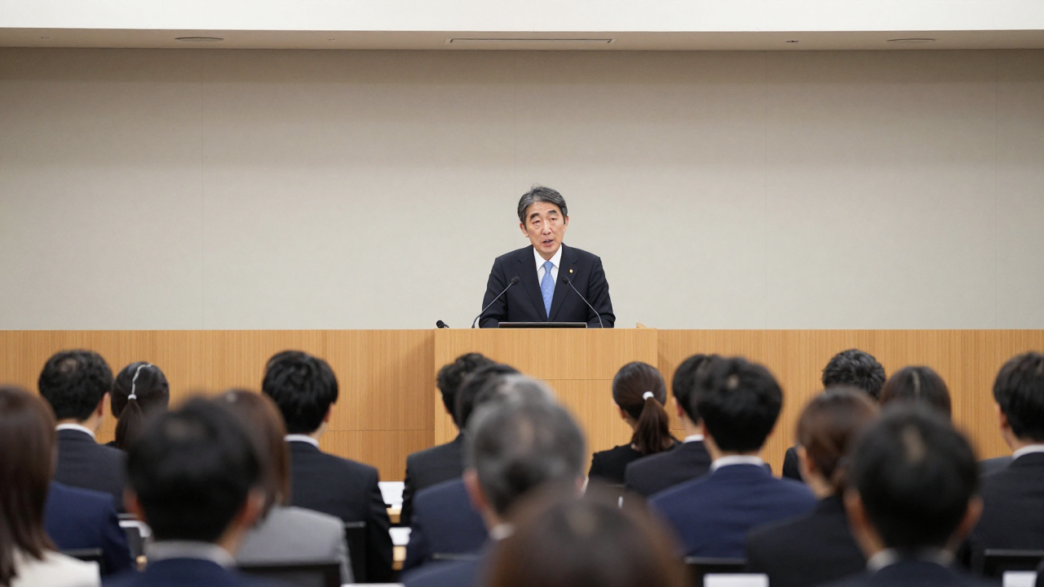
TOKYO, Oct. 6, 2026 — Bank of Japan Governor Kazuo Ueda said it had become more important to keep underlying inflation anchored around the central bank’s 2% target, signaling that the BOJ remains prepared to raise interest rates as it withdraws monetary support. He made the remarks Tuesday in a speech to Japan’s annual National Securities Conference.
Ueda said economic and price developments were tracking the BOJ’s baseline outlook: the economy was recovering moderately and longer-term inflation expectations were rising. He also warned that price pressures tied to the conflict involving the United States and Israel and Iran, strong demand linked to artificial intelligence, and yen weakness could raise the risk of underlying inflation overshooting the target.
The message comes after the BOJ raised its policy rate in September to 1.25%, a 31-year high. Ueda said financial conditions remained accommodative and continued to support economic activity even after that move. The central bank’s task, he said, was to adjust the amount of monetary support while limiting the risk that inflation running too high would harm the economy.
Ueda links inflation risks to domestic and external pressures
Underlying inflation is the BOJ’s measure of the broader, demand-driven price trend, rather than a single month’s movement caused by temporary factors. Ueda’s focus on anchoring that measure around 2% indicates that policy decisions are being framed not only around whether inflation reaches the target, but also around whether it can remain near it without accelerating excessively.
In his speech, Ueda pointed to several sources of potential pressure. The weak yen can make imported goods and inputs more expensive, while demand associated with artificial-intelligence investment may add to price pressures. He also cited the US-Israeli war on Iran as a risk, though he did not quantify its effects or specify how those factors would change the timing of future rate decisions.
Ueda said the BOJ would continue raising borrowing costs to adjust the degree of monetary support. He did not give a timetable or a specific level for the next increase in the remarks reported Tuesday. The statement therefore signals a continuing tightening direction, rather than a commitment to raise rates at the next meeting.
September’s increase marks a faster policy shift
The September increase lifted the BOJ’s policy rate to 1.25%, its highest level in 31 years. The move followed an earlier increase in June, putting the two hikes three months apart. Before this latest phase, the BOJ had moved more cautiously as it assessed whether Japan’s return to sustained price growth would be durable.
The central bank has a 2% inflation target. Its recent shift toward guarding against an overshoot reflects a change in emphasis: after years in which policymakers sought to overcome weak price growth, the concern now includes preventing inflation from becoming too entrenched above the desired pace. Ueda’s Tuesday remarks describe that challenge as compatible with continued moderate recovery and still-supportive financial conditions.
What the governor said—and what remains undecided
Ueda’s comments were delivered at the National Securities Conference, an annual gathering of securities firms, and were reported by Reuters. He said the economy and prices were moving in line with the BOJ’s baseline scenario, but did not present new forecasts or announce a policy decision in the speech.
The speech also left open how the BOJ will weigh conflicting developments. The governor identified forces that could lift underlying inflation, but gave no numerical assessment of their likely contribution. Nor did he indicate whether the bank would accelerate, pause or maintain the recent pace of increases; that will depend on the central bank’s assessment of economic and price data.
Next milestone is the BOJ’s policy meeting
The BOJ’s next policy meeting is scheduled for Oct. 29–30, when policymakers are due to review interest rates. Reuters separately reported on Oct. 6 that three people familiar with the bank’s thinking said the BOJ may signal in its next quarterly outlook report that underlying inflation has roughly reached 2%. That possibility is a source-based report, not an announcement by Ueda or a confirmed decision by the policy board.
The distinction matters: a judgment that underlying inflation is near target would not itself establish that the BOJ will raise rates at that meeting. Ueda’s public message was that anchoring inflation around 2% has become more important and that borrowing costs will continue to be adjusted. The timing and scale of any further move remain for the policy board to determine.