

Updated:
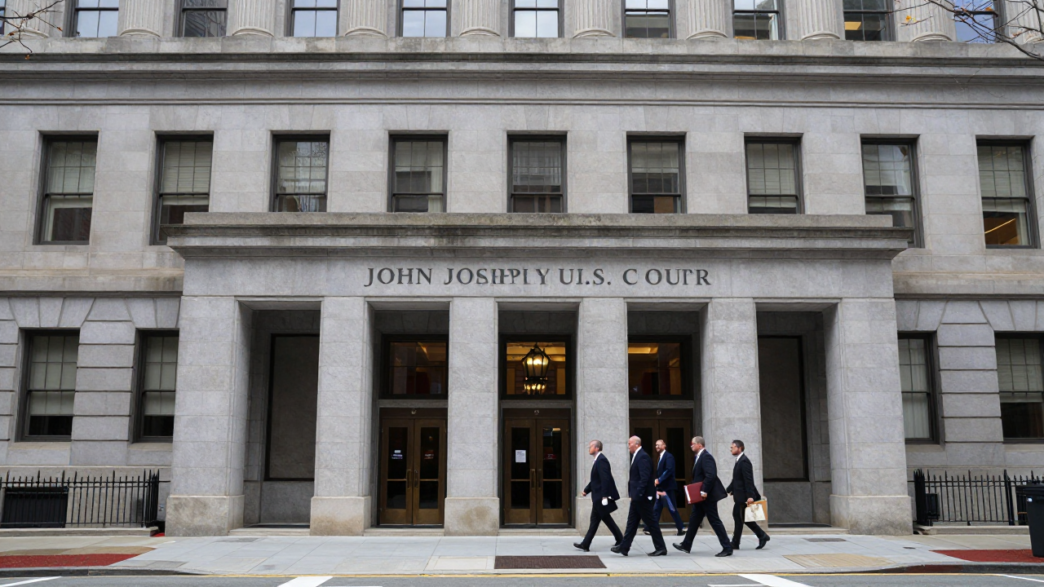
A federal appeals court in Boston heard arguments Tuesday over whether Health Secretary Robert F. Kennedy Jr.’s appointees may return to a key vaccine advisory committee, after a lower-court judge suspended 13 of them. The Trump administration says the order has left the panel unable to meet; medical groups that sued argue the appointments did not comply with federal law.
The three-judge panel of the 1st U.S. Circuit Court of Appeals did not rule at the hearing. The dispute concerns only the order blocking the appointees, not the separate parts of the lower-court ruling that paused changes to the childhood vaccine schedule and set aside votes taken by Kennedy’s reconstituted committee.
Administration says committee cannot function
Justice Department attorney Matthew Zorn told the appeals court that the appointment order was preventing the Advisory Committee on Immunization Practices, or ACIP, from doing its work. He argued that officials were reluctant to appoint replacements because those selections might also be challenged and blocked.
The administration asked the court to vacate the order so Kennedy could reconstitute the panel. ACIP advises the Centers for Disease Control and Prevention on vaccine policy, and its recommendations have historically informed federal guidance. The government’s position is that the current uncertainty has left the committee without the quorum needed to issue recommendations.
Chief U.S. Circuit Judge David Barron questioned the basis for the specific relief imposed by the district court, asking what harm the order was intended to address and how barring the appointees was legally justified. Other judges also pressed the parties on the court’s authority to review the order at this stage.
Medical groups defend the appointment challenge
Andrew Pincus, representing the American Academy of Pediatrics and other medical organizations, urged the court to leave the order in place. The plaintiffs say Kennedy’s selections failed to meet federal requirements for a balanced advisory committee with appropriate expertise.
The groups also argued that the appeals court may lack jurisdiction because the district judge’s order is not a final decision. Their position, as presented at the hearing, was that the government could lawfully rebalance the panel rather than simply have the suspended appointments reinstated.
The case was brought by the American Academy of Pediatrics and other medical and public-health organizations. Their broader lawsuit challenged Kennedy’s replacement of the panel’s previous members as well as federal vaccine-policy changes, alleging that the administration failed to follow required procedures.
Judge’s March order covered several actions
On March 16, U.S. District Judge Brian Murphy found that the plaintiffs were likely to succeed in arguing that the committee’s reconstitution violated the Federal Advisory Committee Act. That law governs federal advisory committees, including requirements intended to ensure they are balanced. Murphy stayed the appointments of 13 members and also halted votes taken by the reconstituted panel.
Murphy’s order addressed other disputed policies as well. It paused the CDC’s Jan. 5 move to reduce the number of routinely recommended childhood vaccinations and set aside ACIP votes made under Kennedy, including votes affecting recommendations on hepatitis B vaccination for newborns and COVID-19 shots.
The administration has appealed only the part of Murphy’s ruling blocking the 13 appointments. It has not asked the appeals court in this case to overturn the other portions of the March order, leaving those measures outside the narrow question argued Tuesday.
Panel meetings remain on hold
ACIP has not met since Murphy’s ruling and has canceled two meetings, Reuters reported. Another meeting was scheduled for Oct. 21-23, but the committee could cancel it if it is not reconstituted before then. The hearing itself did not determine whether that meeting will go ahead.
The dispute has stalled the committee’s role in federal vaccine recommendations at a time when health officials and medical groups are addressing guidance for the 2026-27 respiratory-virus season. The Associated Press has reported that, with the committee inactive, medical organizations have issued recommendations independently, while official CDC guidance remains in place.
Appeals court ruling remains pending
Tuesday’s arguments raised both the government’s claim that the panel cannot operate and the plaintiffs’ challenge to the court’s power to hear this appeal now. The judges did not announce a decision, and no timetable for a ruling was reported.
The immediate outcome will determine whether the stayed appointees can serve while litigation continues. It will not, by itself, resolve the wider lawsuit over the administration’s vaccine-policy changes or decide whether the suspended appointments ultimately complied with federal law.