

Updated:
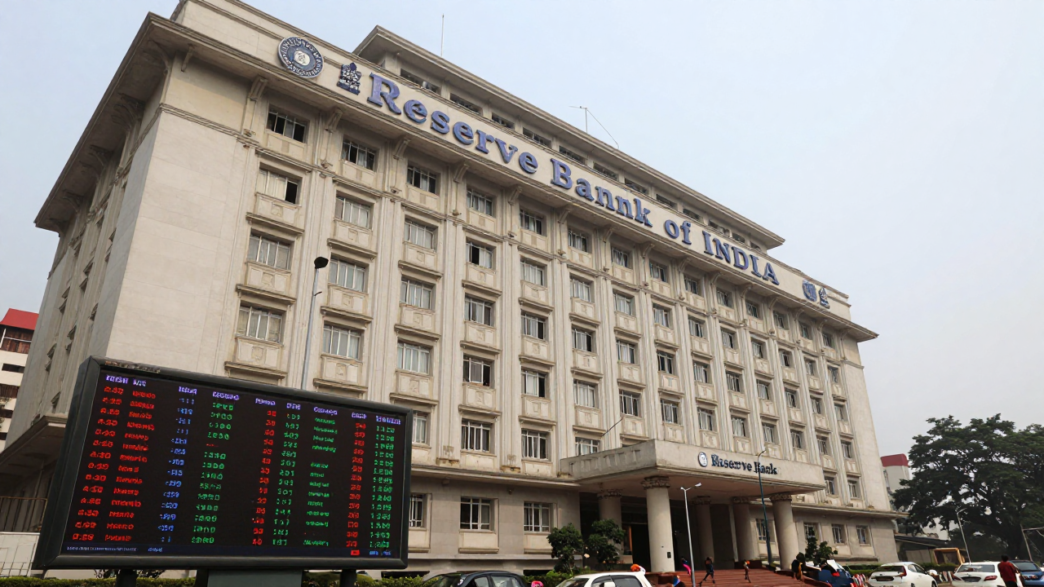
The Reserve Bank of India raised its benchmark repo rate by 25 basis points to 5.5% on October 7, its first increase since February 2023, as the central bank responded to renewed inflation pressures. The six-member Monetary Policy Committee voted unanimously at its October 5–7 meeting and shifted its policy stance from neutral to “calibrated tightening,” signaling that further moves could depend on how conditions develop.
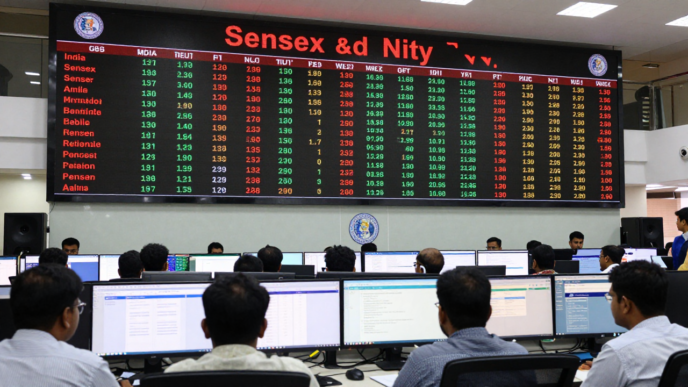
Indian equities remained lower after the decision, although financial shares recovered from early declines. The Nifty 50 was down 0.33% and the Sensex 0.13% at 11:06 a.m. local time, after both indexes had fallen about 0.7% before the announcement, Reuters reported. The rate increase was widely anticipated; investors were also assessing the RBI’s new stance, higher oil prices and tighter global financial conditions.
Inflation concerns drive the policy shift
The RBI’s decision reversed part of the easing that began in February 2025, when it started cutting rates to support economic activity. The higher repo rate raises the benchmark cost at which banks borrow from the central bank, influencing borrowing conditions across the economy over time.
Investing.com reported that consumer-price inflation reached 4.82% in August, above the RBI’s 4% target for a third consecutive month. It also cited the central bank’s projection of average inflation of 5.8% over the next three quarters. Higher oil prices linked to the Middle East conflict and a weak monsoon were among the pressures identified in the report.
At the same time, the economy has continued to expand: GDP grew 7.8% in April–June, according to Investing.com’s account of the policy outlook. Mint reported that the RBI raised its forecast for FY27 real GDP growth by 40 basis points to 7.1%, while lifting its FY27 consumer-price inflation projection to 5.2%. The differing figures refer to separate measures and forecast periods; the central bank’s policy challenge is to contain price pressures without needlessly weakening growth.
Markets had anticipated the quarter-point increase
The initial index declines were followed by a partial recovery. Reuters said the Nifty and Sensex had been down roughly 0.7% ahead of the announcement, then stood 0.33% and 0.13% lower, respectively, at 11:06 a.m. local time. Mint reported that the Sensex had earlier dropped as much as 547 points and the Nifty 198 points before recovering from their intraday lows.
That uneven response reflected a distinction market participants had drawn between the widely expected 25-basis-point move and the RBI’s guidance about what might follow. V.K. Vijayakumar, chief investment strategist at Geojit Investments, told Mint that the hike itself had largely been priced in, while the policy stance and the bank’s assessment of growth and inflation could have greater bearing on sentiment.
External pressures also shaped the trading day. Mint reported Brent crude near $102 a barrel and the U.S. 10-year Treasury yield at 5.31%, up from 5.27% in the previous session. Higher oil can add to India’s import bill and inflation pressures, while elevated U.S. yields can complicate the outlook for capital flows and the rupee.
Sector reactions diverged
Financial shares rebounded after opening lower. Reuters reported that the Nifty Financial Services index moved to a 0.3% gain and the banking index to a 0.2% gain; private banks rose 0.4% and state-owned banks 0.8%. Analysts cited by Reuters said some benchmark-linked loans may reprice faster than banks’ deposit costs, potentially supporting lending margins in the second half of the fiscal year.
That potential benefit is not uniform or guaranteed. Banks may face higher funding costs as deposits reprice, and the balance between lending income and deposit expenses will determine how the rate move affects individual lenders. Investing.com described large banks’ outlook as mixed, noting that lending yields can adjust before deposit costs catch up.
Rate-sensitive sectors were weaker in morning trade. Reuters put automobile shares down 1.1%, real estate down 0.6% and fast-moving consumer goods down 0.6%. Higher borrowing costs can weigh on loan-financed purchases and property affordability, while debt-funded companies may face increased financing expenses. Mint also reported declines in metals, autos, real estate and IT stocks during the session.
Individual company moves had additional drivers. Titan fell 3.7%, with Reuters citing analysts’ concerns about weaker-than-expected growth in its jewellery segment after a business update. The decline should not be attributed solely to the RBI decision.
Further rate moves remain uncertain
Before the decision, expectations for the scale of future tightening varied. Investing.com reported that swap markets had priced roughly 100 basis points of increases over 12 months, while Nomura and Barclays expected 25–50 basis points in total, compared with forecasts of 75–100 basis points from BofA, Goldman Sachs and ANZ. Those were analysts’ expectations, not RBI commitments.
The RBI’s move to calibrated tightening makes the future path conditional rather than fixed. The available reporting does not establish a schedule for another increase or a specific cumulative total. Oil prices, inflation readings, the rupee, global interest rates and domestic growth will remain relevant to how the outlook develops.
For equities, the decision marks a change in the interest-rate backdrop, but the day’s trading showed no single market-wide response: indexes remained down, while financial shares recovered and rate-sensitive groups lagged. Investors were also contending with global market pressures and company-specific news, making it difficult to isolate the effect of the RBI’s 25-basis-point increase alone.