

Updated:
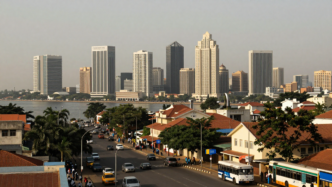
The World Bank expects Nigeria’s economy to grow by an average of 4.4% a year from 2026 through 2028, as recent gains in services and agriculture support a stronger outlook. The forecast follows real gross domestic product growth of 4.2% in the first half of 2026, compared with 3.9% in the same period a year earlier, according to the bank.
The outlook, published on Thursday, October 8, comes with a warning that faster output has not yet translated into enough productive jobs or a substantial reduction in poverty. The bank identifies investment, productivity, infrastructure and human capital as priorities for turning economic stabilization into broader improvements in living standards.
Forecast rises from 2025 pace
The World Bank’s Nigeria outlook puts growth at 4.3% in 2026 and 4.4% in each of 2027 and 2028, according to contemporaneous reporting on its forecast. The bank’s country page summarizes the projection as an average of 4.4% across 2026–28. The figures point to continued expansion, rather than a sharp acceleration in any single year.
Services and stronger agriculture were the main drivers of the 4.2% expansion in the first half of 2026, the World Bank said. The latest growth result was higher than the comparable period in 2025, but the bank cautioned that the pace remains insufficient to create enough productive employment and materially reduce poverty.
Inflation and household pressures remain
The bank expects inflation to ease toward 12% by 2028. Disinflation has continued, but higher fuel and transport costs linked to the Middle East conflict slowed progress. Headline inflation fell from 27.4% in March 2025 to 15.1% in February 2026, then averaged 15.7% from March through July. Food inflation stood at 20.3% in July.
Those pressures weigh particularly heavily on lower-income households. The World Bank estimates that more than 60% of Nigerians were below the national poverty line in 2025, and says poor households can spend as much as 70% of their income on food. Separately, its country overview estimates 69.6% of Nigerians lived below the lower-middle-income poverty line of $4.20 a day in 2025.
External position improves, fiscal constraints persist
Nigeria’s external accounts strengthened during the first half of 2026, supported by oil exports and portfolio inflows. The current-account surplus reached $5.0 billion in the first quarter, up from $1.4 billion in the fourth quarter of 2025, while gross foreign reserves stood at $51.9 billion at the end of July, according to the World Bank.
The bank also flagged a vulnerability: reliance on short-term portfolio flows leaves the external position exposed to changes in investor sentiment. Meanwhile, it projected the fiscal deficit to widen to 3.5% of GDP in 2026 from 3.1% in 2025 as spending increases. High debt-service costs and weaknesses in budget execution and public investment management continue to limit how effectively revenue gains can support development.
Growth gains have yet to close the jobs gap
The World Bank’s outlook places the current expansion within a broader challenge: making growth more inclusive. It says better infrastructure, stronger human capital, greater competition and expanded social protection will be important to lift productivity and job creation. Gaps in electricity, transport and logistics also continue to obstruct business activity and the integration of domestic markets.
The forecast is conditional on maintaining economic stability and addressing those structural constraints; it does not by itself establish how quickly incomes or employment will improve. The bank’s latest figures show recent growth momentum alongside persistent inflation, poverty and fiscal pressures. Its projection covers the three years through 2028, with the next test being whether output gains are accompanied by stronger job creation and lasting improvements in household welfare.