

Updated:
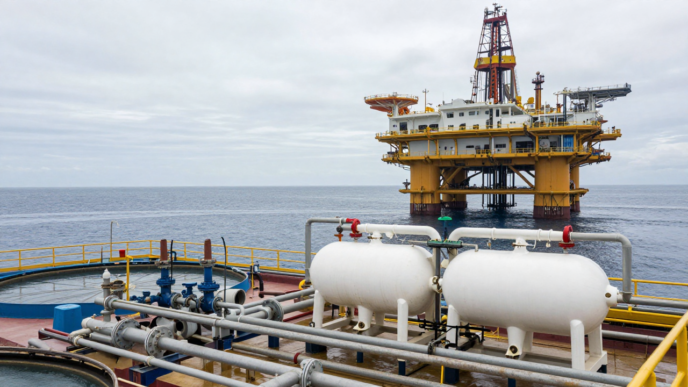
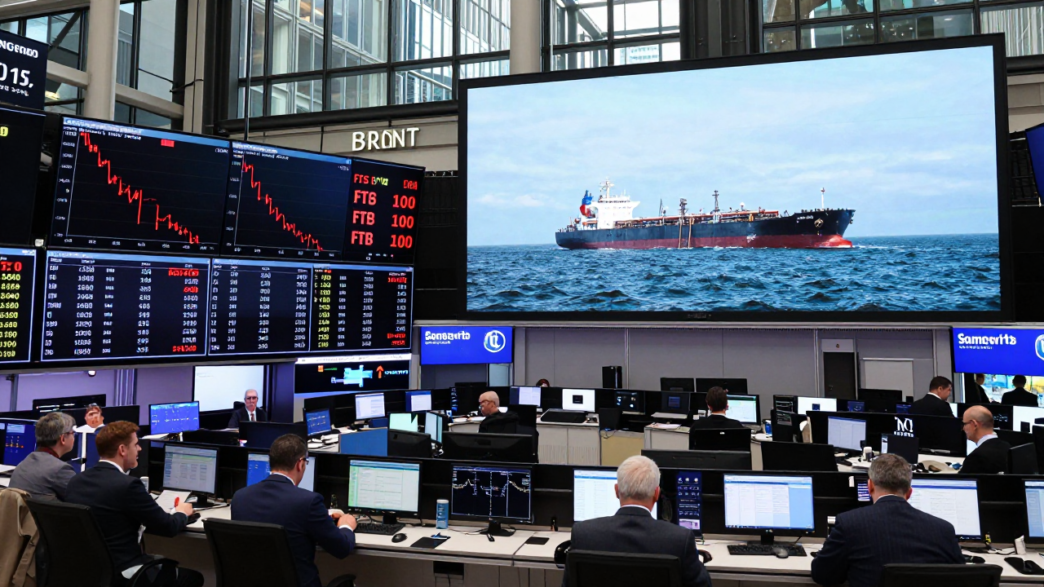
London’s FTSE 100 fell on Thursday, October 8, as losses among mining companies and rising government bond yields weighed on shares. Oil moved in the opposite direction: Brent crude rose nearly 4% as renewed Middle East tensions and uncertainty over shipping through the Strait of Hormuz heightened concerns about supply.
The blue-chip index was down 0.6% at 10,392.22 in early European trading, according to the Associated Press. Investing.com reported a 0.6% decline at 07:21 GMT. The weakness was part of a broader European retreat, with Germany’s DAX and France’s CAC 40 also lower.
Mining shares lead the decline
Antofagasta was among the FTSE 100’s weakest stocks, falling 2.1%, while Anglo American, Rio Tinto and Fresnillo dropped between 1.4% and 1.8%, Investing.com reported. The selling coincided with declines in several industrial metals: silver was down about 1.5%, aluminium 0.6% and nickel 0.63%. Copper was little changed in the report’s early-market snapshot.
The moves showed a split within the commodities market. Crude prices climbed as traders focused on the risk of disrupted Gulf supplies, while weakness in metals accompanied the pressure on mining shares. The available reporting did not identify a company-specific announcement driving the miners’ declines.
Brent rises as shipping risks return to focus
Brent futures gained 3.7% to $103.89 a barrel in Investing.com’s early snapshot; U.S. West Texas Intermediate rose 3.2% to $91.25. The Associated Press reported Brent at $104.18 and U.S. crude at $91.70 in its early Thursday update, reflecting the separate timing of the market observations.
Shipping activity through the Strait of Hormuz was a central concern. Investing.com, citing data from analytics firm Kpler, said seven vessels transited on Tuesday and 10 on Wednesday, down from more than 20 on Sunday and Monday. It reported crude flows of at least 10.1 million barrels a day, equal to 74% of pre-war levels.
The United Kingdom Maritime Trade Operations agency said a tanker was hit by projectiles off Qatar on Wednesday, according to Investing.com. The reports pointed to continuing risks for shipping and oil flows, but did not establish that the latest attack had caused a specific supply interruption.
Conflicting accounts over the strait
Public statements about conditions and oil movements differed. Investing.com reported that a White House official told Al Jazeera the strait was open and that large volumes of oil were being escorted out daily, while Kpler’s figures showed lower vessel traffic and flows below pre-war levels.
The same report described diplomatic uncertainty: NBC reported indirect talks in New York and said Washington had rejected an Iranian proposal to reopen the waterway in exchange for sanctions relief. The report did not identify an agreed timetable for reopening or a confirmed outcome from the talks. Claims made by Iranian officials about U.S. military losses were not independently substantiated in the account.
Bond yields add pressure to equities
Higher borrowing costs formed a second headwind for stocks. Investing.com put the U.S. 10-year Treasury yield at 5.329%, near its reported 52-week high of 5.366%, while the UK 30-year gilt yield reached 6.018%, close to its 6.036% peak.
The Associated Press also linked the wider market retreat to rising bond yields, reporting that the U.S. 10-year yield remained near a multi-decade high after Federal Reserve meeting minutes indicated that most officials expected another rate increase this year. Higher yields can raise financing costs for companies and households; the available reports did not quantify the effect on individual FTSE 100 constituents.
Company news offered some contrast
Not all major UK stocks were lower. Investing.com reported that Tesco raised the lower end of its full-year profit forecast after first-half operating profit increased 6.5%, and expanded its share buyback to £950 million. Imperial Brands reaffirmed its full-year outlook and announced a new £1.5 billion buyback, while Unite Group said the value of its main student-accommodation fund fell 4% during the quarter and expected to sell £300 million to £400 million of assets this year.
Those company updates were set against a market still responding to energy-supply concerns and elevated yields. The reports available on Thursday morning did not establish how the FTSE 100 would finish the session or whether shipping traffic through Hormuz would recover.