

Updated:
Yemen’s Saudi-backed government announced on October 4, 2026, that it had begun a military counteroffensive against the Iran-aligned Houthi movement, according to Reuters. The announcement comes as fighting between the Houthis and Saudi Arabia has resumed, ending a period of relative calm and renewing concern about security around the Red Sea.
The conflict matters beyond Yemen because Houthi forces control territory near major maritime routes and have attacked ships in the Red Sea. Those risks now intersect with disruption to energy exports through the Strait of Hormuz during the wider conflict involving Iran, raising the stakes for shipping and regional governments. Reuters’ report did not specify the counteroffensive’s locations, forces involved or timetable.
A movement rooted in northern Yemen
The Houthis are a political, religious and armed movement that emerged in Yemen’s northern highlands during the 1990s. The group takes its name from the Houthi family and grew out of a revival movement among Zaydis, a branch of Shi’ite Islam with a long history in Yemen. Its rise was shaped by grievances in the north, where supporters said their communities had become economically and politically marginalised.
The movement fought successive rounds of conflict with Yemen’s national army before expanding its influence amid the political upheaval that followed the 2011 Arab Spring protests. After President Ali Abdullah Saleh was removed from power, the Houthis rejected a Gulf-backed transition process and consolidated control in parts of the north. In 2014, they seized the capital, Sanaa, prompting the internationally recognised government to move south toward Aden.
The group is led by Abdul Malik al-Houthi, a secretive figure who became its most prominent leader as it developed from a regional movement into a force capable of challenging Yemen’s government and its foreign backers. The Houthis now rule much of northwestern Yemen, where a large share of the country’s population lives.
How Saudi Arabia became involved
Saudi Arabia intervened militarily in 2015, leading a coalition that included the United Arab Emirates. Riyadh said the intervention aimed to dislodge the Houthis, restore the internationally recognised government and revive Yemen’s political transition. Saudi Arabia and its partners were also concerned about growing Iranian influence on their southern border.
The intervention deepened Yemen’s civil war but did not remove the Houthis from power in the northwest. Years of fighting, airstrikes and economic breakdown devastated the country and contributed to a major humanitarian crisis. Neither side secured a decisive victory, and the conflict settled into an uneasy stalemate.
A United Nations-brokered truce in 2022 helped reduce major fighting between the warring sides. Reuters described that period of relative calm as lasting until 2026, when renewed hostilities between Saudi Arabia and the Houthis reignited the conflict. The government’s October 4 announcement marks a new military effort, but the available report did not say whether it would alter the balance of control on the ground.
Iranian ties, but not a simple proxy relationship
Iran supports the Houthis and presents them as part of its regional “Axis of Resistance,” alongside groups including Lebanon’s Hezbollah and Iraqi Shi’ite militias. The United States says Tehran has armed, funded and trained the movement, with Hezbollah’s help. The Houthis deny being an Iranian proxy and say they develop their own weapons.
The relationship is not identical to Iran’s ties with every other group in that network. Reuters noted that the Houthis do not recognise Iran’s supreme leader as their ultimate religious authority in the way Hezbollah and Iraqi groups do. Their priorities are substantially domestic, even as their political messaging aligns with Tehran and their actions can serve Iranian regional interests.
Why shipping is part of the story
The Houthis’ military reach has made Yemen’s location strategically significant. The movement began attacking vessels in the Red Sea in November 2023, saying the campaign was in support of Palestinians during Israel’s war in Gaza. It also launched drones and missiles toward Israel. Attacks on shipping between 2023 and 2025 forced some cargo operators to reroute vessels around Africa, adding time and cost to journeys between Europe and Asia, according to Reuters.
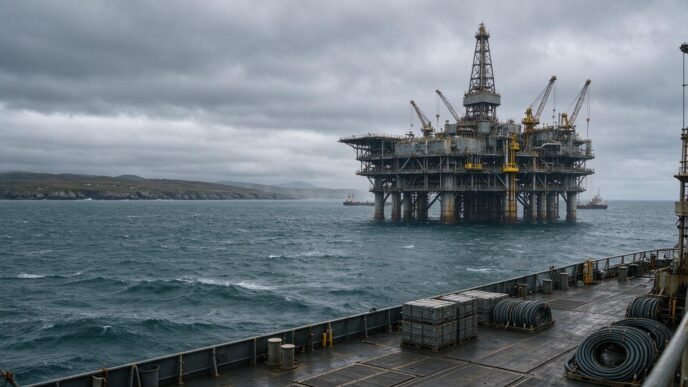
Attacks on Saudi and Emirati infrastructure have also demonstrated the group’s ability to threaten targets beyond Yemen. During the current conflict involving Iran, Houthi threats to oil tankers have added to concern about energy supplies already affected by restrictions in the Strait of Hormuz. The October 4 report did not identify a specific new attack on shipping tied to the government’s counteroffensive.
What is known about the latest offensive
The Saudi-backed government’s announcement establishes that it says a counteroffensive has begun, with the stated aim of retaking territory controlled by the Houthis. Reuters described the renewed Saudi-Houthi fighting as a revival of Yemen’s frozen civil war and warned of heightened risks to Red Sea shipping. The report provided no operational details, including which areas were targeted or what forces were committed.
It therefore remains unclear how extensive the operation will be, whether Saudi Arabia is directly participating in the announced push, and whether the escalation will produce new changes in territorial control. Those details will be important to determining whether the latest announcement marks a sustained campaign or a more limited phase in Yemen’s long-running conflict.