

Updated:
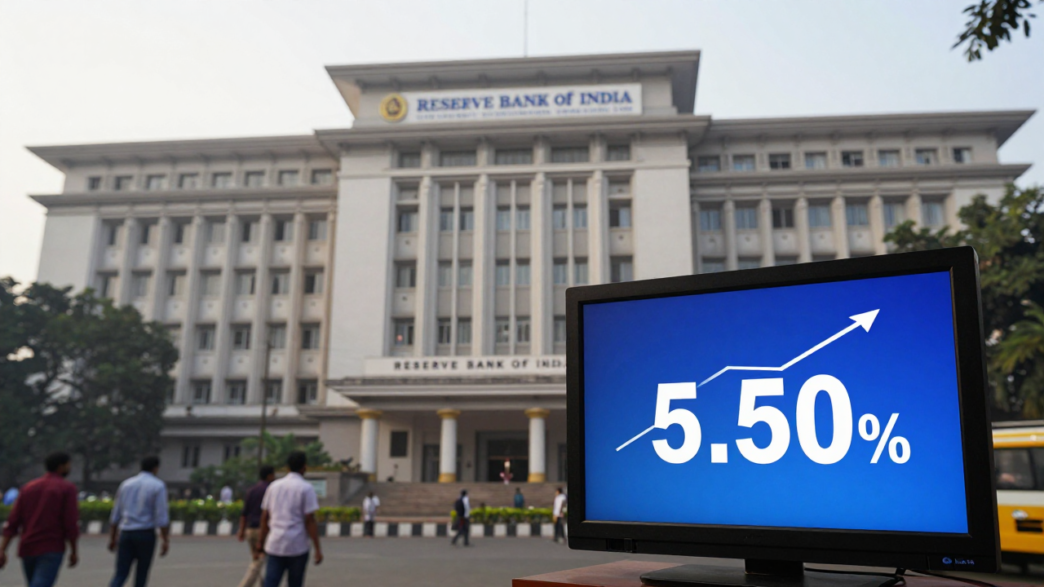
The Reserve Bank of India raised its benchmark repo rate by 25 basis points to 5.5% on Wednesday, October 7, its first increase since February 2023, as higher food and fuel costs intensified inflation concerns. The six-member Monetary Policy Committee voted unanimously for the move and shifted its stance from neutral to calibrated tightening, Governor Sanjay Malhotra said.
The decision comes as India contends with global energy-market disruption, weak monsoon conditions and pressure on the rupee, while economic growth remains robust. The RBI also lifted its fiscal-year growth forecast, but raised its inflation projection and signalled that rate cuts are not an option in the near term.
Inflation pressure prompts policy reversal
India’s consumer-price inflation reached 4.82% in August, up from 4.5% in July, according to Reuters reporting. The August figure was above the RBI’s 4% medium-term target for a third consecutive month. The central bank’s concern is not confined to a small set of items: Reuters reported that prices were rising faster than 4% across nearly half of the consumer basket.
Food and fuel costs are central to the outlook. Higher international oil prices have added to domestic price pressures, while deficient and uneven monsoon rainfall and El Niño conditions threaten agricultural output and could feed into food prices. India imports much of its energy, leaving its inflation outlook exposed to global oil-market shocks.
Malhotra said the inflation outlook was no longer benign and pointed to signs that price increases were becoming more widespread. The move reverses the easing direction of the previous policy phase: the RBI had last raised rates in February 2023, AFP reported.
Growth gives the central bank room to tighten
The RBI raised its real GDP growth forecast for fiscal year 2026-27 to 7.1%, from 6.7%, Reuters reported. India’s economy grew 7.8% year on year in the April-June quarter, above the central bank’s earlier 7% forecast. That strength gives policymakers more scope to address inflation even as higher borrowing costs may affect consumers and businesses.
The growth picture is not without risks. The RBI cited global uncertainty, elevated commodity prices and the possibility that weak monsoon conditions could weigh on rural demand. Its projections underline the tension confronting policymakers: economic activity is resilient, but the price outlook has worsened.
For borrowers, a higher repo rate raises the benchmark cost at which the central bank lends to commercial banks. How quickly the increase is reflected in loan and deposit rates will depend on banks’ pricing decisions and the terms of individual products; the policy announcement itself does not set every retail rate.
Rupee and oil add to the challenge
The RBI’s decision also comes amid pressure on the Indian rupee and a volatile global backdrop. AFP reported that the currency had been near record lows in the days before the announcement, while crude oil was hovering around $100 a barrel. Higher oil prices can increase India’s import costs and complicate efforts to contain inflation.
The central bank has also pursued measures to attract foreign-currency inflows. AFP reported that a deposit scheme aimed at the Indian diaspora drew about $127 billion. Such steps address external funding and currency pressures, while the repo-rate increase is a monetary-policy response to inflation risks; the two approaches are related to the broader economic environment but serve different purposes.
Rate cuts ruled out for the near term
The MPC changed its policy stance to calibrated tightening, with the stance decision approved by a 4-2 majority, according to Reuters-syndicated reporting in The Economic Times. Malhotra said rate cuts were off the table in the near term. Future policy action, he indicated, would depend on how growth, inflation and the effects of supply shocks develop.
That language leaves the timing and size of any further move unsettled. Reuters reported that nearly 60% of economists in its poll had expected a 25-basis-point increase ahead of Wednesday’s decision. The RBI’s next steps will depend on incoming data, including whether food and fuel pressures broaden further and whether economic momentum holds.
The decision therefore marks both a rate increase and a change in the policy signal: after a period without a hike, the committee has prioritised guarding against persistent inflation. The RBI’s higher growth forecast offers support for that choice, but the outlook remains exposed to energy prices, weather conditions and currency volatility.