


Updated:
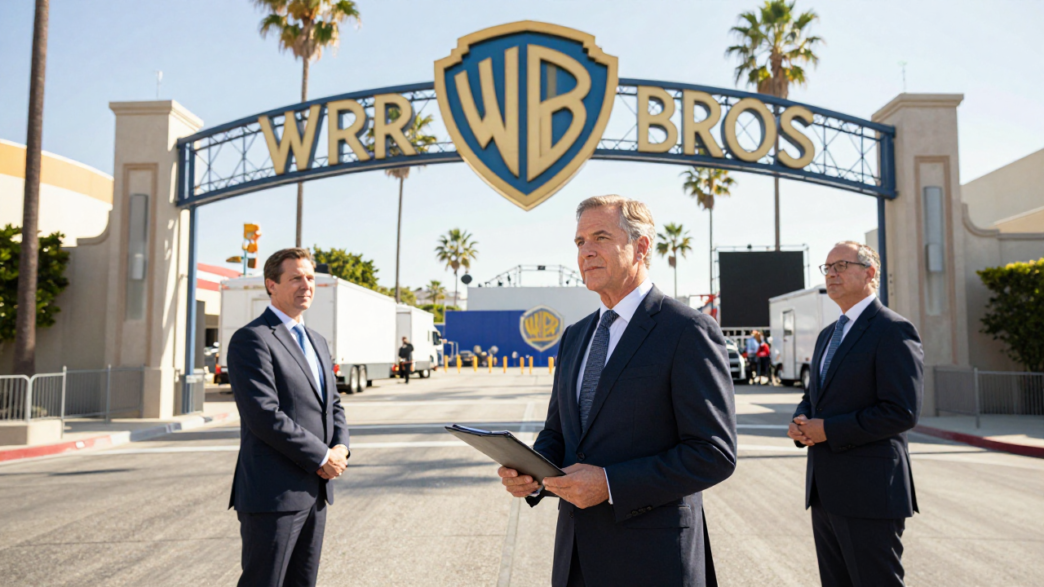
Paramount Skydance Chief Executive David Ellison plans to put Paramount Pictures executives Dana Goldberg and Josh Greenstein in charge of Warner Bros. Pictures after Paramount completes its acquisition of Warner Bros. Discovery, Bloomberg reported Friday, citing people familiar with the plans. The proposed move would place both major film studios under the same leadership as the companies prepare to combine.
Warner Bros. film chiefs Michael De Luca and Pamela Abdy are not expected to join the merged company, according to Bloomberg’s report. The management decisions are being made ahead of the transaction’s expected close on October 6, and come as Paramount sets out how it intends to organize the enlarged media business.
The film-studio leadership plan is part of a broader reshaping across the companies’ television, streaming and corporate operations. The deal brings together two of Hollywood’s remaining legacy studios and an extensive portfolio of networks, production businesses and streaming services. Its completion remains subject to closing conditions, while the reported personnel arrangements have not all been publicly detailed by the companies.
Paramount executives set to oversee Warner film studio
Bloomberg reported that Goldberg and Greenstein, who lead Paramount Pictures, will assume operational oversight of Warner Bros. Pictures once the acquisition closes. The report described the appointments as plans, citing unnamed people because the information was not public; Paramount did not confirm the specific film-studio arrangement in the material reviewed.
De Luca and Abdy, Warner Bros.’ current film leaders, are expected to leave rather than take roles in the combined company, Bloomberg reported. Their contracts were renewed in October 2025, following a period in which the studio recorded a turnaround, according to Bloomberg. Their departure would mark a significant change at a studio whose recent film slate has been overseen by the pair.
Goldberg and Greenstein’s new remit would extend their existing Paramount responsibilities to Warner Bros. Pictures. The arrangement signals a centralized leadership structure for the two film operations, although the companies have not publicly laid out the full division of authority, reporting lines or any detailed creative plan for the studios.
Television operations also get a shared leadership structure
Separate reporting by TheWrap said George Cheeks, Paramount’s television-media chair, is set to oversee the combined company’s television production studios, including Warner Bros. Television, CBS Studios and Paramount Television Studios. Warner Bros. Television chief Channing Dungey and Paramount Television president Matt Thunell were expected to remain in their roles and report to Cheeks, according to TheWrap.
TheWrap also reported that CBS Studios president David Stapf would report to Cheeks. Paramount declined to comment to the publication. These television arrangements, like the film leadership plan, point to consolidation of senior oversight while retaining executives within several individual labels.
Paramount’s announcement of Ynon Kreiz as co-CEO of the anticipated combined company adds another layer to the leadership setup. The company said Kreiz, currently Mattel’s chairman and chief executive, would join David Ellison as co-CEO at closing. Paramount described the appointment as part of a long-term plan to integrate and manage the businesses; Axios reported that Kreiz is expected to handle day-to-day operations while Ellison focuses on strategy.
Deal close follows settlement of state lawsuit
The leadership preparations come after a federal judge approved Paramount’s settlement with 12 states that had sued to block the takeover. The Associated Press reported that U.S. District Judge Araceli Martínez-Olguín approved the consent decree on September 30, clearing a major legal obstacle. Paramount and Warner Bros. Discovery have said they expect the transaction to close October 6.
The states’ lawsuit, led by California, argued that the merger would reduce competition and choice for consumers. Under the settlement described by the AP, Paramount committed to increase U.S. film-production spending by at least $1.5 billion over five years, release at least 30 films annually for the first two years and 32 annually for the following three, and establish an editorial independence board for CBS and CNN.
The court-approved settlement also includes potential penalties if the company fails to meet certain film-output commitments. The AP reported that a missed-film requirement could trigger a $30 million payment per film and, in specified circumstances, divestiture of Miramax. The terms are relevant to the newly combined studios’ planned operations, but they do not specify which studio must produce each release.
Scale and execution remain central questions
The merger would bring Paramount Pictures and Warner Bros. Pictures under common ownership alongside properties including CBS, CNN, HBO, HBO Max and Paramount+. The AP has reported the transaction at about $81 billion in deal value, while Bloomberg’s leadership report refers to a $110 billion acquisition; those figures use different measures, with the larger figure reflecting a broader valuation that includes debt.
Paramount has presented the combined company as a way to expand its global media scale, while the state settlement imposes production and editorial commitments. For investors and the entertainment industry, the transition will involve integrating large organizations while maintaining the separate film labels and determining how the combined business allocates projects and resources.
As of Friday’s reports, Paramount had not publicly provided a complete organization chart for the film division or announced a detailed transition timetable for Warner Bros. Pictures’ outgoing leadership. The immediate next milestone is the planned October 6 closing; the final executive structure and how the studios will work together after that date remain to be clarified.