

Updated:
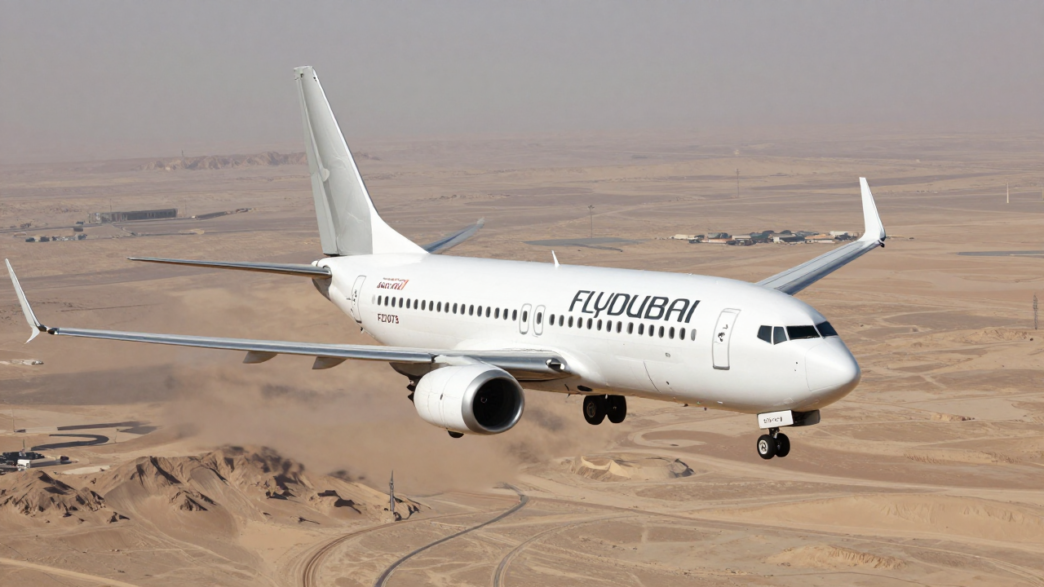
A Flydubai Boeing 737 MAX 8 plunged about 16,000 feet in roughly 30 seconds during a midair emergency on Wednesday, an aviation instructor said after recreating the descent in a flight simulator for Reuters. The aircraft later stabilized and landed safely in Tabuk, Saudi Arabia, after passengers and crew intervened during an altercation in the cockpit.
The simulator demonstration, reported Sunday, October 4, offered a sense of the physical forces passengers may have experienced, but did not establish exactly what happened aboard the aircraft. Investigators still need to examine flight and cockpit voice recorders, aircraft systems and air traffic control communications to determine the sequence of events and the cause of the descent.
Simulator shows the force of the descent
Alberto Paduanelli, owner of ALPA Simulation in Sherfield on Loddon, southern England, recreated the aircraft’s steep descent for Reuters. He described a rapid drop of that scale as resembling an extremely steep roller coaster, while noting that passengers would not know what was happening and could feel negative G-forces.
Paduanelli said passengers who were not strapped in could have been lifted from their seats. The simulation was an instructor’s recreation, not an official reconstruction based on the aircraft’s flight recorder data, and does not independently verify what controls were used or what was happening in the cockpit at each moment.
In the simulator, Paduanelli said the autopilot disconnected before the plunge, allowing the aircraft to accelerate quickly. His account illustrates how the event might have felt, but the official investigation will be needed to establish whether the simulated sequence matches the aircraft’s recorded performance.
Flight data trace the emergency and diversion
FZ1073 was scheduled to fly from Dubai to Tel Aviv on a Boeing 737 MAX 8. Flight-tracking data cited by Anadolu Agency showed the aircraft climbing to about 34,000 feet after departure, then making sharp altitude changes beginning at approximately 5:21 a.m. GMT on Wednesday, October 1.
The tracking service recorded a drop of more than 14,000 feet in less than 30 seconds. The aircraft subsequently stabilized at a lower altitude and diverted to Tabuk. Tracking data can show the plane’s path and altitude changes, but cannot determine who was flying it or what was happening inside the flight deck.
Anadolu reported that the aircraft transmitted the general emergency code 7700 before its transponder code changed to 7500, used to indicate unlawful interference, and later returned to 7700. The flight requested an emergency landing in Tabuk and landed safely at about 6:45 a.m. GMT. The codes signal the kind of response air traffic controllers should make, but do not by themselves explain the cause of an emergency.
Saudi airport authorities said 174 passengers were aboard, according to Anadolu. The passengers later continued to Tel Aviv on a replacement aircraft arranged by Flydubai, which departed Tabuk on Wednesday evening local time.
Authorities describe an altercation; some details remain contested
The UAE prosecutor general said on Saturday that the co-pilot attacked the captain with an emergency crash axe and described the incident as a terrorist attack. Reuters reported that two sources familiar with the investigation identified the co-pilot as Hammam al-Hammami, an Omani national; UAE authorities had not immediately confirmed that identification.
Flydubai has confirmed that an altercation occurred in the cockpit and said on-duty company personnel travelling aboard the flight secured the aircraft. The airline said the circumstances were under investigation and that the reasons and motives remained unknown. It has not confirmed the account that the co-pilot deliberately attempted to crash the plane.
Passenger accounts reported by Anadolu said passengers entered the cockpit and restrained the attacker, after which two Flydubai pilots travelling in the cabin helped regain control and divert the aircraft. Anadolu also reported that the captain and first officer were injured and taken to hospital. These accounts and official statements provide details of the response, but the full sequence remains subject to investigation.
Investigation continues as training history emerges
Reuters reported that Royal Air Maroc said al-Hammami completed a three-month training period with the airline in 2025 but was rejected for a job afterward. Buckinghamshire New University said he took an aviation-management course by distance learning, but did not undertake pilot training there. An Australian Federal Police spokesperson said Sunday that Australian authorities were investigating his links to the country; a source briefed on the inquiry told Reuters he had studied at a university in Melbourne.
Those background details do not establish a motive or explain the cockpit confrontation. Reuters said Oman had not commented, and Flydubai said it could not comment further while the investigation was ongoing. Boeing did not respond to Reuters’ request for comment.
U.S. President Donald Trump praised the aircraft’s ability to withstand the forces involved, Reuters reported. The simulator instructor, meanwhile, said a prolonged high-speed dive could place severe strain on an airframe. The aircraft’s recorded data and the formal safety investigation—not the simulation or public statements—will be needed to determine the loads it experienced and how it recovered.
Investigators are expected to rely on the cockpit voice and flight data recorders, aircraft systems, air traffic control communications and interviews with crew and passengers. As of Sunday, no public timetable for completing the inquiry had been announced, and key questions—including the exact cause of the descent and who selected the transponder codes—remained unresolved.