

Updated:
Artificial intelligence could increase global annual carbon dioxide emissions by 0.47 to 1.8 billion metric tons as productivity gains in oil and gas production outweigh modeled emissions avoided through renewable-energy applications, according to a peer-reviewed study published in npj Climate Action. The researchers said the modeled increase represents 1.2% to 4.8% of 2024 global energy-related CO₂ emissions.
The findings, published August 4 and subsequently corrected, examine how AI affects both fossil-fuel and renewable-energy supply—not just the electricity consumed by data centers. Investing.com reported October 4 that Jefferies’ sustainability and transition strategy team highlighted the study’s implications for investors evaluating AI’s broader environmental footprint.
The study looks beyond data-center electricity
The research team used a global economic model to estimate how AI-related productivity improvements might affect energy markets and emissions. Its central distinction is between applications that help fossil-fuel producers increase output or lower costs and those that improve renewable generation and energy systems.
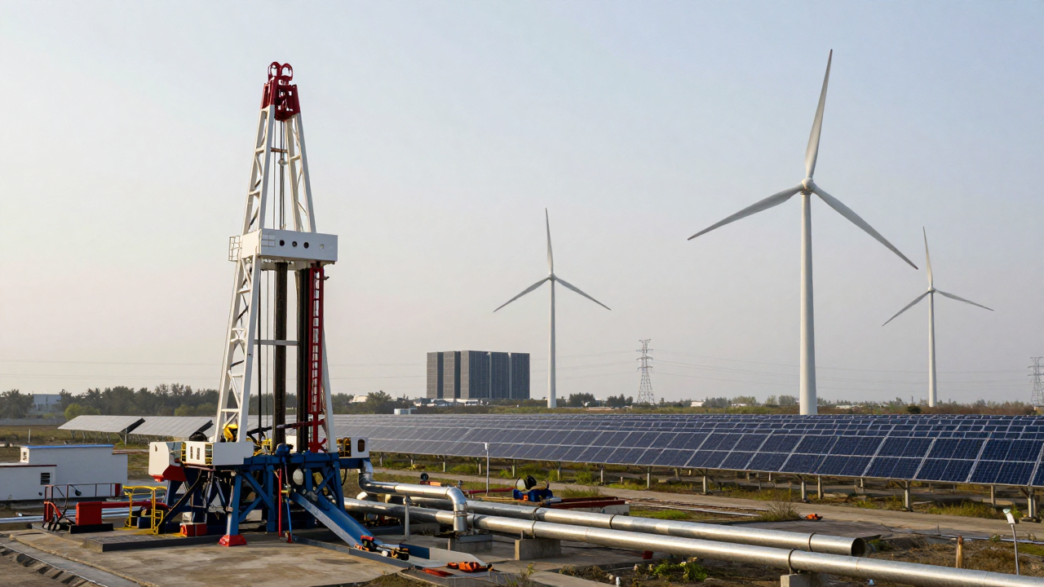
AI can support oil and gas companies by helping identify drilling prospects, improve recovery from existing fields and reduce operating costs, the study said. In clean energy, applications can improve renewable generation forecasting, maintenance and grid integration. The authors modeled how productivity gains in both pathways could interact across the wider economy.
The study estimated that the emissions enabled by fossil-sector productivity gains exceeded emissions avoided through renewable-energy gains in its parallel-adoption scenarios. It found that net emissions reductions would require productivity gains in renewables to be four to five times greater than gains in fossil fuels.
Why lower costs can change energy supply
The researchers’ concern is not limited to emissions directly produced by AI systems or data centers. If AI makes fossil-fuel production more productive and economical, companies may be able to bring more supply to market; the study’s economic model considers how such changes can ripple into production and consumption decisions.
At the same time, the authors noted that AI can reduce emissions in fossil-fuel operations, including through methane-leak detection, and can improve efficiency in power generation. The study’s comparison weighs those possibilities against the potential for expanded fossil-fuel output, rather than treating all AI uses within the energy industry as having the same effect.
The authors also described limits to their analysis. It models CO₂, not the full range of greenhouse gases, and does not include some emerging technologies, such as green hydrogen, small modular nuclear reactors and direct air capture. Its estimates are therefore model results under specified assumptions, not a forecast of emissions that will necessarily occur.
Industry and researchers see different implications
In an August report on the research, Axios cited the American Petroleum Institute disputing the idea that producing more energy and reducing emissions are incompatible. The trade group said the U.S. oil and natural gas industry was using technology, operational practices and policy to produce more energy while reducing emissions.
That report also described AI adoption by major oil companies and oilfield-service firms, including Chevron, ExxonMobil, ADNOC, Aramco, SLB, Halliburton and Baker Hughes. Those companies have said AI can help with activities such as evaluating drilling prospects, improving recovery and guiding well placement; the study assesses the possible system-wide emissions implications of productivity changes, not the emissions outcome of any one company’s deployment.
Researchers and outside observers have also pointed to an important uncertainty: the model does not estimate whether AI might accelerate breakthroughs in technologies such as fusion or long-duration energy storage. The paper’s results focus on modeled productivity effects in existing energy pathways, rather than every potential future use of AI in climate technology.
What the findings mean for investors
Jefferies’ team said the research broadens the questions investors may ask when assessing AI’s climate exposure. Data-center power demand remains part of the picture, but the study argues that AI’s use in producing fossil fuels and improving renewable energy could also affect emissions—and that the balance between those applications matters.
The paper does not set a timetable for changes in energy investment or prescribe a specific policy response. Its authors’ analysis instead highlights the need to account for AI’s effects across competing energy supply chains, while recognizing that the emissions estimates depend on model assumptions and do not capture every possible application or consequence.