

Updated:
Yemen’s Presidential Leadership Council chairman Rashad al-Alimi announced on Sunday, October 4, that government forces would begin military operations to retake territory held by the Houthi movement, setting out a stated aim of restoring the authority of state institutions throughout the country. Al-Alimi made the announcement in a televised address, according to Reuters and other media reports.
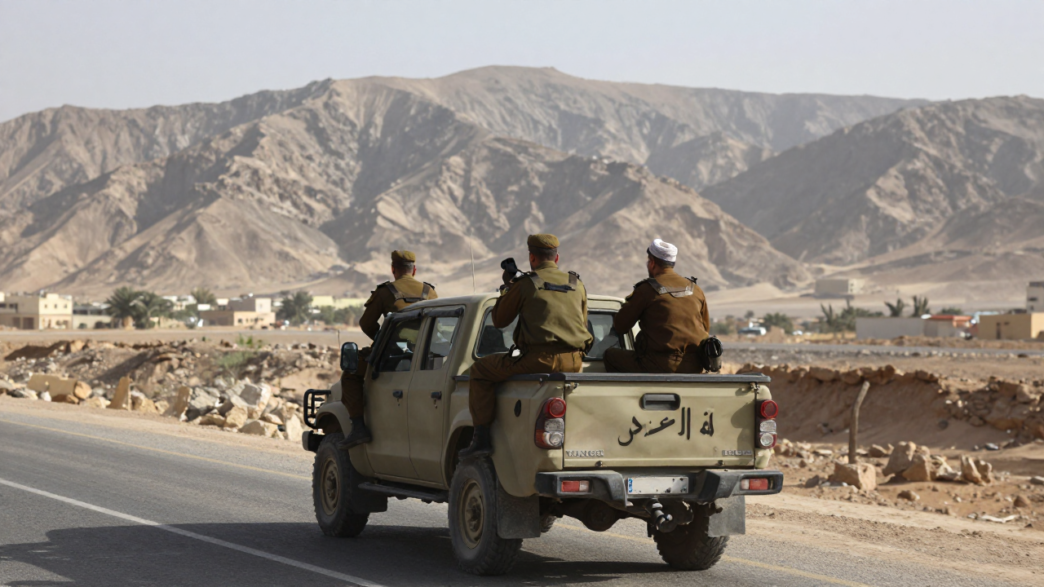
He said armed forces, security forces and other military formations had been instructed to carry out tasks under an approved plan. The declaration came amid renewed fighting between the Houthis and forces aligned with Yemen’s internationally recognized government, as well as recent Houthi advances on the country’s Red Sea coast. Al-Alimi did not publicly specify the campaign’s timetable, operational objectives or the forces assigned to particular fronts.
Campaign announced, operational details remain limited
Al-Alimi described the effort as a campaign to retake the republic’s remaining territory and extend state authority across Yemen. Anadolu Agency reported that he also ordered state institutions to remain on full alert until the mission was complete. Public reporting on Sunday did not establish a detailed timeline or independently verify the scope of military operations underway following the announcement.
Claims about casualties and strikes require separate attribution. Al Jazeera reported that a spokesman for government forces said Yemeni forces had carried out 257 precision operations on Saturday and that preliminary estimates indicated at least 700 Houthi fighters had been killed. The figure was a claim by the government side; the available reporting did not provide independent verification or a Houthi response confirming it.
Recent fighting shifted toward the Red Sea coast
The announcement follows a sharp escalation in Yemen’s long-running conflict. AP reported that Houthi forces captured the strategic port city of Mocha and nearby Red Sea islands in September, in what it described as the group’s most significant territorial advance in years. The move brought fighting closer to Bab al-Mandeb, the narrow passage linking the Red Sea and Gulf of Aden.
That waterway is a major route for commercial shipping, making renewed conflict along the coast relevant beyond Yemen. AP reported that UN Yemen envoy Hans Grundberg had warned that the latest escalation threatens maritime corridors and that attacks on commercial shipping were a concern. The reports do not establish that al-Alimi’s announcement has already changed shipping conditions.
Separately, Al Jazeera reported that the Saudi-led coalition said it had carried out 97 operations against Houthi reinforcements on the Tor al-Baha front and Taiz axis on Saturday. Those figures and descriptions were attributed to the coalition; they were not independently confirmed in the reports reviewed.
Conflict has endured despite earlier truce
The Houthis seized Yemen’s capital, Sanaa, in 2014, prompting the internationally recognized government to retreat from the city. A Saudi-led coalition intervened in 2015 in support of that government. A 2022 truce largely halted major fighting, but AP and Anadolu Agency reported that the ceasefire collapsed in July 2026, followed by a renewed wave of clashes.
UN envoy Grundberg, speaking to AP in late September, said he had met Houthi negotiators in Muscat and held talks with the government and regional representatives in Riyadh in an effort to prevent the escalation from worsening. He described a diplomatic track alongside the fighting, but the October 4 announcement points to a government decision to pursue military operations. No new negotiations or ceasefire arrangement were announced with al-Alimi’s declaration.
Humanitarian and diplomatic implications
The renewed conflict has displaced civilians. AP, citing the UN migration agency, reported that more than 145,000 people had fled their homes inside Yemen during the latest flare-up, with more than 3,000 others crossing to Djibouti. These displacement figures describe the preceding escalation, not a measured impact of the operation announced on Sunday.
For now, key questions remain unanswered: whether the announcement signals a coordinated nationwide offensive or a formalization of operations already underway, how forces will be deployed, and whether diplomatic efforts can resume alongside the fighting. As of Sunday, the public statements and reporting reviewed offered no confirmed schedule for the campaign’s next phase or independently verified assessment of battlefield changes after al-Alimi’s address.