

Updated:
Seven OPEC+ producers agreed on Sunday, October 4, to keep their required oil production levels for November unchanged from September, formalizing a decision that Reuters had reported was expected. The move leaves the group’s near-term output policy steady while conflict involving Iran continues to constrain Gulf oil exports and disrupt energy flows.
The decision was made at a virtual meeting of Saudi Arabia, Russia, Iraq, Kuwait, Kazakhstan, Algeria and Oman. OPEC said the countries reviewed global market conditions and would meet again on November 1. Their announcement addressed production targets; it did not promise that members would deliver those volumes in practice.
Seven producers hold targets steady
In its statement, OPEC said the seven countries would maintain their September 2026 required production levels for November. The participating governments also reiterated their commitment to comply with the wider Declaration of Cooperation, the framework that coordinates production policy between OPEC members and partner producers.
The group’s decision followed Reuters reporting, citing three sources close to the matter, that members had agreed in principle to leave targets unchanged. OPEC’s subsequent announcement confirmed the outcome. The seven-country gathering was distinct from the broader OPEC+ alliance, which includes other oil-producing partners.
Disruptions complicate the meaning of targets
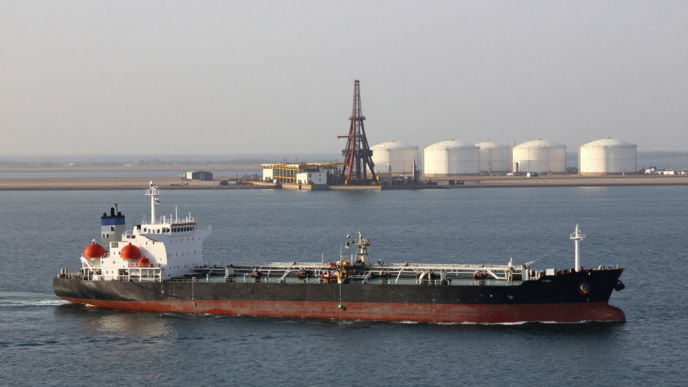
Keeping quotas steady does not necessarily mean the same volume of oil will reach the market. Reuters reported that Gulf producers had been pumping below targets amid export disruptions linked to the war involving Iran, with regional exports fluctuating at 60% to 80% of normal levels in recent months, according to sources cited by the news agency.
Reuters also reported that the seven core producers pumped 25 million barrels per day in August, up 630,000 barrels per day from July but about 5 million barrels per day below their February, prewar level. Those figures, attributed to OPEC data, illustrate the difference between a production allowance and barrels actually produced and exported under disrupted conditions.
The Associated Press reported that the conflict, which it said began with U.S. and Israeli attacks on Iran on February 28, had disrupted global oil supplies. AP said benchmark Brent crude was above $100 a barrel on Sunday. Prices and the extent of supply disruption can change; the quota decision itself does not guarantee a particular market price or restore interrupted shipments.
Capacity review clouds future allocations
Reuters reported that the war had delayed an assessment of members’ production capacity, a review intended to help determine 2027 output quotas. Industry sources told Reuters that uncertainty over future production potential had complicated that exercise. The assessment matters to how production increases or allocations might be distributed, but the group did not announce a new timeline or outcome for the review on Sunday.
The seven members have been raising targets during 2026 after years of production cuts, according to Reuters, although the agency reported that much of the planned increase had not translated into physical supply amid the conflict. Reuters also said OPEC+ still had about 2 million barrels per day of output cuts in place covering most members. The unchanged November decision therefore maintains the current target structure rather than announcing a new increase or cut.
Monitoring group flags maritime routes
Separately, the Joint Ministerial Monitoring Committee met on October 4 to review market conditions and production data for July and August. In its statement, OPEC said the committee stressed the importance of protecting international maritime routes and raised concerns about attacks on energy infrastructure, noting that restoring damaged assets can be costly and take time.
The monitoring committee reviews compliance and market conditions; it does not set the production policy announced by the seven countries. OPEC said the committee’s next meeting is scheduled for November 29, while the seven producers’ next monthly meeting is November 1. No further output-policy change was announced for that later date, leaving any subsequent decision dependent on the group’s next review.