

Updated:
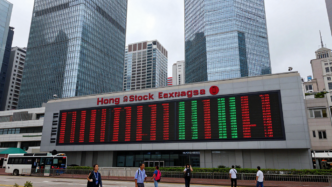
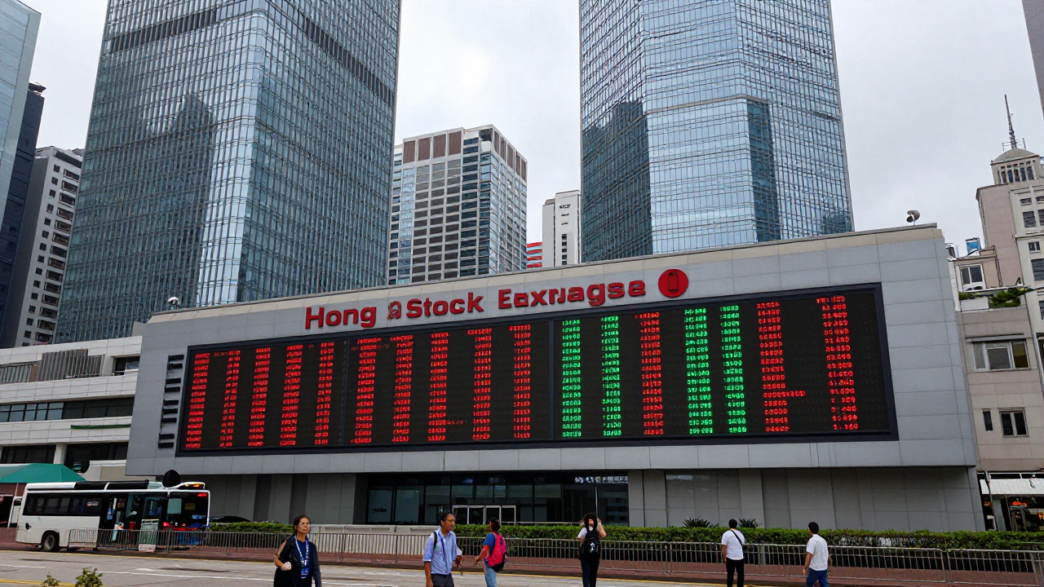
Hong Kong shares edged lower by midday on Monday, October 5, as declines in property companies and financial heavyweights outweighed gains in technology stocks. The Hang Seng Index was down 0.08%, while the Hang Seng China Enterprises Index was flat, according to Reuters. Trading was light as mainland Chinese financial markets remained closed for the National Day holiday.
The sector split left the benchmark little changed, but showed weakness among rate-sensitive shares. Hong Kong-listed property companies fell 0.9%, and a finance subindex tracking major banks and insurers declined 0.7%. The Hang Seng Tech Index rose 0.3%, with semiconductor and printed-circuit-board shares among the stronger performers.
Property and financials lead declines
The broad market’s small midday loss reflected contrasting performances across sectors rather than a uniform sell-off. With developers and financial firms under pressure, modest gains in technology were not enough to lift the main benchmark into positive territory.
Reuters described the property and financial groups as rate-sensitive, but its report did not identify a specific new interest-rate development as the cause of Monday’s moves. Nor did it name particular developers or banks responsible for the sector declines. The available figures therefore show where selling was concentrated, without establishing a single catalyst.
Technology shares provide a counterweight
Technology stocks moved in the opposite direction. Kingboard Laminates gained 9%, while Hua Hong Grace Semiconductor rose 4%, Reuters reported. The publication identified semiconductor and printed-circuit-board shares as leaders among the day’s gainers.
The advances offered some support to the wider market, though the technology index’s 0.3% rise remained modest. The report did not provide trading volumes or company-specific announcements explaining the two stocks’ moves, so it is unclear whether they reflected individual news or broader sector activity.
Mainland holiday leaves investors watching consumption data
China’s onshore financial markets were closed from October 1 through October 7 for the National Day holiday and were scheduled to reopen on October 8. With mainland trading paused, Reuters characterized activity in Hong Kong as light.
Investors were also watching travel and retail spending during the week-long holiday for an early indication of consumer demand heading into the fourth quarter. Citi analysts said early activity appeared underwhelming and assessed that retail and tourism spending per traveller was likely softer despite steady footfall, Reuters reported. The report did not provide the underlying data or a numerical estimate of spending.
Budweiser APAC shares hit a post-listing low
Budweiser Brewing Company APAC fell 2.1% to HK$5.555 in early trading, its lowest level since its September 2019 debut, Reuters reported. The brewer said it expected to record a $52 million non-underlying withholding-tax charge arising from an internal restructuring involving some of its mainland Chinese subsidiaries.
The company described the restructuring’s purpose as enhancing capital efficiency. The charge was separate from the broader sector moves described in the market report; Reuters did not quantify its effect on the company’s earnings or say that it explained the share decline.
What comes next
Mainland markets were due to reopen on Thursday, October 8, after the holiday closure. Until then, holiday travel and retail figures were among the few near-term indicators highlighted in the reporting for investors assessing Chinese consumer activity. The available report did not specify when fuller spending data would be released or provide a forecast for Hong Kong shares after mainland trading resumed.
Monday’s midday figures capture a narrow snapshot rather than a closing result: the Hang Seng reading was reported at midday, and Budweiser’s price was described as an early-trading level. The report did not include the final close, total turnover or additional company statements beyond the brewer’s disclosure, leaving the full-day market outcome unknown at publication.