


Updated:
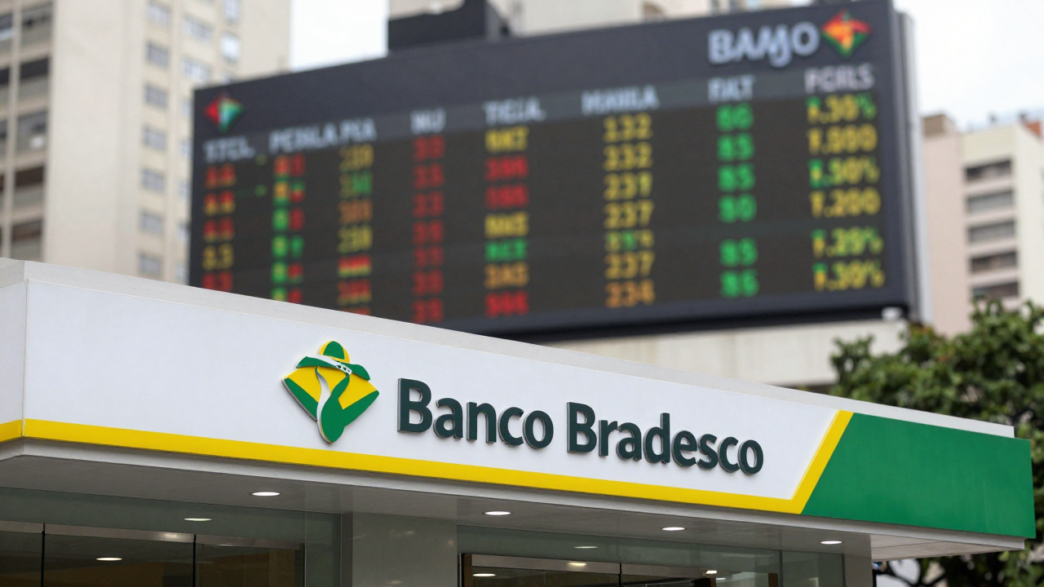
Banco Bradesco’s U.S.-listed shares rose 13.6% in pre-market trading on Monday, October 5, reaching $3.59, after Brazil’s first-round presidential vote delivered a stronger-than-expected result for Senator Flávio Bolsonaro. The Liberal Party candidate received about 47% of valid votes, ahead of incumbent President Luiz Inácio Lula da Silva, who received about 45%, according to results reported by Brazil’s electoral authorities.
The outcome sent the contest to a runoff scheduled for October 25, rather than settling the presidency. Investors reacted to Bolsonaro’s lead as a possible shift toward more market-oriented economic policies, including tighter control of public spending, though the election result does not establish what policies a future government would enact. Bradesco’s move formed part of a wider rally in U.S.-listed Brazilian stocks: Reuters reported that peer Itaú Unibanco also gained more than 9% in pre-market trading.
Result defied expectations
Pre-election surveys had generally placed Lula ahead in the first round, Reuters reported. The final tally therefore represented a surprise for investors watching the race for signals about Brazil’s fiscal and economic direction. Flávio Bolsonaro is the son of former president Jair Bolsonaro; his first-place finish gives him a lead going into the runoff, not a presidential victory.
Brazil’s public broadcaster, citing the Superior Electoral Court, reported that Flávio Bolsonaro received 47.03% of valid votes and Lula 45.16%, with 99.99% of ballots tallied late on October 4. Neither candidate passed the threshold for winning outright in the first round, leaving voters to choose between the two on October 25.
Investors focused on fiscal policy
The initial market response reflected expectations rather than a confirmed policy change. Reuters quoted investors and analysts anticipating gains in Brazilian assets after Bolsonaro outperformed polling, with some pointing to the possibility of fiscal adjustment and economic reform. Analysts also cautioned that the result alone does not show whether a future administration would deliver those policies.
Reuters reported that Flávio Bolsonaro’s campaign had shown limited aptitude for economic policymaking, according to one market participant, and that investors would look for clear signals about his plans. The runoff remains a source of uncertainty: Lula is still in the race, and the eventual direction of fiscal policy depends on the result and the decisions of the next government.
Rally extended beyond Bradesco
The gains were not limited to Bradesco. Reuters reported that Itaú Unibanco and other U.S.-listed Brazilian companies also advanced in pre-market trading, pointing to a broader repricing of Brazilian assets following the vote rather than a Bradesco-specific corporate announcement.
Investing.com’s report additionally noted that October 5 was the ex-dividend date for Bradesco’s BBDO security. That date may be relevant to trading in that security, but it does not by itself explain the broader political-market reaction or establish the cause of the reported rise in Bradesco’s BBD ADRs.
Runoff is the next political milestone
The next scheduled event is the October 25 runoff between Flávio Bolsonaro and Lula. Brazil’s public broadcaster reported that Bolsonaro described the result as a call for change, while Lula acknowledged he had expected to win in the first round and said his campaign would restart for the runoff.
For markets, Monday’s sharp pre-market move records investors’ immediate response to an unexpected election result; it does not resolve the political contest or confirm future government policy. Reuters reported that investors would be watching for clearer economic-policy signals as the campaign continues.