


Updated:
Britain is considering potential tariffs on Chinese electric vehicles, with Business Secretary Jonathan Reynolds authorising officials to draw up a package of possible levies, according to reports published on Monday, October 5. No tariff rate, timetable or final government decision has been announced, leaving the proposal at an exploratory stage.
The deliberations come as Chinese brands expand their presence in the UK and the European Union presses for closer alignment on trade rules. Reporting by The Times, cited by other outlets, said Brussels has linked the UK’s treatment under its proposed “Made in Europe” policy to concerns over tariffs and the possibility that Chinese-made goods could enter the EU through Britain.
Officials asked to prepare options
The Financial Times headline and summary described Reynolds as weighing tariffs and said he had authorised officials to draw up potential levies. A separate Times report, carried by Bloomberg and other outlets, said ministers were considering charges on Chinese vehicle imports amid concerns about state support for Chinese manufacturers. Those concerns are reported claims, not a published UK finding that tariffs are warranted.
The government has not publicly set out the scope of any package, including whether it would apply only to battery-electric cars or more broadly to vehicles made in China. Nor has it said whether any duties would follow an investigation, mirror EU rates or differ by manufacturer. The distinction matters because a charge applying to all China-built cars would also affect vehicles made there by non-Chinese companies.
EU rules raise the stakes
The EU introduced definitive countervailing duties on battery-electric vehicles from China in October 2024, following an anti-subsidy investigation. The European Commission set additional rates between 7.8% and 35.3%, depending on the producer, on top of the bloc’s ordinary 10% import duty.
Britain did not adopt the EU’s additional duties. Recent coverage has reported that Brussels is developing a “Made in Europe” approach that could give preference to locally made products in areas such as subsidies or public procurement. The Times report said EU officials worry that a gap in UK tariffs could make Britain a route into the European market for Chinese exports, while alignment could help UK companies retain access to the scheme. The proposal’s final design and its treatment of the UK remain unsettled.
Chinese brands gain ground in Britain
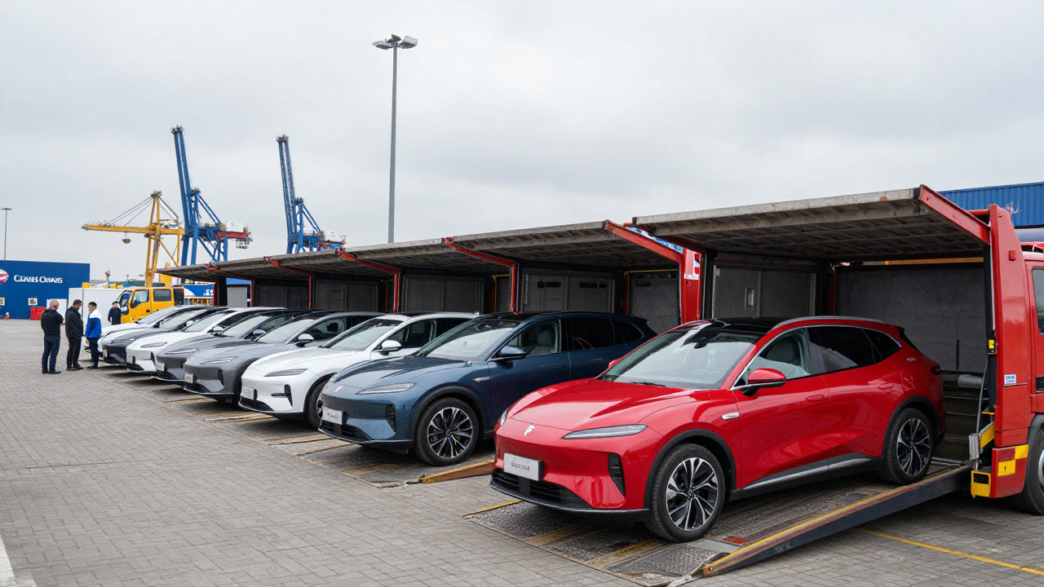
UK market data underscore the commercial stakes. The Society of Motor Manufacturers and Traders reported that 350,518 new cars were registered in September, up 12.1% year on year, while battery-electric cars reached a record monthly volume of nearly 100,000 and a 28.3% market share. The September figures were reported as preliminary by the trade body.
City A.M., citing SMMT data, reported that Chinese car brands accounted for just under a quarter of UK registrations in the first nine months of 2026, with more than 300,000 Chinese cars sold over that period. MG, BYD and Jaecoo were among the leading brands. These figures refer to cars from Chinese brands and should not be taken as a count of battery-electric vehicles alone: manufacturers and brands can sell more than one type of powertrain, and tariffs discussed in reporting have not been fully defined.
Government has not announced a decision
A government spokesperson told City A.M. that ministers continued to engage with industry so that the UK’s approach reflected the sector’s and national interests. The statement did not confirm that tariffs would be introduced, specify a rate or provide a decision date.
For now, the concrete step reported is the preparation of options, not an enacted policy. Further details—including whether the government will consult manufacturers, investigate subsidies or connect any tariff proposal directly to negotiations with the EU—have not been publicly confirmed. Until those questions are answered, the possible impact on automakers, importers and buyers remains uncertain.