

Updated:
Stellantis is on course to assemble about 450,000 vehicles in Italy in 2026, reversing two years of falling output but remaining below the automaker’s earlier expectations, the FIM-CISL union said Tuesday. The forecast follows a 28.3% year-on-year increase in production during the first nine months, when the company’s Italian plants made 340,745 cars and commercial vehicles.
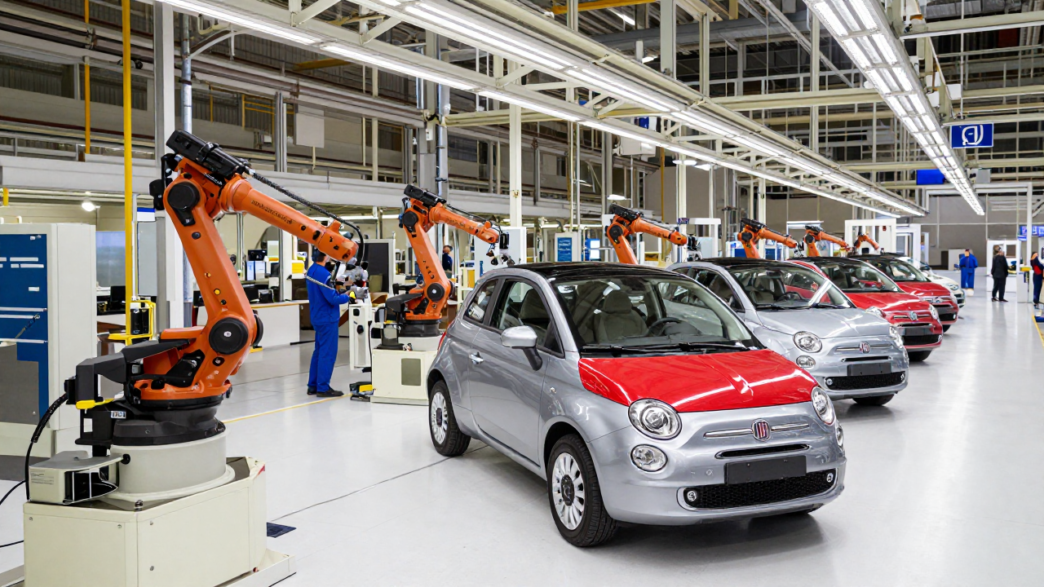
The recovery has been uneven. New production of the Jeep Compass and hybrid Fiat 500, alongside continued output of the Fiat Panda, helped lift volumes, but shortages of engine components and weaker-than-expected orders have disrupted the 500’s ramp-up. FIM-CISL expects the model to reach about 60,000 units this year, short of Stellantis’ initial target of 100,000.
The figures, presented by FIM-CISL secretary-general Ferdinando Uliano in the union’s quarterly production report, put the rebound in context: Italy’s only major automaker produced just under 380,000 vehicles in 2025, including 213,706 passenger cars. The union said last year’s passenger-car total was the lowest since 1954. Stellantis was not immediately available for comment, Reuters reported.
Nine-month output rises, but remains below the industry target
Between January and September, Stellantis assembled 340,745 vehicles in Italy, compared with 265,490 in the same period of 2025. Passenger-car production rose 36.7% to 206,945, while commercial-vehicle output increased 17.3% to 133,800, according to the union data reported by ANSA and Corriere della Sera.
FIM-CISL expects full-year production to exceed 250,000 passenger cars, bringing the total for cars and commercial vehicles to around 450,000. That would mark a substantial improvement on 2025, but remain far below the one-million-vehicle objective discussed in government-industry meetings, Uliano said, according to Borsa Italiana’s Radiocor service.
The union attributed the improvement partly to new model launches. Production of the hybrid Fiat 500 at Mirafiori and the Jeep Compass at Melfi, together with the Fiat Panda’s performance, supported passenger-car volumes. Commercial vehicles produced at Atessa also contributed to the increase.
Fiat 500 disruptions temper the year-end outlook
The 450,000-unit estimate is less favorable than earlier expectations, FIM-CISL said, citing the recent slowdown in Fiat 500 production. The union attributed stoppages to missing components and lower-than-expected orders, and said two weeks of temporary layoff measures were requested for October at the plant.
The 500 hybrid had been expected to contribute more strongly to the year’s totals. Reuters reported the union’s estimate of about 60,000 units in 2026 against an initial Stellantis target of 100,000. The gap illustrates how production capacity and new model launches do not necessarily translate into planned output when supply interruptions and demand constrain factory schedules.
Growth differs sharply among Italian plants
FIM-CISL reported the largest increases in passenger-car assembly at Mirafiori, up 151.1%, and Melfi, up 77.2%, compared with the first nine months of 2025. The union also noted that Modena’s rise reflected the transfer of Maserati GranCabrio and GranTurismo production from Turin late last year, rather than a like-for-like expansion at the site.
Cassino was the outlier among car-assembly plants, with production down 37.1% against an already weak comparison period. The union described the site’s condition as worsening. At Pomigliano d’Arco, output rose in the third quarter compared with the first nine months of 2025, while Atessa remained the group’s largest Italian production site by volume.
Atessa assembled 133,800 commercial vehicles in the first nine months, equivalent to 39.3% of Stellantis’ reported Italian production, and recorded growth of 17.3%. FIM-CISL said the site had stopped using temporary wage-support measures, even as the employment and production picture remained more difficult at Cassino, Pomigliano and Mirafiori.
Union points to jobs and next talks
Use of temporary wage-support measures across the Italian operations fell by more than 30% in the first nine months, Uliano said, attributing the reduction to new production launches and a decline in employment. The union’s outlook for lower use of such measures in 2026 excludes Cassino, Pomigliano and Mirafiori, where it sees continuing challenges.
FIM-CISL and other unions are scheduled to meet Stellantis management on October 15 to review production and progress on the company’s industrial plan, Corriere della Sera reported. The union’s year-end estimate remains a forecast rather than a company production commitment; Stellantis had not provided a response to Reuters by the time of its report.