

Updated:
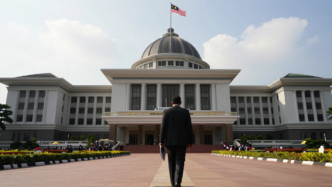
Malaysia will present its 2027 budget in Parliament on Friday, October 9, with Prime Minister and Finance Minister Anwar Ibrahim expected to outline measures to address household cost pressures while maintaining fiscal restraint. The budget is scheduled for 3:30 p.m. local time, or 0730 GMT, according to the Finance Ministry and contemporaneous reporting.
The announcement comes amid speculation that Malaysia could hold an early general election. The next vote is not due until February 2028, but strains within Anwar’s governing alliance have prompted discussion of an earlier poll. Analysts expect the political backdrop to heighten attention on support for households, though they do not anticipate a broad stimulus package given the government’s stated concern with fiscal discipline.
Election talk meets fiscal constraints
Reuters reported that economists expect a moderately expansionary budget, with potential tax relief and other assistance aimed at living costs. RHB economist Alexander Chia said election expectations raise pressure for a budget that supports positive sentiment, while describing the likely market effect as mildly positive. Those are analyst assessments, not confirmed government commitments.
Malaysia’s Finance Ministry has framed the budget around balancing public welfare with fiscal resilience. Its August pre-budget statement says the plan will continue the MADANI economic agenda and focus on, among other priorities, easing living-cost pressure, narrowing regional development gaps, improving essential services and encouraging investment. The ministry described these as areas guiding consultation; the final allocations and policies are due to be set out on Friday.
Major new taxes are not expected, according to RHB’s assessment reported by Reuters. The bank said the government may instead concentrate on tax compliance, administration and reducing revenue leakages. The distinction matters because the state is facing pressure to fund assistance while keeping its deficit-reduction effort on track.
Subsidies and the deficit complicate spending plans
OCBC economist Lavanya Venkateswaran estimated that Malaysia’s fiscal deficit could reach 3.6% of gross domestic product this year, slightly above the government’s 3.5% target, citing higher-than-expected subsidy and social-assistance spending. The estimate is a forecast, rather than a final government result.
Fuel support is a major source of uncertainty. Malaysia has said its fuel subsidy bill could reach 40 billion ringgit ($9.79 billion) this year, compared with 15 billion ringgit allocated in the 2026 budget. Reuters linked the increase to a rise in oil prices following the US-Israeli war with Iran, illustrating how external energy shocks can put pressure on the budget.
CIMB analysts expect fuel subsidy expenditure to decline in 2027 if oil prices normalize. They said that could leave room for more targeted support, including cash transfers for lower-income households and personal income tax relief. But the scale of any such measures will depend on the government’s final spending and revenue choices.
Potential revenue from Petronas and wage review
Dividends from state energy company Petronas are another possible source of government revenue. CIMB analysts expect the company to contribute about 25 billion ringgit ($6.12 billion) to the government in 2027, up from an estimated 20 billion ringgit this year. OCBC and Standard Chartered also said a special dividend to help cover this year’s higher subsidy costs could be considered; neither proposal has been confirmed by the government.
Analysts also flagged a possible review of Malaysia’s minimum wage, currently 1,700 ringgit a month. AmInvestment Bank raised the possibility, while the government has said any increase would not apply to micro, small and medium-sized enterprises for now because of challenging business conditions. The budget speech will clarify whether the issue results in a formal policy proposal or remains under review.
Official priorities include investment and cost-of-living support
The Finance Ministry’s pre-budget statement outlines 10 focus areas, including household welfare, social protection, education and health services, governance, regional development and investment. It says assistance and subsidies should be better targeted, with purchasing power for vulnerable groups supported through existing programmes. The statement also identifies employment, incomes and access to essential services as concerns, but does not set out the final 2027 spending amounts.
Investment priorities include semiconductors, artificial intelligence, digital services, the energy transition, pharmaceuticals, logistics and aerospace. The ministry also points to support for local firms and small businesses, as well as investment hubs such as the Johor-Singapore Special Economic Zone. Separately, Reuters cited Standard Chartered’s expectation that the budget could support high-value investment in semiconductors, AI and digital infrastructure. These policy areas sit alongside, rather than replace, the immediate fiscal decisions over subsidies and household assistance.
Malaysia’s economy grew 5.7% in the first half of 2026, according to Reuters, while the central bank expects full-year growth of about 5%, at the upper end of its 4% to 5% official forecast range. The Finance Ministry’s pre-budget statement reported second-quarter growth of 6.0% and said full-year growth could approach the upper end of the same range. The figures provide context for the budget, but do not remove the tension between a resilient economy, household cost pressures and the need to contain public spending.
What is scheduled next
Anwar is due to present the budget in Parliament at 3:30 p.m. on Friday, October 9. The Finance Ministry’s pre-budget statement confirms the date and identifies broad policy priorities, while analysts’ forecasts point to possible tax relief, targeted aid, subsidy adjustments and higher Petronas dividends. The precise measures, allocations and fiscal projections remain unknown until the budget is tabled.
Election timing is also unresolved. The scheduled date for the next general election is February 2028, and speculation about an earlier vote does not establish that one will be called. Friday’s budget will provide the clearest indication of the government’s planned response to living costs and its approach to balancing assistance with fiscal consolidation.