


Updated:
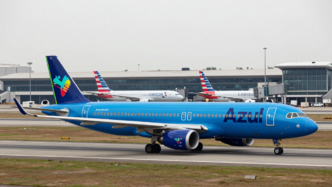
Brazil’s antitrust authority approved American Airlines’ planned $100 million investment in Azul on Wednesday, October 7, clearing the way for the U.S. carrier to acquire a minority stake of about 8% in the Brazilian airline. The approval is conditional: the companies must sign and fully comply with a merger-control agreement, known in Brazil as an ACC, that makes competition safeguards enforceable by the regulator.
The decision comes as Azul rebuilds its finances after a Chapter 11 restructuring in the United States. It also resolves a regulatory review focused on whether a minority investment between airlines could affect competition, including on routes connecting Brazil and the United States. CADE’s announcement said its review examined the investment’s financial interest, governance rights and access to competitively sensitive information.
Approval depends on an enforceable agreement
CADE said the operation was approved subject to the execution and full observance of the ACC. The agreement is intended to convert safeguards that had largely appeared in private arrangements into obligations directly enforceable before the agency. The regulator described the measures as addressing residual risks identified during its review.
The authority did not describe every provision of the agreement in its public announcement. It said the safeguards address concerns about governance and information flows, while avoiding restrictions broader than those deemed necessary to protect competition. The approval therefore does not mean the investment is unconditional: compliance with the agreement remains a requirement.
CADE’s decision also discussed how minority stakes can affect competition through more than direct control. Its analysis considered whether an investor’s economic interest, influence over corporate decisions or exposure to sensitive information could alter companies’ incentives or reduce uncertainty between competitors.
Investment forms part of Azul’s restructuring
Azul’s February 2026 filing with the U.S. Securities and Exchange Commission said American Airlines had committed to invest $100 million through the subscription of warrants. The filing said exercise of those warrants, and receipt of the underlying shares and related economic or political rights, depended on conditions including prior approval from CADE.
The same filing documented a separate $100 million commitment from United Airlines, bringing the two airlines’ stated investments to $200 million in total. Azul said the capital was intended to support its capitalization upon emergence from Chapter 11 and the implementation of its court-approved reorganization plan. The SEC filing is a company disclosure of the agreements and conditions, not confirmation that every investment step has since been completed.
Reuters reported on Wednesday that Azul emerged from Chapter 11 protection in February after a restructuring that included investments from both U.S. airlines. The CADE approval removes a Brazilian antitrust condition attached specifically to American’s planned investment, but the transaction remains subject to the ACC and any other applicable contractual conditions.
Review drew attention to airline ties
CADE’s technical staff had recommended clearance earlier in the process, according to Reuters. Abra Group, which controls Brazilian rival Gol and has a longstanding partnership with American Airlines, appealed the technical decision. The appeal brought the relationship among the airlines into focus as the regulator considered whether shareholdings and commercial connections could affect rivalry.
CADE said the tribunal’s analysis considered the possibility of coordinated effects, including whether links between companies could align incentives or make coordination more sustainable. The agency’s public account did not say that it found coordination had occurred; it described those issues as part of the competition assessment and said residual risks were addressed through the ACC.
What happens next
CADE’s October 7 announcement makes the signing and full compliance with the ACC conditions of approval. The public materials reviewed for this report did not specify a completion date for the investment or provide a detailed timetable for the agreement’s implementation. Azul’s SEC filing said American’s investment was structured through warrants and subject to conditions precedent, including antitrust authorization.
The decision also contributes to CADE’s broader examination of minority investments between competitors. The authority said the case touches on its guidance for horizontal mergers and ongoing discussion about possible revisions to its rules on merger filings, particularly regarding partial acquisitions and changes in influence. For Azul, the immediate significance is regulatory clearance for American’s investment within the restructuring framework; the terms and timing of final completion remain tied to the agreement and outstanding conditions.